
Swami Vivekananda
Ramakrishna His life and sayings
Such a man was Râmak ri sh n a, who has lately obtained considerable celebrity both in India and America, where his disciples have been actively engaged in preaching his gospel and winning converts to his doctrines, even among Christian audiences. This may seem very strange, nay, almost incredib
Ramakrishna His life and sayings
Within certain limits Yoga seems to be an excellent discipline, and, in one sense, we ought all to be Yogins. Yoga, as a technical term, means application, concentration, effort; the idea that it meant originally union with the deity has long been given up. This Yoga, however, was soon elaborate
Ramakrishna His life and sayings
Similar ideas existed already among the Brahmans, and we meet among them, even before the rise of Buddhism,
Ramakrishna His life and sayings
The life of a Brahman was, according to the Laws of Manu, divided into four periods or  s ramas, that of a pupil or Brâhma k ârin, that of a householder or G ri hastha, of an ascetic or Vânaprastha, and of a hermit or Yati. 1 The first and second stages are clear enough; they represent the scholas
Ramakrishna - his life and sayings
IT is not many years since I felt called upon to say a few words on certain religious movements now going on in India, which seemed to me to have been very much misrepresented and misunderstood at home. To people who are unacquainted with the religious state of India, whether modern or ancient,
PREFACE
THE name of Râmak ri sh n a has lately been so often mentioned in Indian, American, and English newspapers that a fuller account of his life and doctrine seemed to me likely to be welcome, not only to the many who take an interest in the intellectual and moral state of India, but to the few also
NOTICE OF ATTRIBUTION
Scanned at sacred-texts.com, February, 2005. Proofed by John Bruno Hare. This text is in the public domain in the US because it was published prior to 1922. These files may be used for any non-commercial purpose, provided this notice of attribution is included in all copies.
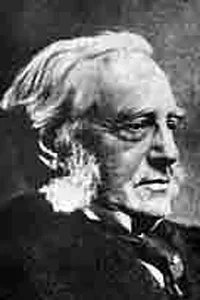
His life and sayings
Ramakrishna (1833-86), was a Bengali Hindu sage. Although theoretically a high-caste Brahamin by birth, he came from a poor, low-caste village and had little or no education. He did not know a word of Sanskrit and his knowledge of the Vedas, Puranas, and Hindu Epics was obtained orally (in the
Gauri Ma - A Monastic Disciple of Sri Ramakrishna
ARATI. Worship of the deity accompanied by the offering of lights. ASANA. Seat. ASHRAM. A hermitage or monastery for religious-minded people. Also, a place for practicing or studying religion. AVIDYA. Ignorance, cosmic or individual, which is responsible for the non-perception of Reality. BABA. F
CHAPTER 19
THE NUNS who had been trained by Gauri Ma gradually took upon themselves the responsibility of running the ashram in order to relieve her from day-to-day worries and problems. But her work of teaching went on to the end of her life, uninterruptedly and without a slackening of pace. In fact, thi
CHAPTER 18
WITH THE WORK of the ashram increasing rapidly, Gauri Ma felt it was not feasible or proper that the entire responsibility be on her shoulders. She created an advisory board, whose membership consisted of several highly respected gentlemen, and a women's council, whose membership consisted of a
CHAPTER 17
GAURI MA'S MIND was without a trace of ego. She always disliked honor and fame and was completely satisfied when people praised Sri Ramakrishna and Holy Mother. A few days before the sisters moved into the new convent, Gauri Ma had gone to check on the work. As she alighted from the carriage an