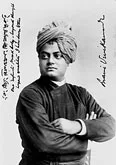
Ramakrishna - his life and sayings
Ramakrishna: His life and sayings
The Mahâtmans
IT is not many years since I felt called upon to say a few words on certain religious movements now going on in India, which seemed to me to have been very much misrepresented and misunderstood at home. To people who are unacquainted with the religious state of India, whether modern or ancient, and ignorant of the systems of philosophy prevalent in what has often, and not unjustly, been called a country of philosophers, it is very difficult to understand these movements, more particularly to distinguish between their leaders, who may be open to criticism, and the ideas themselves by which they feel inspired, and which they preach, often with great eloquence, to the multitudes that believe in them and follow them. My article, entitled 'A Real Mahâtman,' appeared in the August number, 1896, of the Nineteenth Century, and gave rise to a good deal of controversy both in India and in England. My object was twofold: I wished to
protest against the wild and overcharged accounts of Saints and Sages living and teaching at present in India which had been published and scattered broadcast in Indian, American, and English papers, and I wished to show at the same time that behind such strange names as Indian Theosophy, and Esoteric Buddhism and all the rest, there was something real, something worth knowing, worth knowing even for us, the students of Plato and Aristotle, Kant and Hegel, in Europe. What happens so often to people whose powers of admiration are in excess of their knowledge and discretion, has happened to the admirers of certain Hindu sages. They thought they had been the first to discover and unearth these Indian Mahâtmans, whom they credited not only with a profound knowledge of ancient or even primeval wisdom, but with superhuman powers exhibited generally in the performance of very silly miracles. Not knowing what had long been known to every student of Sanskrit philology, they were carried away by the idea that they had found in India quite a new race of human beings, who had gone through a number of the most fearful ascetic exercises, had retired from the world, and had gained great popularity among low and high by their preachings and teachings, by their abstemious life, by their stirring eloquence, and by the power ascribed to them of working miracles. Mahâtman, however, is but one of the many names by which these people have long been known. Mahâtman means literally great-souled, then high-minded, noble, and all the rest. It is often used simply as a complimentary term, much as we use
reverend or honourable, but it has also been accepted as a technical term, applied to a class of men who in the ancient language of India are well known to us by their name of Samnyâsin. Samnyâsin means literally one who has laid down or surrendered everything, that is, one who has abandoned all worldly affections and desires. 'He is to be known as a Samnyâsin,' we read in the Bhagavad-gîta V, 3, 'who does not hate and does not love anything.'
InstanceEndEditable
InstanceBeginEditable name="Author Credit Bottom"
- www.vivekananda.net edited by Frank Parlato Jr.
InstanceEndEditable