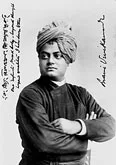
Ramakrishna His life and sayings
Ramakrishna: His life and sayings
Ascetic exercises of Yoga
Within certain limits Yoga seems to be an excellent discipline, and, in one sense, we ought all to be Yogins. Yoga, as a technical term, means application, concentration, effort; the idea that it meant originally union with the deity has long been given up. This Yoga, however, was soon elaborated into an artificial system, and though supplying the means only that are supposed to be helpful for philosophy, it has been elaborated into a complete system of philosophy, the Yoga philosophy ascribed to Patañgali, a variety of Kapila's Sâmkhya-philosophy. As described by Svâmin Râmakrishnânanda in the Brahmavâdin, p. 511 seq., it consists, as practised at present, of four kinds--Mantra, Laya, Râga, and Hatha-yoga. Mantra-yoga consists in repeating a certain word again and again, particularly a word expressive of deity, and concentrating all one's thoughts on it. Laya-yoga is the concentration of all our thoughts on a thing or the idea of a thing, so that we become almost one with it. Here again the ideal image of a god, or names expressive of the Godhead, are the best, as producing absorption in God. Râga-yoga consists in controlling the breath so as to control the mind. It was observed that when fixing our attention suddenly on anything new we hold our breath, and it was supposed therefore that concentration of the mind would be sure to follow the holding back of the breath, or the Prânâyama. Hatha-yoga is concerned with the general health of the body, and is supposed to produce concentration by certain portions of
the body, by fixing the eyes on one point, particularly the tip of the nose, and similar contrivances. All this is fully described in the Yoga-Sûtras, a work that gives one the impression of being perfectly honest. No doubt it is difficult to believe all the things which the ancient Yogins are credited with, and the achievements of modern Yogins also are often very startling. I confess I find it equally difficult to believe them or not to believe them. We are told by eye-witnesses and trustworthy witnesses that these Yogins go without food for weeks and months, that they can sit unmoved for any length of time, that they feel no pain, that they can mesmerise with their eyes and read people's thoughts. All this I can believe, but if the same authorities tell us that Yogins can see the forms of gods and goddesses moving in the sky, or that the ideal God appears before them, that they hear voices from the sky, perceive a divine fragrance, and lastly that they have been seen to sit in the air without any support, I must claim the privilege of St. Thomas a little longer, though I am bound to say that the evidence that has come to me in support of the last achievement is most startling 1.
That what is called a state of Samâdhi, or a trance, can be produced by the very means which are employed by the Yogins in India, is, I believe, admitted by medical and psychiatric authorities; and though impostors certainly exist among the Indian Yogins, we should be careful not to treat all these Indian Saints as mere impostors. The temptation, no doubt, is great for people, who are believed
to be inspired, to pretend to be what they are believed to be, nay, in the end, not only to pretend, but really to believe what others believe of them. And if they have been brought up in a philosophical atmosphere, or are filled by deep religious feelings, they would very naturally become what the Mahâtmans are described to be--men who can pour out their souls in perfervid eloquence and high-flown poetry, or who are able to enter even on subtle discussions of the great problems of philosophy and answer any questions addressed to them.
Footnotes
9:1 See also H. Walter, Hathayogapradîpikâ, 1893.
- www.vivekananda.net edited by Frank Parlato Jr.