Prose: Reply to the Calcutta Address
(Written from New York on Nov. 18, 1894, to Raja Pyari Mohan Mukherji, President of the public meeting held on Sept. 5, 1894 at the Calcutta Town Hall in appreciation of Swami Vivekananda's work in the West.)
Shri Nârâyana bless you and yours. Through your Highness' kind help it has been possible for me to come to this country. Since then I have become well known here, and the hospitable people of this country have supplied all my wants. It is a wonderful country, and this is a wonderful nation in
I agree with you so far that faith is a wonderful insight and that it alone can save; but there is the danger in it of breeding fanaticism and barring further progress.
(Written from Bombay on 23rd May, 1893 to D. R. Balaji Rao who just had a severe domestic affliction.)
(When the success of the Swami in America became well known in India, several meetings were held and addresses of thanks and congratulations were forwarded to him. The first reply which he wrote was that to the Address of the Hindus of Madras.)
During his stay in America, the Swami received the following Address from the Maharaja of Khetri, dated March 4, 1895.
The Theosophists are having a jubilee time of it this year, and several press-notices are before us of their goings and doings for the last twenty-five years.
The following notes were discovered among Swami Vivekananda's papers. He intended to write a book and jotted down forty-two points as a syllabus for the work, but only a few points were dealt with as an introduction by him and the work was left unfinished. We give the manuscript as found.
"God created the native, God created the European, but somebody else created the mixed breed" — we heard a horribly blasphemous Englishman say.
A veritable ethnological museum! Possibly, the half-ape skeleton of the recently discovered Sumatra link will be found on search here, too. The Dolmens are not wanting. Flint implements can be dug out almost anywhere. The lake-dwellers — at least the river-dwellers — must have been abundant at
To help the suffering world was the gigantic task to which the Buddha gave prominence, brushing aside for the time being almost all other phases of religion; yet he had to spend years in self-searching to realise the great truth of the utter hollowness of clinging to a selfish individuality. A
The first view of Constantinople we had from the train. It is an ancient city, with big drains running across the walls, narrow and crooked lanes full of dirt, and wooden houses, etc., but in them there is a certain beauty owing to their novelty. At the station we had great trouble over our bo
We read many books, but that does not bring us knowledge. We may read all the Bibles in the world, but that will not give us religion. Theoretical religion is easy enough to get, any one may get that. What we want is practical religion. The Christian idea of a practical religion is in doing good
Two forces seem to be working throughout nature. One of these is constantly differentiating, and the other is as constantly unifying; the one making more and more for separate individuals, the other, as it were, bringing the individuals into a mass, bringing out sameness in the mid
A sage called Narada went to another sage named Sanatkumara to learn about truth, and Sanatkumara inquired what he had studied already. Narada answered that he had studied the Vedas, Astronomy, and various other things, yet he had got no satisfaction. Then there was a conversation
What concerns us most is the religious thought--on soul and God and all that appertains to religion. We will take the Samhitas. These are collections of hymns forming, as it were, the oldest Aryan literature, properly speaking, the oldest literature in the world. There may have bee
In studying the religions of the world we generally find two methods of procedure. The one is from God to man. That is to say, we have the Semitic group of religions in which the idea of God comes almost from the very first, and, strangely enough, without any idea of soul. It was very remarkable
( Extract from an address delivered at Airlie Lodge, Ridgeway Garden, England )
Before going into the subject of this afternoon, will you allow me to say a few words of thanks, now that I have the opportunity? I have lived three years amongst you. I have travelled over nearly the whole of America, and as I am going back from here to my own country, it is meet
The Vedanta philosophy, as it is generally called at the present day, really comprises all the various sects that now exist in India. Thus there have been various interpretations, and to my mind they have been progressive, beginning with the dualistic or Dvaita and ending with the

The human mind naturally wants to get outside, to peer out of the body, as it were, through the channels of the organs. The eye must see, the ear must hear, the senses must sense the external world--and naturally the beauties and sublimities of nature captivate the attention of man
Wheresoever our senses reach, or whatsoever our minds imagine, we find therein the action and reaction of two forces, the one counteracting the other and causing the constant play of the mixed phenomena that we see around us, and of those which we feel in our minds. In the external world, the ac
( Delivered under the auspices of tile Brooklyn Ethical Society, in the Art Gallery of tile Pouch Mansion, Clinton Avenue, Brooklyn, U.S.A. )
A huge locomotive has rushed on over the line and a small worm that was creeping upon one of the rails saved its life by crawling out of the path of the locomotive. Yet this little worm, so insignificant that it can be crushed in a moment, is a living something, while this locomoti
My religion is to learn. I read my Bible better in the light of your Bible and the dark prophecies of my religion become brighter when compared with those of your prophets. Truth has always been universal. If I alone were to have six fingers on my hand while all of you had only fiv

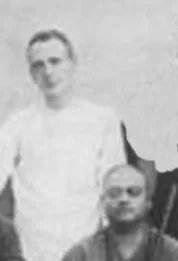
Swami Vivekananda wrote: "Those who think they have been helped by any thought of mine, ought to know that almost every word of it was published through the untiring and most unselfish exertions of Mr. Goodwin...a disciple of never-failing devotion, a worker who knew not what tiring was...."

( Delivered at Dacca, 30th March, 1901 ) At Dacca Swamiji delivered two lectures in English. The first was on "What have I learnt?" and the second one was " The Religion we are born in ". The following is translated from a report in Bengali by a disciple, and it contains the substance of the fir
Those of you who have been attending my lectures for the last month or so must, by this time, be familiar with the ideas contained in the Vedanta philosophy. Vedanta is the most ancient religion of the world; but it can never be said to have become popular. Therefore the question "Is it going to