
Poetry & Prose
Poems on Swami Vivekananda
( Letter to Miss. Alberta Sturges on her 23rd birthday, September 22, 1900)
This is Swami Vivekananda’s free translation of verses from Bhartrihari’s Sanskrit poem Vairâgya Shatakam.
One circle more the spiral path of life ascends And time's restless shuttle — running back and fro Through maze of warp and woof of shining threads of life — spins out a stronger piece. (Cf. a slightly different version of the first three lines of this poem which appeared in Swami Vivekananda’
1. We feel happy when you are happy, and we suffer when you suffer. Therefore, during these days of extreme adversity, we are striving and ceaselessly praying for your welfare and an easy way to save you from disease and the fear of an epidemic.
This article was recorded by Ida Ansell in shorthand. As, however, Swamiji's speed was too great for her in her early days, dots are put in the articles to indicate the omissions, while the words within square brackets are added by way of linking up the disconnected parts .

In 1889, Swami Vivekananda translated into Bengali selections from Book I, chapters 1-6 of Thomas à Kempis's The Imitation of Christ. They were published along with a preface in a now-defunct Bengali monthly magazine, Sâhitya Kalpadruma. The Swami's preface and Bengali translation, entitled "Is
After his experience of the macrocosm within the microcosm while absorbed in meditation under the peepul tree at Kakrighat, in 1890, Swami Vivekananda jotted down in Bengali fragments of his realization in his notebook.
Probably at the turn of the century, Miss Ellen Waldo gave these undated notes in Swami Vivekananda’s handwriting to her friend Sister Devamata, a member of the Boston Vedanta Centre, where they were later made available for publication.
[An undated and untitled, one-page manuscript in Swami Vivekananda’s own handwriting]

(Translated from an original Bengali writing of the Swami in 1889. The passage is the preface to his Bengali translation of The Imitation of Christ which he contributed to a Bengali monthly. He translated only six chapters with quotations of parallel passages from the Hindu scriptures.)
(Written by the Swami during his first visit to America in answer to questions put by a Western disciple.)
(Written by the Swami during his first visit to America in answer to questions put by a Western disciple.)
(Written by the Swami during his first visit to America in answer to questions put by a Western disciple.)
(Written by the Swami during his first visit to America in answer to questions put by a Western disciple.)
(This incomplete story was found among Swamiji's papers after he had passed away. It is printed as the last article in the Bengali book Bhâbbâr Kathâ.)
A man presented himself to be blessed by a sight of the Deity. He had an access of joy and devotion at the sight; and perhaps to pay back the good he received, he burst out into a song. In one corner of the hall, reclining against a pillar, was Chobeji dozing. He was the priest in the temple,
By the word "Shastras" the Vedas without beginning or end are meant. In matters of religious duty the Vedas are the only capable authority.
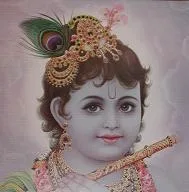
"O mother! I am so afraid to go to school through the woods alone; other boys have servants or somebody to bring them to school or take them home — why cannot I have someone to bring me home?" — thus said Gopâla, a little Brahmin boy, to his mother one winter afternoon when he was getting read

Non-existence can never be the cause of what exists. Something cannot come out of nothing. That the law of causation is omnipotent and knows no time or place when it did not exist is a doctrine as old as the Aryan race, sung by its ancient poet-seers, formulated by its philosophers, and made t
(Letter written by Swamiji, to accompany the First Report of the Ramakrishna Home of Service, Varanasi, February, 1902.)
(These lines there sent in a letter , March, 1899, by Swamiji, for embodying in the prospectus of the Advaita Ashrama, Mayavati, Almora, Himalayas.)
The success which attended the labours of the disciples of Shri Ramakrishna Paramahamsa in diffusing the principles of Hindu religion and obtaining some respect for our much abused faith in the West, gave rise to the hope of training a number of young Sannyâsins to carry on the propaganda, bot
[The following three chapters were discovered among Swami Vivekananda's papers. He evidently intended to write a book and jotted down some points for the work.]
(Reproduced from Swami Vivekananda in America: New Discoveries. These together with the English translations, were transcribed by Swamiji in six of his photographs.)
[Swamiji had made the home of the Hale family his headquarters during almost all of 1894 before the pivot of his activities moved eastward to the Atlantic Coast. It was on George W. Hale's letter paper and thus, presumably, during one of his stays in the latter's home, that Swamiji jotted down

(Translated from a Bengali letter written to Shrimati Mrinalini Bose from Deoghar (Vaidyanâth), on 23rd December, 1898.)

(Translation of a review of Ramakrishna: His Life and Sayings by Prof. Max Müller, contributed to the Udbodhana, 14th March, 1899.)
(This incomplete article was found in the papers of Miss S. E. Waldo. The heading is inserted by us — Publisher.)
It is with a heart full of love, gratitude, and trust that I take up my pen to write to you. Let me tell you first, that you are one of the few men that I have met in my life who are thorough in their convictions. You have a whole-souled possession of a wonderful combination of feeling and kno
Push on with the organization. Nothing else is necessary but these — love, sincerity, and patience. What is life but growth, i.e. expansion, i.e. love? Therefore all love is life, it is the only law of life; all selfishness is death, and this is true here or hereafter. It is life to do good, i