- Ramchandra Datta

S
Swami Vivekananda  ·  January 1, 1900
- Ramchandra Datta
SharefXin
InstanceBeginEditable name="Body Content"
  Tributes to Sarada Devi    
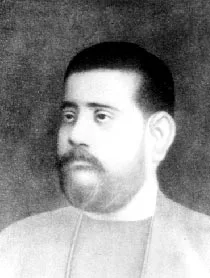
 

Ram Chandra Datta

"After all she was no ordinary wife. Could the wife of someone who was the master of thousands of [spiritual] orphans, the deliverer of unlimited number of reprobates, the jewel of the heart of the Lord of the Universe, deign to acquire the habits of beasts given to sexual appetites? The scriptures approve of man and woman for begetting a son. O Ma, you are mother to thousands of sons and daughters. Do you have to lower yourself to the status of dogs and jackals in order to become mother?"

, Srisriramakrishna Paramahamsadeber Jibanbrittanta [in Bengali] (Seventh edn. Kankurgachhi, 1357 B.E


InstanceEndEditable


InstanceBeginEditable name="Author Credit Bottom"

- www.vivekananda.net edited by Frank Parlato Jr.

InstanceEndEditable
SharefXin

Comments (0)

Leave a comment

More From Vivekananda

People that Swami Vivekananda knew
Biographical

People that Swami Vivekananda knew

By Swami Vivekananda · January 1, 1900

Friedrich Max Müller (December 6, 1823 – October 28, 1900), more regularly known as Max Müller, was a German philologist and Orientalist, one of the founders of the western academic field of Indian studies and the discipline of comparative religion. Müller wrote both scholarly and popular works on t

Swami Trigunatitananda
Biographical

Swami Trigunatitananda

By Swami Vivekananda · January 1, 1900

Swami Trigunatitananda, a direct disciple of Sri Ramakrishna was the first editor of Udbodhan. In 1902 he went to the USA, at the behest of Swami Vivekananda. He was the head of the Vedanta Society of Northern California, San Francisco, until his death in 1915.

Complete books online by the Swami
Books

Complete books online by the Swami

By Swami Vivekananda · January 1, 1900

How can we love the Vyashti, the particular, without first loving the Samashti, the universal? God is the Samashti, the generalised and the abstract universal whole; and the universe that we see is the Vyashti, the particularised thing. To love the whole universe is possible only by way of lovin