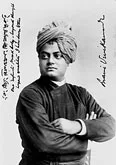
Photos of people and places associated with Swami Vivekananda
1863-1886
Baranagore Math 1886
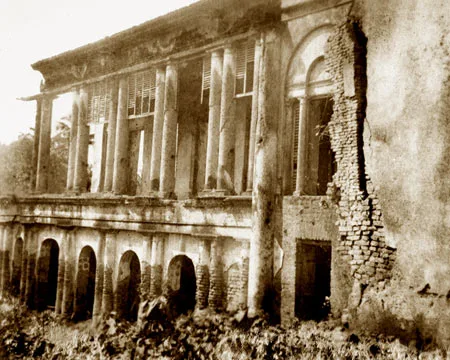
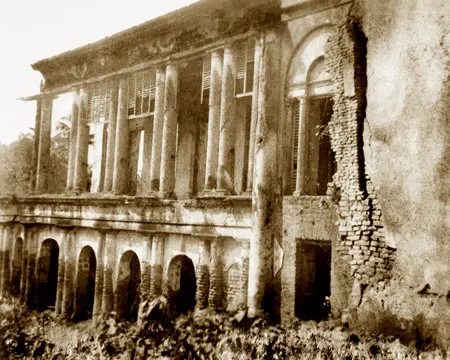
So in accordance with the good-will of this saintly householder (Surendranath Mitra), whom Sri Ramakrishna had tenderly called a Dand or demon of Shiva, the monks secured that house which became the Baranagore monastery. This was situated midway between Dakshineswar and the City of Calcutta, it was a dreary place. For years it had had no tenant. For years it had the appearance of being deserted. It was in fact in a ruined condition and sadly in need of repair. Besides being very old, it had the reputation of being haunted. It was two stories in height, but the lower story was absolutely useless, being the resort of lizards and snakes. The gateway had long since tumbled down. The verandah which flanked the front part of the upper story showed signs of decay; the main room at the back part where the monks lived was in a most dilapidated state. Indeed, none others would have lived there for fear of the building giving way. To the east of the building was another house which was used as a sort of chapel where the family-God of the owners was worshipped by resident priest. To the west was a garden overgrown with weeds and tall brush and undergrowth so that it resembled a jungle. The rooms of the ground floor were never occupied during the time the monks remained there except one in which lived the gardener of the landlord. They were exceedingly damp and dingy, and filled with all sorts of rubbish which several generations of landlords had allowed to accumulate and made no effort to remove. The garden was peopled by tall Sovanjan and mango trees, and a Vilva tree, giving a sombre aspect to the place. At the back part was a pond which had become overgrown with moss and was the breeding-place of mosquitoes. The whole place was weird.
There were many thrilling tales current concerning dark deeds which, it is said, had been perpetrated in this house and compound, but this was of long ago, and, besides, the Sannyasin disciples of Sri Ramakrishna had no fear of ghosts. The monks had chosen this dreary retreat because of its cheapness, but especially because it was adjacent to the Baranagore burning ghat where the body of the Master had been consigned to the flames. They desired to be near the sacred river also, as their Master always did, and the Baranagore monastery was but a few minutes walk from the Ganges. Here the monks were glad to live, away from the turmoil of city life, in the solitude where few cared to interrupt their days of meditation.
InstanceEndEditable
InstanceBeginEditable name="Author Credit Bottom"
- www.vivekananda.net edited by Frank Parlato Jr.
InstanceEndEditable