InstanceBeginEditable name="Body Content"
A HISTORY OF INDIAN MUSIC'
SWAMI PRAJNANANANDA
VOLUME ONE
( Ancient Period )
RAMAKRISHNA VEDANTA MATH
CALCUTTA : INDIA.
Published by Swaxni Adytaanda
Ramakrishna Vedanta Math, Calcutta-6.
First Published in May, 1963
All Rights Reserved by
Ramakrishna Vedanta Math, Calcutta.
Printed by Benoy Ratan Sinha at Bharati Printing Works,
141, Vivekananda Road, Calcutta-6.
Plates printed by Messrs. Bengal Autotype Co. Private Ltd.
Cornwallis Street, Calcutta.
DEDICATED TO
SWAMI VIVEKANANDA
AND HIS SPIRITUAL BROTHER
SWAMI ABHEDANANDA
PREFACE
Before attempting to write an elaborate history of
Indian Music, I had a mind to write a concise one
for the students. Opinions differ regarding the
import, scope, characteristics as well as method of
treatment of history of Indian music. So far as
is known to us there are different kinds of history
of music taught in schools, colleges and universities
of foreign lands. Indian people claim that their
music is the most ancient one in the world, but
no serious attempt has as yet; been made to write
a chronological history of music of India. India
indeed is a great country, the fountain-head of the
world civilization and culture. Most of the
historians both of the East and the West admit
that many of the civilized nations of the world are
indebted to India for their materials of civilization,
aft and culture. India does not lack in authentic
materials for constructing a history of music of
her own, for putting before the admiring gaze of
tbe world, her glorious heritage in the field of art,
education and culture.
It gives me pleasure to mention in this connection
that some valuable articles on the history of Indian
music, from the gifted pens of the connoisseurs of
music, published from time to time in different
papers and journals, have left; behind them impress
of permanent value in the field of study and culture
( vii )
A HISTORY OF INDIAN MUSIC
of Indian music. A compendious book on history
of music has recently come out from the pen of a
scholar like Shri P. Sambamoorthy of Madras.
The precious articles of Dr. V. Raghavan in this
field are noted for their clarity and scholarship.
His illuminating serial articles on Some Names in
Early and latter Sangita Literature, An Outline
Literary History >of Indian Music, appeared in the
journal of the Music Academy, Madras, and
Music in the Deccan and South India, appeared in
the "Behar Theatre", Behar, and other articles,
appeared in the Trivai, the Bulletin of the Sangita
Na'tak Akadami, New Delhi, are worth-mentioning.
Recently the University of Agra has honoured
Dr. Saratchandra Shridhar Paranjape of Bhopal
by conferring a doctorate on him for his thesis on
the history of Indian music, from the ancient
period upto the Gupta period. Thus new hope is
dawning on the horizon of history of Indian music,
and paving the path for writing a future authentic
history of music of the Indian people.
The present volume is an attempt for tracing out
firstly the historical evolution of the musical
materials like microtones, tones, murcchands,
rdgas, scales, gifts and prabandhas, ve\en!d, vemt,
and tnridanga, dances and hand-poses, rhythm and
tempp as well as the philosophical concept that are
very essential for the study of history of Indian
music, and secondly, the chronological accounts of
.history of music of India in different ways in
( -v
Vlll )
PREFACE
different periods, including development of music
in Bengal and South India.
It is needless to mention that this present small
volume will act as a guide to the students of
history of Indian music. I have already published
two volumes of Sangita O Samskriti in Bengali (in
the second edition, the name has been changed into
Bharatiya* Sangiter Itihdsa), wherein I have dealt
with Indian music upto the Gupta period. The
third volume of the book is under preparation.
The present first volume deals with the ancient
period, covering the primitive one down to the 12th
century A.D. The second volume will cover the
mediaeval and modern periods i.e., from the 13th
century upto the 20th century.
I express my deep sense of gratitude to
Dr. Niharranjan Ray for writing the 'Foreword'
of this book, which has enhanced its value as well
as its prestige. I also express my gratitude to
Dr. V. Raghavan of the Madras University for
giving me permission to print as an 'Appendix' to
this volume his learned article, Sdmazwda and'
Mtisic, which was delivered under the auspices of
the Convention in Delhi on the 13th October, 1962
and subsequently published in the Journal of the
Music Academy, Madras, in 1963. Though I have
dealt with the problem of sdmagdnti in this book,
yet I have included Dr. Raghavan's article for the
fuller knowledge of the subject for the students.
I also express my gratitude to Shri Subodh
A HISTORY OF INDIAN MUSIC
Kumar Chatter ji, B.A,, for making necessary
corrections in the manuscript before sending it to
the press. It will be of great pleasure to me if
the Students as well as the lovers of Indian music
are benefitted through its perusal.
It should be mentioned in this connection that
the diacritical marks a a a a have been used
throughout the book to express the sound of a i.e.,
aa.
Swami Prajnanananda.
Ramakrishna Vedanta Math,
19B, Raja Rajkrishna Street,
Calcutta-6.
May, 1963
FOREWORD
Swami Prajiianananda of the Ramakrishna
Vedanta Math of Calcutta, has been well-known
in Bengal for more than a decade and a half, as
one of our foremost authorities on the history,
form, and technique of Indian Classical Music.
For all these years he has been publishing, in
Bengali, volume after volume, each one incorporat-
ing his findings and interpretations on practically
all aspects and phases of his chosen field of study.
This treatise in English is a summary of some of
his basic findings and observations, put in the form
of a simple historical narrative, more or less in the
shape and form of a student's or general reader's
hand-book on the subject.
I believe the book fulfils its purpose.
A good Sanskritist, deeply religious in spirit
and approach to life and its afifairs and philoso-
phical in training and discipline, Swami
Prajnanananda-ji gives evidence of his intimate
knowledge of early and mediaeval texts on Indian
music, its religious and spiritual associations and
its philosophical background. Yet what is most
gratifying is that he never loses sight of the
historical perspective; indeed, his study is directed
from the point of view of what; he calls "dialectical
method of historical -evolution". In whatever,
therefore, he brings into his orbit of study and
A HISTORY OF INDIAN MUSIC
analysis, whether it is shrutis or svaras, rdgas or
prabatidhas, mudrds or musical instruments, he
follows the history from mystic origins to almost
the beginning of our times, and more, he cites
evidences that are not merely textual, but literary
and archaeological as well, evidence that can be
fixed in time and space more or less objectively.
His narrative of the history of music in our
country from primitive times onwards is also very
interesting reading. The inclusion of rural and
folk music and a separate chapter on the contri-
bution of Bengal to Indian music enhances, I am
sure, the value of the narrative.
I feel very thankful that I have been asked to
introduce the book to the reading public, though
I am sure, Swami Prajfianananda does not need
any introduction as a writer and scholar in the
field of Indian music.
Prasad Bhavan
68-4A, Puma Dos Road, NIHARRANJAN RAY
Calcutta-29
April 11, 1963.
( xii )
CONTENTS
Subject Page
Preface ....... vii ix
Foreword by Dr. N. R. Ray .... xi xii
Prelude 17
CHAPTER I & 14
Music that evolved on the Indian soil, 8 What is
history, 8 What do we mean by history of music, 9
How to construct history of music, 9-10 Import-
ance and utility of history of music, 10-11 Music:
sacred and profane, 11 Division of ages, 12-13
Origin of music, 13-14.
CHAPTER II 1582
Historical evolution of different music-materials, 15
Evolution of microtones (shrutis), 15-16 Five jdti-
shrutis and 22 shrwtis (table), 17-18 Table No. 2, 18
Evolution of tones, 19-23 Ud&tta, anuddtta and
svarita, 19 The emergence of the solfa syllables, 20
The Vedic tones, 20- -The Vedic tones evolved in
a downward process, 20 The laukika tones evolved
from the register tones, uddtta, etc., 21 The ddhdra-
shadja, 21 Different numbers of shrutis in different
periods (Table No. I), 28 Table No. II, 23 Evolu-
tion of murcchand, varna, alamkdra, tana and stJidya,
23-29 Sth&na and murcchand in the Rdmdyana, 24
The Rdmdyama and Abhinavagupta on pdthya, 24
Bharata on pdthya, 24-25 Murcchand in the Ndradi-
shikshd and the Ndtyasdstra, 25 The murcchands
evolved from the gramas, 25-26 Murcchand of 12
tones, 26 Murcchands with 7 tones are divided into
four parts, 26 Kohala on the murcchand, 26-27 The
function of the varna, 27 The tanas in old treatises,
27-28 Different kinds of tana, 28 The gamaka and
the kdku, 29 The sthdya, 29 Evolution of ten essen-
tials (dasa lakshanas), 29-30 Bharata on the ten
( . V
Kill )
A HISTORY OF INDIAN MUSIC
Subject Page
essentials, 30-31 Graha and amsha, 31-32 Nydsa,
viddri, samnydsa, alpatva, vahutva, etc., 32-33 Vadi,
samvddi, anwuddi and vivadi, 33 Evolution of the
concept of rdga, 33-34 Rdgas in the Rdmdyana,
Mahdbhdrata-Harivamsha, 34 Evolution of the rdga f
35 Jdti or jdtirdga and six grdmardgas, 35-36 Rdgas
in the Kudumiamalai Rock-Inscriptions, 36 Different
bhdshdrdgas, 37 Shuddha and vikrita jdtirdgas as
described in the Ndtyasdstra, 37-38 Evolution of the
grdmardgas, 38 The seven shuddha grdmardgas
evolved from the gramas, shadja and madhyama, 39-40
Evolution of the bhdshdrdgas or angardgas, 41 The
evolution of the rdgas was in a gradual process, 42
Evolution of the scales, 42-47 What do we mean by
the word, scale, 42-43 The sdman scale, 43-44 The
shadjagrdma was the fixed scale of the Vedic music,
44-45 The mcla and the melakantd, 46-46 Evolution
of the gitis and the prabandhas, 47-48 The jdtiqdna,
48 The brahma- gitis , 48 The gitis, magddhi, ardha-
mdgadhi, etc., 49 The definitions of the rdgagitis,
shuddha, etc., 50-51 The probandha-giti, 51-52 The
limbs (angas) of the prabandha, 52 Three categories
of prabandha i.e., suda, dli and wprakirna, 52-53 The
new designs of the dhruvapada (dhrupad), 53-54
Evolution of the wecnd, venu and mridanga, 54-59
The vetna and the dhanuryantram, 55 The evolution
of vcnu, 56 Different kinds of ve,end in the Vedic age,
56-57 Division of the musical instruments, 57 The ,
veena, wna, 57-58 The four-stringed vfynd from the
Ruper excavation, 59 Evolution of dance in India and
its significance, 59-60 Statuette of bronze dancing
girl and that of the dancing Nataraja Siva from the
mounds of Mahenjo-daro and Harappa, 60 Hand-
poses, 60 Nritya, nritta, and ndtya, 61 Mdrga and
desi types of dances, 61-62 Dances in the times of
Panini, Patanjali and Bharata, 63 Tandatva and Idsya,
63 Dances during the time of Kalidasa, 64 Dances
in different periods, 65 Evolution of the hand-poses
(mudrds), 66-71 The symbolized figures of the hands
and different limbs of the body during the time of the
( xiv )
CONTENTS
Subject Page
sdman singing, in the Vedic period, 67-68 Narada
about the hand-poses, 68-69 The updsand-mudrds of
the Hindus, Buddhists, Jains and others, 69 The four
kinds of abhinaya, 20 Hand-poses as described by
Bharata and Nandikeshvara, 70-71 Evolution of
rhythm and tempo, 71-78 Kdla and tola, 71 Hans
Tiscler on rhythm, 72 The Vedic meters, 73 The
talas, sa-shabda and nis-shabda, 73 Evolution of
eight kinds of tdla, 74 Two kinds of jdti of the
talas, 74 Different grahas of the tolas, 75 The
evolution of yati, 75-76 The evolution of prastdra,
76 Different rhythms of the Karnatic music, 76-77
The modern talas of the North Indian system of
music, 77 Historical evolution of philosophical con-
cept in music, 78-82 The Mahdbhdrata about seven
tones, 79 Philosophical ideas in the Brihaddeshi and
the Sangita-samayasdra, 79-82'.
CHAPTER III 8388
Music in the primitive time, 83-86 The functional
music, 83 A. B. Alexander on the primitive music,
83-84- Mr. Hambly on the primitive music, 84 The
musical instruments of the primitive time, 85
Some aboriginal stocks of the primitive singers,
85-86. Music in the prehistoric time, 86-88 The
mounds of the dead in Mohenjo-daro and Harappa,
86 Musical remains from the Indus civilization, 87
The wena from the Ruper level, 87 A shell piece
with grooves at two places, found from, the Lothal ex-
cavation, 87-88.
CHAPTER IV 8996
The sdmagdna, 89 The stobhas, 89 The women
would devoted their time in music in the Vedic time,
90 Music in different sacrifices and rites, 90-91 The
tones of the Vedic music were in descending series, 91
Some subsidiary tones of the Vedic music, 91 The
veends, v&na and kdtydyawi, 92 The four song
books and four types of Vedic ganas, 92-93 The sing-
A HISTORY OF INDIAN MUSIC
Subject Page
ing process of the Vedic music, 93 The Vedic songs
had their fixed scale, 93 The vakra and riju move-
ments of the Vedic tones (Table), 94 Pt. Lakshmana
Sankara Bhatta-Dravida and M. S. Ramasvami
Aiyar on the methods of the movements of the Vedic
tones, 94 The seven Vedic tones evolved from the three
register tones, 94 There were various recensions
(shdkhds) of singing the sdmagdna, 95 The stobha,
95 Four kinds of sdmagdna, 96.
CHAPTER V 97103
Music in the classical and Epic times, 97-103 The
g&ndharva type of music, 97 The real significance
of the word rdga, 98 Music in the works of Panini
and Patanjali, 98-99 Music in the Bhuddhist period,
99-103 The thera and theri gathds, 100 The gatha,
ndrasamsi, 100 Music in the Matsya and Gupttta
jdtakas, 100 The veends, chvtra and vipanchi, 101
Music in the Mahayana texts, 101-102 The records left
by Fa Hien, 102 Music culture during Harsa
vardhana's time, 103.
CHAPTER VI 104107
Music in sculptures and bas-leliefs, 104 Rajendra Lai
Mitra on Sanchi and Amaravati, 104-105 Music
remains in the temples at Bhubanesvara, 105 The
dancing Nataraja in the cave temple of Badami, 105
Drums, represented in the temple-halls of Muktesvara
and Badami, 106 Dance figures in the Parasurames-
vara temple, 106-107 The dancing Nataraja of
Chidamvaram, 107.
CHAPTER VII 108139
Setback and reconstruction in Indian music, 108
Music coming into definite form, 109 Contact of
India with other countries, 110 It is said that
Pythagoras visited India and carried with him the
materials of Indian culture, 110 Cultural and com-
mercial contact between the prehistoric Indus cities
CONTENTS
Subject Page
and other Western and most ancient countries, 111
Contract of India with China, 111-112 Contact of
India with Central Asia, 112 Different schools of
dance, drama and music, 112-113 The schools of
Narada, Bharata and Nandikesvara, 113 Brahma-
bharata and Sadasi vabharata, 113-1 14 Different
Naradas, 114 The svaramandcda as described by
Narada in the Shikshd, 115 The gwnawrittis, as
described in the Ndradishikshd, 115-116 The vaidika
and laukika tones, 116 Gdtra and ddravi veends, 1 lo-
ll/ Bharata, the father of the methodical system of
music ,117 The Pythagorian inicrotonal system,
118-119 Bharata's method of determing of the
twenty-two shrutis, 120-122 A short survey of
Bharata's Ndfiyasdstra, 112-128 The veends, chitrd
and vipanchi, 129 The remains of the saptatantri-
veend in the Pitalkhora Caves, 129-130 The kutapa,
131 Evolution of the tuning-method or mdrjand,
131-132 Three kinds mdrjand, 132 The modern
method of tuning in the tumburd, 133 Nandikesvara
and his works, 133-134 Bharata and Nandikesvara,
135 A short analysis of the work, Bharatdrnava,
136-137 The age of new awakening, 136-138^-The
murcchands and grdmardgas in the Ndradishikshd,
137 Aryan and non-Aryan elements in Indian music,
138-139.
CHAPTER VIII 140143
The age of renaissance, 140 Eighteen jdtis, sddhdrana,
antara and kdkali (modified) tones, 141-142 The
alamkdras, gitis and dance in the Ndtiyasdstra, 142
What do we mean by the word jati, 142 The dhruvds,
143 The tonal bases and their distributing units,
143.
CHAPTER IX 144150
Culture of music in the Gupta and Maurya period,
114 Kumara Davi, 145 The Sakas and the Pahlavas
ha4 interest in music, 145 Kalidasa's knowledge of
( xvii )
A HISTORY OF INDIAN MUSIC
Subject Page
music and dance, 145-146 Dance-types, as described
in different works of Kalidasa, 146-149 Dipadikd,
jhambhalika, etc. classical dances, 147-148 Prof.
Ghurye on dvipadika and other dances, 148 Vema-
Bhupala and Rana Kumbha on dance, 149 Shudraka
and music, 149 Vishnu Sharma and music, 149
Shri-Harsa and Damodaragupta on dance, 150.
CHAPTER X 151165
Indian music in the post-Bharata period, 151 Kohala,
151 Dattila, 151-152 Shardula, 152 Yashtika, 152
Durgashakti, 1 52 Vishvakhila, 1 53 Visvavasu,
153 Svati, 153 Kirtidhara, 153 Lollata, 153
Udbhata, 153 Saunaka, 154 Nandikeshvara, 154-155
Matanga, 155-156 Matrigupta, 157 The author
of the Natyalochana, 157 Utpaladeva, 158
Abhinavagupta, 1 58-1 59 Parshvadeva, 1 59-160
King Nanyadeva, 160-161 Someshvara, 162-164
Saradatanaya, 164 and other musicologists, 165.
CHAPTER XI 166176
Role of Bengal in the domain of music, 166-167
Sumudragupta, the veend-player, 167 King Harsa-
vardhana of Kanauj and music, 157 Kalhana, and
Damodaragupta about music of Bengal, 167 The
music culture during Pala and Sena Rulers, 168 The
charyd and vajra gitis, 169 The singing method of
the chary agitij 170 Music culture during Lakshmana-
sena's time, 171 Jayadeva contribution to the music
of Bengal, 171 The nature and the raga* of the
Gitagovinda, 172 Rana Kumbha's commentary of
of the Gitagovinda and the change of form of the
rtigas, mentioned in the astapadi, 173-174 Similar
works like the Gitagovinda, 175 Theform of presenta-
tion of astapadi in the South, 176.
CHAPTER XII 177190
Role of South India in the field of music, 177 The
ancient Tamil epic, Silappadikaram, 177 The Jain
( xviii )
CONTENTS
Subject Page
dictionary, Tivakaram, 178 The hymns and rdgas,
as described in the Tevdkaram, 178 The fans are
divided into three main classes, 178-179 The shuddha
scale of the Tamil music, 179 The book, Paripadal,
179 Dr. Ragghavan regarding the Tamil worked on
music, 780 The Silappadhikaram has described about
22 microtones, 180 The epic drama is divided into
three, ISOThe pan and its four varieties, 180 The
names of the seven tones of the Tamil music, 180
The nine classes of prabandha, 180 The ancient
scale of the Tamil music, 181 Different musical instru-
ments in the Tamil music, 181 Music as developed
during the Pallava Rulers, 181-182 The Vakatakas
and the Pallavas, 182 Raja Mahendravarman was an
accomplished zwna-player, 182 Prof. Nilkanta
Sastri on the Pallava Rulers, 183 The religio-devo-
tional hymns of the Nayanars, 184 The new names of
some of the old rdgas, ISA Dr. Raghavan about the
Saiva hymns of the Nayanars, ISA Music in the
Chola period, 185 The Dancing hall at Chidambaram,
185-186 MM. Ramakrishna Kavi about the dance-
figures at the Chidambaram Nataraja temple, 186
The musical modes during the time of Rajendra Chola
186-187 The ages of Rajaraja and his son Rajendra,
187 Music in the Chalukya period, 188 King
Somesvara and music-materials, 188-189 The
ragas, tolas and prabandhas, as described in the
Abhildsdrthachintdmaniy 189 The ancient period of
history of Indian music is very important one, 190.
APPENDIX 191198
Samaveda and music, 191 The Samaveda is the
musical version of the Rigveda, 191 The arrange-
ments of the Samaveda, 191 The purvdrchika and the
uttardrchika, The udgdtris and the sdmans, 192
According to the Sdmavidhdna-brdhmana, the saman-
singing, 192 The terms prakriti and vikriti, 192
Seven kinds of gdna, 193 The different kinds sdmans
like gayatra, etc., 193 The utterances of the syllables
A HISTORY OF INDIAN MUSIC
Subject Page
in the texts of the sdmans, 193 The stobhas, 193
The syllables of the aldpa, 194 The Rik and the sdman
differ in the method of the sdman-singmg, 194
Matanga and Kallinath in this connection, 194-195
The esoteric significance of the ^awaw-smging*, 196
The Mahdbhdsya on the ^aftum-singing, 195 The
sdman-scale, 196 The jdtis of the sdmans, 196 The
rendering of different sdmans, 197 Indian music still
harks back to the Samaveda, 198.
BOOKS TO BE CONSULTED . . . 199200
INDEX 201207
PLATES 210
A HISTORY OF INDIAN MUSIC
PRELUDE
The ancient history of Indian Music is funda-
mentally the history of her people, civilization and
culture. The continuity of Indian civilization and
culture, from the most ancient time uptil now, hab
one of its sources in the geographical configuration
of the country. Many historians are of opinion
that as Hinduism was a common faith and the
Hindu kings were in power, there was a religious
and cultural unity and affinity among the Indian
people as a whole. Decadence set in with the fall
of Hindu India, and reached its climax during the
period intervening the 9th to llth centuries A.D.
That again was the cause of success of the Turkish
and some other foreign invasions. There was a
great revival in arts and letters in the 15th-16th
centuries A.D., with the rise of the Mughal Empire
in the North India on one side and the Hindu
Empire in Vijayanagar in the Deccan on the other.
In the beginning of Maghadhan ascendancy, the
infiltration of 'the Yavanas began. The word
'yavana' here means the Greeks or some other
foreign peoples like the Sakas or Scythians and
others. During the decadence of Mauryan imperia-
lism, the Graeco-Scythian powers invaded India
(324 B.C. 320 A.D.). Though the advent of the
A HISTORY OF INDIAN MUSIC
Muslims, politically speaking, commenced with the
conquest of Sind by the Arabs and that of the
Punjab by the Sultans of Ghazni, it was 'Ala-ud-
din Khalji, who got a strangle-hold over this
country. Dr. R. C. Majumdar is of opinion that
the reign of 'Ala-ud-din Khalji really witnessed the
rapid expansion of the Muslim dominion over
different parts of India. The name of Amir
Khusrau should also be linked with that of 'Ala-ud-
din for our purpose, for the period witnessed the
innovation brought about in the art of classical
music of Muslim India. During the period of
Sharqui rule at Jaunpur, music, architecture and
other types of culture received fresh impetus for
their development in a novel manner.
The history of India from 1526 A.D. to 1556
A.D. is mainly the story of the Mughul-Afghan
contest for supremacy on the Indian soil. Akbar
the Great ascended the throne in February, 1556
A.D. and ruled upto October 1605 A.D. During
this period, music, architecture, pointing and other
fine arts, (together with literary culture attained
high watermark of development. During the
time of Jahangir and Shah Jahan (1605-1657
A.D.), fine arts, including dance and music fully
received Imperial patronage. During the reign of
Aurangzeb (1658 to 1707 A.D.), the tempo of
culture of classical music became slow to some
.extent, and during that of his successors, it became
more and more slothful and stagnant, and at last it
PRELUDE
entirely ceased to receive support from the Mughul
court during the reign of Shah Alam II (1759-1806
A.D.). But strange enough the reign of Muham-
mad Shah (17194748 A.D.) became a landmark
in ( lhe domain of Indian classical music. A new
type of vocal music, vilambat or slow kheydl on
the model of the traditional dhruvapada became in
vogue, through the expert medium of Ustad
Niyamat Khan, saddrang, and at the same time the
culture of dhruvapada was raised to its pristine
glory.
Besides the courts of the Afghan, Pathan and
Mughul rulers, dance, music and drama, together
with other fine arts also found free outlet under
the patronage of the indigenous rulers as well as
the art-loving wealthy people of both the North
and the South India. In Kashmere, Bengal, Bihar,
Assam, Kamarupa, Nepal and Maharastra, the
tradition of culture of classical dance and music
was fully maintained with proper care. The
classical dance, drama and music received the
royal patronage from the rulers like Lalitaditya
Jayapida Vinayaditya of Kashmere. Kalhan the
historian of Kashmere has recorded these facts in
his history of Kashmere, the RdjaParangini.
Dance and music got full support at the hands
of the Gupta, Pala and Sena rulers of Greater
Bengal. The charyd and vajra gitis of the
Vajrayani Buddhist Siddhacharyas of the 10th-
llth centuries A.D., the Gitagovindappdagitis of
A HISTORY OF INDIAN MUSIC
Kavi Jayadeva of the early 12th century A.D., the
Kristhnakirtana of (the Vaishnava savants like Vadu
Chandidasa, Vidydpati and others of the 14th-15th
centuries A.D., the ndma-kirtana and the Hid or
rasa kirtana of Shri Chaitanya and Thakur Narot-
tamadasa of the 16th-17th centuries A.D., and the
classical and folk as well as the classico-Bengali
songs of the 18th-20th centuries A.D., enriched the
treasury of Indian music.
The materials for history of Indian music of the
ancient period can be collected from the Vedas
and specially from 'the Samaveda, Ihe womb of
music, the Shikshds and the PrdPishdkhyas, the
Ndtyasdstra and its commentaries, the classical
Sanskrit dramas and literature, the Buddhist
literature and the Jdtakas, 'the Brihaddcshi and
the Sangitasamayasdra, the Silappadikaram and
the Tevaram and other ancient Tamil literature, as
well as from the rock-cut inscriptions and sculp-
tures, chiselled on the railings, facades and walls of
different Buddhist, Hindu and Jain Stupas,
Viharas and temples.
Similarly the materials of history of Indian music
of the mediaeval and modern periods can also
be collected from the records of political and social
happenings of those two periods. The epochs of
Baijubaora, Nayaka Gopala, Raja Man Singh
Tomar, Baksu, Macchu, and others, together with
that of Swami Krishnadasa, Swami Haridasa,
Mian Tanasena and others must be considered to
4
PRELUDE
be important landmarks in the history of North
Indian music of 'the mediaeval period. In the South,
we had Tyagaraja, Muthusvami Dikshitar,
Shyama-shastri, Svati Tirunal and others, who put
a mark upon the mediaeval history of Karnatic
music. Again, the music works like the Git\a-
prakdstha of Swami Krishnadasa, the Rdgat\a-
rangini of Lochana-kavi as well as some of the
Persian books like Mdnakutuhala of Fakir-ulla, the
Toft-ul-hind of Mirza Khan, the Ma'danul-
moosiqui of Hakim Mohammed Karam Imam of
the court of Wajid Ali Shah of Lucknow and the
Ndgmat-e-asaphi of Md. Rezza Khan are the land-
marks of history of Indian music of the mediaeval
period of North India. In this connection,
mention may be made of the main works like
Samgraha-chiiddmani of Govinda Dikshit and the
Chatudandiprakdshikd of Venkatamakhi, which
have constitued the mediaeval history of South
Indian music. The Rdgadarpana (Hindi transla-
tion), 'the Sangitadarpana of Damodara (Sans-
krit), the Sangitataranga of Radhamohan Sen of
Bengal, the Rddhdgovinda-sangitasdra (Hindi) of
Frajtap Singh Deo of Jaipur, etc., contain impor-
tant materials for history of music of the Moham-
medan period. The contributions of Pandit
Achrekar, Prof. Deval, Pandit Bhatkhande of
Maharastra, and Sir Saurindra Mohan Tagore of
Calcutta, Bengal, are essential for the history of
Indian music of the modern period.
A HISTORY OF INDIAN MUSIC
Mere heresies and stories, unsupported by
reliable facts, arguments and reasoning, must not
be regarded as authentic materials for the construe-
tion of the history of music. Although they might
have been collected and preserved with care, they
must always be weighed upon the scale of verifica-
tion of facts and traditional records, aided by
arguments and reasoning. Some are inclined to
believe dogmatically that old Ustads and the
upholders of the ghardiids are the only persons
capable of supplying records and materials for
construction of a reliable history of music,
but that is merely a blind faith, having 110
tradition and argument. True historians are rather
merciless in this respect, because they do not believe
in anything which is not based upon traditional
facts and reasoning. So the history of music must
always be built upon the solid rock of traditional
as well as textual materials, supported by reasoning
and sound proofs. From the statements of Captain
Willard and some of the Western writers on Indian
music, we come to know that from time to time
conferences used to be called upon to ascertain the
real and genuine system and standard scale of
Indian music, and stalwart Hindu and Muslim
Tmsicians used to be invited at those conferences,
and as such the system used to undergo many
changes from time to time.
The culture of classical, classico-folk and folk
music are being now patronised by the Government
PRELUDE
of India and the State Governments, and 'their
courses will certainly continue to flow uninter-
ruptedly towards the near and distant future, so
as to preserve the glorious tradition of fine arts of
cultural and historical India. It is at least a
pleasure to admit in connection with the history
of Indian music that some of the modern researches
on music in the Science Laboratories and experi-
ments in the field of crops and trees have unveiled
the inner nature of Indian music, and have enriched
its historical and scientific values as well.
7
CHAPTER I
Music that evolved on the Indian soil and was
cultured all through ages % in diverse ways and
forms by ilhe Indian people and nurtured in a
religious and spiritual atmosphere, is called 'Indian
music'. Not only Indian music, but also music o
all the countries evolved in the hoary past among
the aboriginal primitive tribes in a very crude and
simple form. It is commonly believed that it
originated from Nalture. But it has a systematic
ar:d chronological history, as it passed through
different stages of evolution in order to take shape
as a complete system of science and art.
I. What is History :
The creative genius of India had been busy in
giving expression to art in all its aspects through
ages. They are prolific in contents and uplift-
ing in nature. The history of Indian culture and
civilization is not only glorious but amazing as
well. Now, what do we mean by history? A
history, in its truest sense, is an interpretation of
the genuine happennings of the events and facts
in the progressive human society. C A history is a
collection of records or chronicles of incidents and
evolution and involution of different matters or
subjects, that happened and had their beings in the
8
HOW TO CONSTRUCT HISTORY
past, have so in the present, and will happen in the
future.} The music of India has an interesting and
eventful history of its own. Having its origin in
the primitive society, it kept the tempo of its
triumphal march throughout ages, prehistoric,
historic or Vedic, post-Vedic or Classical and post-
Classical. It will again resume its march through
the near and distant future in order to attain
perfection, and in the process, it will adjust; and
harmonize itself with the taste and temperament
of the growing and changing society.
II. What do We mean by History of Music :
A history of music is, therefore, the systematic
and chronological records of musical thoughts and
materials that evolved in different ages in a
gradual process. It requires collection, arrange-
ment and preservation of the facts and findings
relating to music in a systematic order. A history
of Indian music is a saga of musical thoughts of
the Indian people, as written in their subconscious
mind. It has its birth, growth and progress in
Indian society, and has religious and spiritual out-
look. A history of Indian music is a wide subject,
the range of which is extended from the remote
antiquity uplto the present time.
III. How to construct HisiPory of Music:
A history of Indian music can be constructed
from the materials as found in the annals of
A HISTORY OF INDIAN MUSIC
different periods, and they are, in fact, the land-
marks of history of Indian music. Those materials
can be classified tentatively under four main heads :
(a) the treatises of music, written or compiled by
different authors in different ages; (b) the rock-
cut temples, tablets and inscriptions caused to be
carved and inscribed by different rulers of differ-
ent times, together with sculptures, paintings,
copper-plates and coins of different periods; (c)
the writings of foreign writers on music and drama,
as well as the history of music of other nations;
(d) the private diaries of the musicians and musi-
cologists, including the local traditions, transmitted
orally through ages, and the folklores and
anecdotes of music. All these materials are
required to be properly studied and verified in their
true historical perspective and be consulted
in a comparative manner. The facts, dates and
forms of music and types of musical instruments
and dances of different periods should be
studied with care, and also be collected and
arranged in a systematic way. As music was
considered to be a part and parcel of the art and
science of drama in the classical period, its struc-
ture and technique, in relation thereto, should also
be studied in this context.
IV. Importance and Utility of History of Music :
The study as well as the culture of music loses
much of its zest without the knowledge of history
10
MUSIC : SACRED AND PROFANE
cr historical aspect of music. Music developed in
a gradual process. As taste and temperament of
the society have been changing all the time
through ages, so forms and patterns as well
as the qualities of music are subject to change
in different periods of history. A student of music
should, therefore, critically 'take note of those
changes and compare one with the other, so as
to get the full vision of development of music of
different ages and climes. A sense of historical
perspective is necessary in studying the art and
science of music, and this method of study is sure
to make the knowledge of music perfect, whether
practical or theoretical.
V. Music: Sacred and Profane:
The history of Indian music can be divided into
tw5 main periods, vaidika (Vedic) and laukika
sacred and profane. The sdmagdna, together with
its various forms, constitutes the fabric of -the
vaidika music, while the gdndharva and formalised
desi music form that of the laukika musia Sir
Jadunath Sarkar has said that "it is the duty of
the historians not to let the past be forgotten He
nmst trace these gifts back to their sources, give
them their due places in time-scheme, and show
how they influenced or prepared the succeeding
ages, and what portion of present day Indian life
and thought is the distinctive contribution of each
race of creed that has lived in this land''.
11
A HISTORY OF INDIAN MUSIC
VI. Division of Ages:
As the range of history of music is wide, it will
be convenient to divide it into different units or
periods, so as to enable a historian to arrange and
represent the facts and records of development and
culture of music, so that one may adequately and
easily grasp the significance and value of music.
The history of Indian music can, therefore, be
divided into three broad periods, viz. (1) from the
most ancient times to the end of 'the twelfth
century A.D. ; (2) from the thirteenth century to
the eighteenth century A.D.; and (3) the subse-
quent period. So the periods may be enumerated
as: (1) Ancient, (2) Medieval, and (3) Modern.
Pandit Vishnunarayana Bhatkhande has divided
the history of Indian music into ( 1 ) Hindu period,
(2) Mohammedan period, and (3) British period.
"Each of 'these periods", he has said, "may again
be sub-divided, if necessary, into two divisions,
viz. (1) the earlier, (2) the later". In support of
his views, Panditji has further said: "the Moham-
medans came into contact with this country as
ruling nation in the llth century A.D., and
remained here as such till about the end of the 18th
century, after which date the country passed under
the domination of our present rulers, the British.
* * The Hindu period, according to this classifica-
tion, begins from the Vedic times and extends right
up to the end of 10th century A.D.". We think
12
ORIGIN OF MUSIC
the former divisions, as mentioned above, can be
safely accepted for many reasons.
VII. Origin of Music:
Various grotesque and mythical stories are
current regarding the origin of music, both Indian
and foreign. The statement of (the Alaxaridrian
Chronicles about the invention of music by the Sons
ol Seth or that of the Mosaic literature about
J'obal's invention seems to be garbed in mythological
allusions. Homer's discovery of a shell of tortoise
on the bank of the Nile or on the top of the Mount
Kyllene are all myths. Sir John Strainer says in
connection with the music of the Bible that the
origin of music is inseparable from 'that of lan-
guage. Darwin, Rouseau, Herder, Herbert
Spencer and other Western savants have advanced
their respective views regarding it in different ways.
According to Darwin, music evolved from the
imitation of the calls and cries of the animals and
birds. In the Rikprdtishdkhya (the grammar of the
Rigveda) and musical treatises of India, this theory
finds support to some extent.
Father Schmidt and Carl Stumpf are of opinion
that music evolved like speech "from the need to
give signals by sound". It has been mentioned in
the Vedic literature that music evolved out of the
rics or stanzas (mantras) of the Rigveda, set to
tunes i.e., tones. So the Samaveda, being a collec-
tion of rics or stanzas, is regarded as the source of
13
A HISTORY OF INDIAN MUSIC
Indian music, nay, of ithe music of the world. The
philologists have observed three transitional strata
or phases in the development of music of all nations,
and they are: (1) speech, (2) speech-music or
recitation, and (3) song i.e., music proper. The
psycho-analysts and the psychologists are of opinion
that speech and music have originated from a
common source, and the primitive music was neither
speaknig nor singing, but something of both.
The Indian literature, both Vedic, Epic and
Classical, have described that music originated from
the sound (narfa), which is the product of ether
(dkddha) : "shabda dkdsha-samb l havah" . Sound
originates in the living beings, from 'the f ridtion of
air (prdiia-vdyit or vital breath) and heat-energy
(agni~ will-power). It evolves first in a causal form
(andhato) and then in a gross form (dhata). When
the gross sound emanates from the vocal chord, it
is called sound, and when again it is sweet
and soothing, it is called music or sangitwn.
Different kinds of philosophical conceptions have
been formed over this -theory of musical sound
and origin of music, and two among them are
Siva-Sakti and Laksmi-Ndrdyana conceptions.
The worshipers of the Lord Siva hold that music
came out from the mouths of both Siva and Sakti,
whereas the followers of Visnu ascribe its origin
to Laksmi and Narayana. From this it is evident
that the mythological conceptions have been inter-
preted in the light of philosophy in later days.
14
CHAPTER II
Historical Evolution of Different Music-Materials :
Before dealing with the regular chronological
history of Indian music, we would like to trace out
the nature of origin as well as historical evolution
of the music-materials like microtone, tone,
murcchai'ia, uarna, alanikara, tana, sthdya, pra-
bandha, rdga, scale or thdta, rdgagiti, rhythm and
tempo, veena, venu and drum, dance and hand-pose
(mudra), 'together with their philosophical concept,
which are the most essential things to be studied
for the history of Indian music. It should be taken
into accourit that history like any other subject
rests upon the universal process of evolution, and,
therefore, history of Indian music should be studied
from ithe viewpoint of dialectical method of
historical evolution:
I Evolution of Microtones (shrutis) :
The microtones (shrutis) are the minute percep-
tible ("shravanayogya"} tones or musical sound-
units that constitute the structures of seven tones
like shadja, rishabha, gdndhdra, madhyama, pan-
chama, dhaivata and nishdda (corresponding Vedic
tones, chaturtha, mandra, atisvdrya, krusta, pra-
thama, dvitiya, \tritiya). The Shdstrakdras
15
A HISTORY OF INDIAN MUSIC
(authors on Indian music) have defined 'shrut? as,
Prathamah shravanat shabdah shruyate
hrasvamatrakah }
Sa shrutih samparijiieya svaravayava-
lakshamanam 1 1
In the primitive, prehistoric and Vedic periods,
we do not come across the use of the microtones.
But their existence cannot be denied even in those
times, and it can be said that in those periods men
did not feel it necessary to determine them in their
musical systems. ( So the use of microtones may
properly be assigned to the beginning of the
classical period in the 600-500 B.C., when the Vedic
music, sdmagdtia was falling out of practice and
the laukika gdndharva type of systematic-cum-
scientific music gaining ascendency over it. In
Greece, the microtones were devised in the begin-
ning of the classical period by the Greek
philosopher, Pythagoras, and the system was
developed by the Pythagorians. In India, it is said
that the microtones were devised by Brahma or
Brahmabharata, the first promulgator of the
gdndharva type of music, and afterwards it was
made perfect by Narada of the Shiksd (1st century,
A. D.) and Bharata of the Ndtyasdstra in the
2nd century A. D. Narada has mentioned about 5
basic minute tones diptd, dyatd, karund, mridu
and madhyd, and he has called them 'shrutis'. The
names of those basic minute tones were very signi-
16
EVOLUTION OF MICROTONES
ficant with their specific meanings. Bharata has
systematically determined and arranged 22 micro-
tones (shrutis) on the basis of those 5 basic minute
tones, and has 'termed them as 'jails' or the ddhdras
of ithe 22 microtones. \ Thus we get in the 2nd
century A. D. the jdii-vyakti or sdnidnya-vishesa
(janaka-janya} relation between the series of
microtones, diptd, dyatd, karund, etc. and tivra,
kumudavati, mandd, etc. Bharata has also deter-
mined the exact bases of the seven tones, shad] a,
etc. (svarasthdnas} in the ratio of 4 : 3 : 2, making
experiment upon two veenas of equal size, chala
and achala (i.e., one veetvA with shif table frets and
other with fixed frets). He has determined the
22 microtones in relation to 5 jdtis (diptd, etc.)
thus :
nos. of the
shrutis.
names of the
shrutis.
jdtis and their
names.
svaras.
1.
tivra
dipta
2.
kumudvati
ayata
3.
manda
mridu
4.
chandovati
madhva. . . .
Sa
5.
dayavati
karuna
6.
ranjani
madhya
7.
ratika
mridu
.... Ri
8.
raudri
dipta
9.
krodha
. ayata
Ga
10.
vajrika
. . . dipta
11.
prasarini
ayata
12
priti
. . . . . mridu
13.
marjani
madhya
Ma
14.
kshiti
mridu
17
A HISTORY OF INDIAN MUSIC
shrutis.
tios. of the
names of thfc
shrutis.
jdtis and their
names.
svaras.
15.
rakta
madhya
16.
sandipani
ayata
17.
alapini
karuna
Pa
18.
madanti
karuna
19.
rohini
20.
ramya
. ...madhya
Dha
21.
Urra
dipta
22.
kshobhini
. . . . ... .madhya
Ni
This division of the shrutis, according to the
jdtis, is also accepted by the authors on musip of 'the
Karnatic system. It should be remembered that
all the names of the Shrutis bear full significances
of their own, and these significances are given
according to eight aesthetic sentiments and moods
(rdsa and bhdva}. On the basis of aesthetic
sentiments and moods of the 5 jdtis i.e. jdti-shrutis
of Narada, the 22 shrtO&s of Bharata are classified
thus:
Narada
dipta = excited, bright, radiant.
ayata extended, broad, wide.
mridu soft, tender, mild, gentle.
madhya = central, proper tolerable, middling.
karuna = sympathetic, compassionate,
tenderness, merciful.
Bharata
tivra.
kumudavati.
mandd.
cliandovati.
dayavati.
18
EVOLUTION OF TONES
II. Evolution of Tones (svaras) :
The primitive tribes of all countries of the world
used to sing monotonous songs with one high tone
at first. Gradually two tones, high and low came
into practice. In the Vedic period, this practice also
prevailed, though the order of the tones used to be
more systematic. In the Brdhmana literature, we
find references as to the method of chanting hymns
with one tone only (ekasvari-gdyana) , and it was
also known as the drchika-gdyana. Similarly refer-
ences to gdthd-gdyana (system of chanting or
singing the hymns with two tones, high and low)
and sdmika-gdyana (system of chanting or singing
of the hymns with three tones, high, medium and
low) are found in the Vedic literature.
\ The Vedic music, sdmagdna was the earliest
scientific method of singing in India. It became
systematic when three base tones like amtddtta,
svarita and itddtta evolved. The svarita was the
harmonizing (samdhdra) or balancing middle tone
that was a combination of the partial tones of the
anuddtta and nddtba. Well has it been said by
Prof. Sambamoorthy : "The Rigveda was recited
to the three notes, uddtta, anuddtta and svarita,
corresponding to ri } ni and sa of frequencies 10 1 9,
8(9 and 1 respectively, the nishdda being a note
belonging to the lower octave". The nucleus of
the scale (thdta } mela or melakartd} was formed
in the arrangement of the three basic tones,
svwrita and uddtta.
19
A HISTORY OF INDIAN MUSIC
The emergence of the solfa syllables, sa, ri, ga,
ma, pa, dha, ni of the post-Vedic period, says Prof.
Sambamoorthy, "is the earliest landmark in the
history of music. * * The European solfa system,
doh, ray, mi, fdh, soh, la, si originated only with
Guido d' Areezzo (10th century A.D.) The solfa
syllables sa, ri, ga, ma, pa, dha, ni laid the foun-
dation for the development of Indian musicography
(notation)". But it should be remembered that
the seven Vedic tones, prathama, dvitiya, tritiya,
chaturtha, mandra (panchama), atisvdrya (sastha)
and krusta (saptama) evolved earlier in the Vedic
society, and they are, therefore, anterior to the posi-
Vedic laukika solfa syllables like sa, ri, ga, etc.
There welre "some subsidiary tones like jdtya, abhi-
nihita, kshaipra, praslista, tairovanjana, pdda-
vritta and tathdbhdvya. Besides these, there
evolved some other subsidiary tones like vinardi,
anirukta, etc. The Vedic music, sdmagdna used to
be sung with different tones, which evolved in a
gradual process from one to seven, thus creating
different strata like drchika, gdthika, sdmika,
svardntara, audava, shddava and sampurna. When
the Vedic music became more systematised, they
were used to be sung with four, five, six and seven
tones. The Vedic tones evolved in downward
process (avarohana-krama) thus:
Uddtta krusta (pa)
prathama (ma)
dvitiya (ga)
20
EVOLUTION OF TONES
Svarita tritiya ( ri ) Vide the Taittiriya-
{ medium) pratishakhya :
chaturtha (sa) "tesham diptijno-
pdabdhih".
mandra (ni) (dha)
Anudatta atisvdrya (dha) (ni)
(low)
According to the Y&jnavalkya, Naradi and other
Shikshds, the laukika (gdndharva and desi) tones
or solf a syllables evolved thus :
anudatta swrita udatta
ri, dha, scr, ma, pa, ni, ga
The solf a syllables, sa, ri, ga, etc. evolved in accord-
ance with the concept of basic or adhara-shadja,
according to which the tones or tunes of the stringed
and percussion instruments, and even the tones of
the vocal music are harmonized even to 'this day,
or it can be said that it is a common practice even
to this day that all rdgas and musical compositions
are sung to the basic key-note, ithe adhara-shadja.
The fourth and fifth tones are the samvddi-svaras
(consonance) of the adhara-shadja.
All the tones of music before the Christian era
were pure and not displaced (vikrita}. In ! the
Ndtyasdstra of the 2nd century A. D., we find two
itcnes as displaced (vikrita) and they were gdn^
dhara and nishdda (i.e., antara-gandhdra and
kdkali-nishdda) . So in the beginning of the
Christian era, the tones were divided into two,
shuddha and vikrita, sharp and flat. The displace-
ment in the tones were due to the shifting of the
21
A HISTORY OF INDIAN MUSIC
subtle microtonal units (shrutis) of the tones.
During the time of Sharangdeva i.e., in the early
13th century A. D., we find the use of a number
of displaced (vikrita) tones in classical music, and
their numbers were 19 i.e., 7 sharp and 12 flat-
19 'tones in all. During Pandit Ramamatya's time
(1150 A.D.), their numbers were minimised and
only 7 displaced tones were used, which meant that
7 sharp and 7 displaced^H tones were used in the
North Indian system of music. During Venkata-
makhi (1620 A.D.) and Tulaja's time (1729-
1735 A.D.), the displaced or flat tones were limited
to five, and 'the total number of tones used were 12
(7 sharp and 5 flat 12), and these numbers are
still in practice in the North Indian system of music.
But in the South Indian system, the pure (shuddha)
and displaced (vikriba} tones are 12, and they are
set forth in the following two tables:
Table I.
1.
ri 1
shuddha-rishabha
ra
2.
ri 2
chatushruti-rishabha
ri
3.
ri 3
shat-shruti-rishabha
ru
4.
g 1
shuddha-gandhara
g a
5.
g 2
sadharana-gandhara
gi
6.
g 8
antara-gandhara
g"
7.
d 1
shuddha-dhaivata
dha
8.
d 2
chatushruti-dhaivata
dhi
9.
d"
shat-shruti-dhaivata
dhu
10.
n 1
shuddha-nishada
na
11.
n 2
kaishiki-nishada
ni
12.
n 3
kakali-nishada
nu
EVOLUTION OF MURCCHANA
Table II.
Svuth Indian
North Indian
s
sa
1.
shad j a =
shadj a
r
ri
2.
shuddha-shadja
vikrita-rishabha.
(flat)
gorR
ra
3.
shuddha-
chatushruti-
gandhara
rishabha=tivra-
rishabha.
R'org
ga
4.
sadharana- =
shatshruti-
(flat)
gandhara
rishabhavikrita
or
komala
gandhara
G 1
ga
5.
antara-gandhara
tivra-gandhara
in
ma
6.
shuddha-
shuddha-
madhyama
madhyama
M
ma
7.
prati-madhyama =
tivra-madhyama
(flat)
P
pa
8
panchama
panchama
d
da
9.
shuddha- =
komala-dhaivata
(flat)
dhaivata
norD
dha
10.
chatushniti- =
shuddha-
dhaivata
nishada=tivra-
dhaivata
D'orn
ni
11.
kaishika- =
satshruti-
(flat)
nishada
dhaivata
=-
komala-nishada
N x
na
12.
kakali-nishada =
tivra-nishada
S
sa
shadj a- ( tara ) ~
(tara)
III. Evolution of Murcchand, Varn, Alamkdra,
Tdna and $\t\hdya:
We find the practice of murcchand, varna,
alamkdra, tana, sthdya and other music-materials
prevailing in India in the pre-Christian era. In the
23
A HISTORY OF INDIAN MUSIC
Great Epic like the Rdmdyma of (the 400 B. C, it
has been mentioned : "sthdna-murcchana-kovidau"
i.e., the wandering Bards like Lava and Kusha were
well-versed in the art and science of the gdndharua,
type of music: (a) "tau tu gdndharvortattvajnau"
(b) "bhrdtardn svararsaynpannau gadharvavivar
rupinam" (vide IV canto). From these it is
e rident 'that in the gdndharua type of music, songs
were sung with the seven shuddha jdtirdgas, having
seven tones, murcchand, sthdna or register, rhythm
and tempo, and aesthetic sentiment and mood
(rasa and bhdva} : "jdtitihih saptabhir-yuktaw,
tantri-laya-samanvitam, * * rasair-yuMam bdvya-
metadgdyatdm" (vide IV canto). The alamkdras
were also in practice, along with the songs, and it
has been mentioned in the Rdmdyana, while it
states: "pdthye gcyc cha madhuram". Abhinava-
gupta has stated in the commentary Abhinava-
bhdrati that when any composition (sdhitya)
possesses six alamkdras and sweet tones, it is
known as a pdthya. These six alamkdras are,
according to Abhinavagupta, svara or tone, sthdna
or register, varna, kdku, alamkdra and anga. So
the kdvya or sdhitya of a song is called the pdthya,
when it is embellished by those six alamkdras.
Bharata has also explained pdthya in the
Ndtyasdstra (XVII. 102), and has said:
"pdthyam prayunjitam saddlamkdrasamyuktcwn"
Abhinavagupta has followed Bharata in this
respect. Bharata has divided pdthya into two,
24
EVOLUTION OF MURCCHANA
Sanskrit and Prakrit. Therefore it is clear from
the texts and commentaries that murcchand,
alamkdra, varna and tana had already evolved in
the pre-Christian era, in the beginning of the
classical period.
(a) During the beginning of the Christictn
era, we come across the clear definitions and des-
criptions of the music-materials like murcchand,
varna, alamkdra, etc., in ithe treatises like the
Ndradishikshd of the 1st century A. D., the
Ndtyasdstra of the 2nd century A. D., the Brihad-
deshi of the 5th-7th centuries A. D. Ndrada of the
Shikshd has said: "tdna-rdga-svara-grdma-
murcchand tu lakshanam" (II. 1). Bharata has
stated that a murcchand is but a series of the closely
connected tones: "kramayutdh". In the 5th-7th
centuries A. D., we find a definition of murcchand
in the Brihadde^hi, in which Matanga has
said: "murcchdmoha-saniitcchrdyayoh", i.e., murc-
chand is no other than the elaboration of 'the seed-
form of the rdga, and this is possible when the
seven tones of a rdga make themselves manifest
by ascent and descent processes.
The murcdha'nds evolved from the gramas as
their base, and so twenty-one murcchands evolved
from the three main gramas, shadja, madhyma
and gdndhdra. Each murcchand possessed
a special unit of aesthetic sentiment. Though
Narada has roughly said about twenty-one
25
A HISTORY OF INDIAN MUSIC
and Bharata about fourteen ("dvaigramikshcha-
turdasha") murcchanas, yet by different arrange-
ments of seven tones (^sa ni dha pa ma ga ri), 84
(7 X 12=84) variations of murcchana might have
evolved.
During the 5th-7th centuries A.D., we come
across a new school, which maintained murcchand
with 12 tones. From the history of Indian music we
come to know that Kohala, Nandikeshvara and to
some extent Matanga, were the upholders of this
school. In the Brihaddeshi, Matanga has said : "sd
murcchand dvibhidha sapta-svara-murcchand
dvadasha-svara-murcchand chcti", i.e., murcchand
was of two kinds: one, having 7 tones and the
ether, having 12 tones, (a) The murcchand with
7 tones was divided into four parts: pwrna,
shddava, audwvita, and sddhdr&na, The purna
or heptatonic one contained 7 tones, hexatonic one,
6 tones, petnatonic one, 5 tones and the sddhdrana
one, two displaced (vikrita} tones, antara-gdridhdra
and kdkali-nidhdda. (b) The murcchand with 12
tones used to manifest themselves in three registers
(sthdna), low, medium and high (mandra,
madhya and tdra). As for example, Kohala has
said,
Yojaniyo vudhair-nityam kramo
lakshanusaraltahf
Samsthapya murcchana jatiraga-
bhashadi-siddhyaye | \
26
EVOLUTION OF VARNA AND TANA
And Nandikeshvara has said,
D vadasha-svara-sampanna j naty avy a
murcchana vudhaih)
Jati-bhashadi-siddhyartham tara-
mandradi-siddhaye 1 1
(b) The function of a varna is 'to manifest a song
(along with a raga), and, therefore, i't is known
as the gdnakriyd. The varna is of four kinds,
drohi, avarohi, sthdyi and sanchdri. Different
alamkdras evolved from those four varnas. The
alamkdras are so called, because they adorn the
rdgas and the gdnas. Now, from the drohi-varna
evolved 12 alamkdras (varndlamkdras} such as,
vistirna, nishkardha (together with its gdtravarna),
vindu, etc. From the avarohi and sthdyi varnas
similar alamkdras evolved, and from the sanchdri-
varna } evolved 25 alamkdras.
x (c) It has already been said that the tanas
evolved during the pre-Christian era, and there
were many tdnas, which were named after different
sacred sacrifies ("yajnandmdni tdndni" vide the
Vdyu-purdna, Matanga's Brihaddeshi, Narada's
Sangita-makaraMa, etc.). In the beginning of
the Christian era, 49 tdnas evolved (vide the
Ndradishikshd, III. 8). Narada has said in the
Shikshd that 20 tdnas evolved from the
madhyamagr&ma, 14 from the shadjagrdma and 15
from the gdndhdragrdma (= 49 tdnas). But, dur-
ing Bhara'ta's time (2nd century A,D.), 84 tdnas
27
A HISTORY OF INDIAN MUSIC
-evolved ("chaturashiti", NS. 28.33). Bharata has
said that there are 49 tanas with six tones and 35
with five tones ( 84), and besides -these, there exist
tanas with 7 itones (sampurna-tdna} . Bharata has
further said about the tanas, applicable >to musical
instruments (veend, etc.), and they were divided
into pravesha (low or soft) and nigraha (touch).
Dattila has said that besides the simple tanas, there
evolved gradually thousands of intricate or kitta^
tanas (5033) in the later period, from different
methods of plucking the strings of 'the musical
instruments like veend, etc: "krama-niutsrijya
tantrinqm".
(d) Similarly different gamakas and kdkus
evolved during the pre-Christian era. The gamakas
like tiripa, sphurita, kampita, Una, dndolita, vali, tri-
bhinna, kitrula, dhata, ullasita, pldvita, gumphita,
wudrita, namtit\a, and mishrita, and kdkus like
svara-kdku, rdga-kaku, anya-kaku, desha-kaku,
kshetra-kdkit and yantra-kdku, etc. evolved in a
gradual process. In the Rdmdyana, we find that
Lava and Kusha used to sing rdmdyana' gdna with
the application of kdku:
Tarn sa shushrava kakusthah p-urvacharya-
vinirmitam |
Apurvam pathyajatim cha geyena
samalamkritam 1 1 etc.
(e) The kdkus are the variations of the vocal
sound for expressing different ideas. Abhinava-
28
J&YUJLUHU1N U* 1J&JN
gupta, Visvanath Chakravurty, Raja Bhojadeva of
Dhara, Sharangdeva, Bhanuji Dikshit and others
have explained the term 'kdku' in different ways.
In the 2nd century A.D., we find that the kdkus
were used to express the eight aesthetic sentiments
(rasas), which have been made explicit by Bharata
in the NdPyasdstra. The experts have observed
that kdku originates from a conjunction of palate,
apex and vocal shord,
(f ) The sthdyas or musical phrases also evolv-
ed in the pre-Christian era, as the songs used to be
improvised at that time with the jdtirdgas and
grdmardgas (vide the Rdondyana, the Mahdbhdrata
and the Harivamsha). The sthdyas or thdyas are
the outlines of musical frames (dkdra), upon which
the structures of the rdgas are built. From the
5th-7th to 9- llth centuries A.D., the sthdyas began
to be conceived and scientifically arranged, upon
which different anga-rdgas like bhdshd, vibhdshd,
anParabhdshd, along with the ancient jdti and grama
rdgas began to be evolved. Different kinds of
sVhdya like vena, gati, jdyi, anujdyi, vali, etc.,
evolved as different bases (sthdnas) of the rdgas.
IV. Evolution of Ten Essentials (dasha-laksh-
manas) :
The ten essentials of Indian music reached high
watermark in their evolutionary process, when the
music-consciousness of the people of the society be-
29
A HISTORY OP INDIAN MUSIC
came mature and keen. The ten essentials like
initials (graha)^ sonant (amsha), higher (tdra),
lower (mandra), concluding (nydsa), medial
(apanydsa}, rare (alpPva), abundance (vahutva},
hexatonic (shddava), and pentatonic (audava)
evolved as qualities, for determining the genuine
form and nature of the melodic -types or rdgas.
The essentials became necessary when the folk
tunes of different countries and nations began to
infiltrate into the stock of the classical music, and
so they were considered as the means for preserv-
ing the intrinsic purity of the rdga^iorms.
In the 2nd century A.D., we come across
those essentials in Bharata's Ndtyasdstra in a very
definite form, and this fact undoubtedly proves the
existence of the essentials even in the pre-Christian
era. The essentials had in them theoretical-cum-
gramma'tical value. Gradually 'there happened many
admixture in the domain of rdgas, indrga and desi,
urban and rural, from the 3rd-4th centuries to
5th-7th centuries A.D., and as such the ten essen-
tials played an important role at that time, for
determining their classical character, and even upto
this time that tradition is upheld and followed with
esteem.
Bharata has said,
Grahamshau tara-mandrau cha
nyasopanydsa eva cha|
Alpatvam cha vahutvam cha
shadavauduvite tatha||
30
EVOLUTION OF TEN ESSENTIALS
It has been mentioned before that the essen-
tials were known as the determining factors of
has been said that the pure type of the grdma-
rdgas were six or seven in number. In course of
time, the vikrita grdmardgas evolved and were
incorporated in bhinnd and other rdgagitis.
The seven shuddha grdmardgas evolved from
the two grdmas, shadja and madhyama thus :
I. Shuddhd . . 7
(a) evolved from the shadjagrdma:
1. kaishika-madhyama,
2. sadharita,
3. shadjagrama,
(b) evolved from the madhamagrdma:
4. madhyamagrama,
5. shadava,
6. panchama,
7. kaishika.
II. Bhinnd. .5
(a) evolved from the shadjagrdma:
1. bhinna-shadja,
39
A HISTORY OF INDIAN MUSIC
2. kaishika-madhyama,
(b) evolved from the madhyamagrdma:
3. kaishika,
4. tana,
5. bhinna-panchama.
III. Gauda. .3
(a) evolved from the shadjagrdma:
1. gauda-kaishika-madhyama,
2. gauda-panchama,
(b) evolved from the madhyamagrdma:
3. gauda-kaishika.
IV. Beshard..8
(a) evolved from the shadjagrdma:
1. takka,
2. veshara-shadava,
3. sauviri,
(b) evolved from the madhyamagrdma:
4. botta,
5. malava-kaishika,
6. malava-panchama,
(c) evolved from both the dhadja and
madhyama gramas:
7. takka-kaishika,
8. hindola.
V. Sddharani. .7
(a) evolved from the Shadjagrdma:
1. rupa-sadharana,
2. shaka,
3. bhasmana-panchama,
40
EVOLUTION OF THE ANGARAGAS
(b) evolved from the madhyamagrdma:
4. narta,
5. gandhara-paiichama,
6. shadja-kaishika,
7. kakubha.
(b) Evolution of the Bhdshdrdgas or Angardgas:
Again from these grdmardgas, emerged different
kinds of subordinate or bhdshd or anga rdgas, and
Sharangdeva has said that 268 rdgas evolved from
the grdmardgas:
Sarveshamiti raganam mili'tanam shata-dvayam|
Chatu'shashtyadhikam vrute shrangi
shrikaranagrani 1 1
which means,
gramaragas 30
uparagas 8
ragas = : 20
ragangaragas ~ 8
(those were ancient)
ancient bhashangaragas . . . .= 11
krianga-ragas =" 12
upanga-ragas = 3
fohasharagas = %
vibhasha-ragas = 20
antarabhasha-ragas == 4
raganga-ragas (those were
practised during
Shrangadeva) = 13
bhashanga-ragas == 9
krianga-ragas 3
upanga-ragas *=* 27
Total ragas = 264
41
A HISTORY OF INDIAN MUSIC
It should be remembered tha't the evolution
of 'the rdgas was in a gradual process. As for
example, the grdmardgas evolved from the jdtis
or causal jdtirdgas, the bhdshdragas from the
grdmardgas, the vibhdshdrdgas from the bhdshd-
rdgas, and the antarabhdshd -rdgas from the
vibhdshdrdgas. The bhdshd, mbhdshd and antara-
bhdshd rdgas were all anga or subordinate rdgas.
The rdgdnga, bhashdnga, kriydnga and updnga
rdgas all came out from the grdmardgas which may
be considered as their f ountainhead. As regard the
evolution of the mediaeval and modern rdgas and
rdginis, it can be said that all of them owe their
origin ito the grdmardgas or jdtirdgas. The janya-
janaka system of the rdgas evolved later on, and so
we get ithe janaka rdgas as six or more than that
and janya rdgas as thirty or thirty-six or more.
It will be fruitful to consult the books on music,
written by Vidyaranya Muni, Pundarika Vitjthala,
Somanath, Sri Kantha, Damodera Misra, Ahobala,
Srinivasa, and others in this context. All /the
mediaeval and modern rdgas evolved from the
basic scales or fihdtas or melas or melakartfds.
Venkatamakhi has devised 72 melakartds, and in
relation to those melakartds numerous rdgas
evolved to enrich the treasury of the South Indian
music (vide the Chaturdandiprakdshikd).
VII. EvoliMori of the Scales:
The scales (Latin scala ladder) are the
42
EVOLUTION OF THE SCALES
arrangements of different tones (seven (tones)
which are the fountainhead of the melodic types
or rdgas. The sdman scale is the most ancient one
in Indian music. It is said that the scale of the
sdman singing began with the Vedic tone, kmsta,
corresponding to the laukika tone panchama of
the lower octave in a downward process (avaro-
hann-kramd). The civilized nations of yore were
conversant with 'the process of deriving modal
shift of tonic or basic tone. Well has it been said
by Prof. Sambamoorthy in connection with this
method that "the scale to which the process is
applied, is referred to as the basic scale. By taking
each note of the basic scale as the tonic or ddhdra-
shadja and playing the self-same notes of the
original scale, new scales result. New scale results
because of the re-distribution of intervals, conse-
quent on the shifting of the ddhdra-dhadaja.
This process is popularly known as graha-bhedam,
grahasvara-bhedam and shruti-bhedam" .
Some are of opinion that the ancient sdman scale
evolved in a gradual progress. At first, the
sdmagdnas were sung with the basic tones like
uddtta, anud&tta and svarirta, which corresponded
with the laukika (post-Vedic) tones, rishabha,
nishdda and shadja (of frequencies of 10 1 9, 8|9
and 1). These three base tones really formed a
scale. Gradually this scale of (three base tones
developed "into a quadratonic scale wiith the addi-
tion of ga (32 1 27), a semi-tone above ri", and,,
43
A HISTORY OF INDIAN MUSIC
therefore, the scale formed as ga, ri, ni, $a was in
a svardntara cast. Next the tone, dhaivata (dha
5)6) was added, and consequently the pentatonic
scale ga, ri, ni, sa, dha evolved. After it, we find
the hexatonic scale with six tones like ma, ga, ri,
sa, ni, dha, with the addition of madhyama
(ma 4|3) above. At last the heptatonic scale with
seven tones evolved and we got 'the tone-series as
ma, ga, ri, ^ra|and sa, ni, dha, pa; with the addition
of the tone panchama (pa 3|4) below. "The scale
of the sdmagdna", says Prof. Sambamoorthy, "was
a downward scale, and ma, ga, ri, sa and sa, ni, dha,
pa were perfectly balanced and systematic tetra-
chords, 'the extreme notes of each tetrachord bear-
ing the ratio 3 : 4. Thus the sdmagdna scale
may be regarded as a madhyama scale. When sa,
n, d, p was sung, an octave higher, the idea of an
octave was perceived. The sdma-saptaka gave
birth to the shadjagrdma, -the primordial scale of
Indian music".
It is said that the shadjagrdma was the fixed
scale of the Vedic music, sdmagdna, and this scale
was of .three kinds, low, medium and high, accord-
ing to their bases in the three registers, mandra,
madhya and tdra. The Rik-prdtishdkhya has
supported it when it says: "Uririi mandram
madhyama-muttaman cha, sthdndnydhuh sapta-
yamdni vdchah". It should be remembered that all
the tones in the scale of the sdmagdna were pure
(shuddha).
44
EVOLUTION OF THE SCALES
We know that there were three basic scales
or gramas in ancient India and they were dhadja,
madhyama and gdndhdra. The shadjagrdma first
evolved in the Vedic time, and it has already been
said that the shadjagrdma was the scale of the
Vedic songs, sdmagdna and it consisted all the
shuddha svaras. The madhyamagrdma and the
gdndharagrdma evolved gradually after it. The
grdmas used to play the role of scales in the ancient
music system of India. Gradually (the murcchands
evolved from the grdmas i.e. from the seven tones
of the grdmas, and they were 21 in number. In
the ancient treatises on music, it has been mentioned
that the svaras evolved from the shrutis, the
grdmas from the svaras, murcchands from the
grdmas, the jdtis from the mnrcdha l nas and the
rdgas from the jdtis. In fact, when the murcchands
came into being, they began to play 'the role of
the scales, being recognised as the receptacles
(ddhdra) of the rdgas. The murchhands were
framed out of the seven tones, and so the mur-
chhands of die three grdmas were 21 in number as
it has been said before. Matanga and Nandikesh-
vara have mentioned about the murchhands, con-
stituted out of 12 svaras ("dvddasha-svara-sarn-
panna"), whereas Bharata and most of the post-
Bharata musicologists have recognised murckhands
with only seven svaras ("sapta-svardtmikd").
During Bharata's time (2nd cenltury A.D.), the
gdiidhdragrdma became out of practice, and so he
45
A HISTORY OF INDIAN MUSIC
mentioned about 7+7=14 imirchhands of ithe
grdmaS; shadja and madhyama. Narada of the
Shikshd fame, Narada of the Makaranda, the
Purdnakaras, Kalidasa and others have mentioned
about the murchhands of the gdndharagrdma.
Gradually the murchhands came to be replaced
by the new scales or melas or thdtas
or melakartds or samsthdnas. Thus we find the
stages of the scales as (1) grdma-scale, (2)
murchhand-scale, and (3) mela or melakariti-
scale.
A clear-cut definition of the mela we came across
for the first time in Pandit Somanath's Rdga-
vibodha of the early 17th century A.D., and there
we find the name thdta of Persian origin. The
name, melakartd was given by the music authors
of the Karnatic system. But it should be remem-
bered that the definite form of mela evolved long
before Pt. Somanath. As we find that
Madhavacharya-Vidyaranya (14th century A.D.)
formulated 19 melas in his SangiPasdra, Pandit
Ramamatya (1550 A.D.) formulated 20 melas in
his Svaramelakaldnidhi and Pt, Pundarika Vitthala
(1590 A.D.), 19 melas in his Sadrdgachandrodaya.
Pt. Vitthala lived during the time of Emperor
Akbar (1556-1605 A.D.). Somanath has said that
as ithe series or arrangements of tones unify the
melody-types or rdgas they are called 'mela'. Some-
times they are known as 'thdta' ("milanti vargi
bhavanti rdga yatreti \fiaddshrdyah svarasamthdna-
46
EVOLUTION OF THE GITIS AND THE PRABANDHAS
vishesd meldh, f thdta' iti bhdshdyam, te kathyante
* * "). Pt. Somanath has further said that by
different arrangements of sharp (shuddha) and
flat (vikrita) tones, 960 mclas could be evolved.
After Pt. Somanath, we find different numbers of
melas in the works of different authors on music
of different times. In the 1620 A.D., Pandit
Venkatamakhi formulated 72 mclakartds, though
most of them were out of practice during his life-
time. In the middle of the 17th century A.D., we
find 12 melas or samsthdnas in Kavi Loch ana's
Rdgatarangim, and it seems that on that basis,
Pandit V. N. Bhatkhande devised 10 mclas to deter-
mine all kinds of rdgas. The melas, as selected
by Bhatkhandeji, are: (1) vilavala, (2) kalydna,
(3) khdmbdj, (4) bhairava* (5) purvi, (6) maravd,
(7) kdphi, (8) dsavari, (9) bhairavi and (10)
todi. Again some have devised 32 melas of
shuddha-ma and tivra-ma, with the admixture of
the first and last parts (4+4) of these 10 melas of
Bhatkhandeji. These 32 melas are known as the
purva-mela and the uttara-mela.
VIII. Evolution of \t%e Gitis and the Prabandhas :
The evolution of different types of giti and
prabandha are required to be studied from the
theoretical, practical and historical viewpoints.
Well has it been said by Prof. Sambamoorthy that
/the enternal law of music is the survival of the
beautiful in the realm of lakshya or musical com-
47
A HISTORY OF INDIAN MUSIC
positions and the survival of the useful in the realm
of lakshana or musicology. The ancient musical
form was the sdmagdna, which was known as the
Vedic music. In the classical period, different
kinds of gitis, composed for the purpose of drama-
tic performances (abhinaya) evolved, and they are
in evidence in Bharata's Ndtyasdstra and also in
different Sanskrit dramas and poetics. Those gitis
possessed some determining characteristics like
varna, alamkdra, sthdna, dhdtu, vritti, jdti, rasa
and tthdva, efic.
The songs, which were used to be sung either
with seven shiiddha or berth shuddha and vikrita
jdtis (jdtirdgas), were known as the jdfigdna. In
the Rdmdyana (400 B.C.), we find that Lava and
Kusha used to sing the jdtigdna with the sdhitya
as the episode of Ramchandra. In the Ndtya-
sdstra, Bharata has mentioned about 'dhntvd-
vidhcwa kartiavyd jdtigdne prayatnatah" (vide 29th
Chapt. Kashi ed.). The jdtigdnas were surcharged
with aesthetic sentiments (rasa) and moods
( bhdva) . He has also mentioned about, the brahma-
gitis which were no other than madraka, apardn-
taka, ullopya, prakari, robindaka and ufttara ( = 7)
-t chandaka, dsdrita, vardha$ndnaka, pdnika, richa>
g&tihd and sdma ( =7) = 14 types of gitis. Jtjs cer-
tain thalt those types of songs (gitis) were practised
even before the Ndtyasdstra (2nd century A.D.)-
The compositions (sdhitya) of the brahmagitis
were panegyrics of Lord Siva ('sivaMtti'). Besides
4.8
EVOLUTION OF THE GITIS AND THE PRABANDHAS
Bharalta (vide the Ndtyasdstra, XXXII, 416),
Matanga, Parshvadeva and specially Sharangdeva
have elaborately dealt with those classical gitis
(vide the Sangita-Ratndkara, Chap^ \ T ^tdladhyavd)
describing their specific forms and giving precise
definitions. The kapdla and kambala types of the
gitis were also current in ancient times, and
Sharangdeva has described those types in the
Sangitta-Ratndkara.
Again Bharata has described about the gitis,
mdgadhi, ardha-mdgadhi, sambhdmtd and prithuld
in the Ndtyasdsfra. He has said,
Atah urdham prabakshami gitanamapi
lakshanam 1 1
Prathama magadhi jneya dvitiya
chardha-tnagadhi |
Sambhavita ttritiya cha chaturthi
prithula smrita j |
NS. XXXI. 76-77.
It has been said that the giti, magadhi was named
after the country Magadha (Magadha-desha), and
so some scholars consider it, to be a regional type
of song ( f magadha-deshaja). Bharata has observ-
ed that the mdgadhi-giti used to be sung with the
help of three vrittis, the ardha-mdgadhi with half
of those vrittis, sambhdmtd with heavy sounding
letters (Jgwrvakshara-samanvita') and prithuld
with light sounding letters. According to Abhi-
navagupta, ithese gitis were sung along with the
49
A HISTORY OF INDIAN MUSIC
classical dramatic song dhruvd, and they possessed
different varnas, alamkdras, chhandas and
akdharas.
During- the 2nd 5th-7th century A.D.,
some of the rdgagitis like shuddhd, bhinnd
or bhirtnakd, gaudi or gaudikd, rdga, sddhdrani,
bhdshd, and mbhdshd evolved. Regarding the
numbers of these rdgagitis, there remain contro-
versies, for Matanga has admitted them to be 7,
Durgashakti 5, and Yashtika 3. Matanga has
defined these 7 kinds of rdgagM in the Brihad-
dcshi (vide slokas 285-90). The rdgagitis were
so called because they were known by their respec-
tive rdgas. To describe some of the salient features
of these seven rdgagitis, it can be said: (1) the
nature of the shuddhdgiti was mild. The tones
(the movement of the tones) were straight and
stretched in three registers (sthdrtas), mandra,
worthy a and tar a. (2) The tones of >the bhinnd were
crooked (i.e. undulating in movement), but subtle
and possessed gamakas. (3) The tones of the gaudi
were closed together and the gamakas that were
used, were played in three parts. The tones of the
lower register (mandrd) were produced with
repeated sounds of a-kdra and u-kdra from the con-
junction of chin and breast (chibuka and vaksha),
(4) The rdga was rhythmic and soothing, and
possessed gamakas and four varnas, and was sur-
charged with aesthetic sentiments and moods (rasa
and bhava). (5) The tones of the sddhdrani were
50
EVOLUTION OF THE GITIS AND THE PRABANDHAS
straight in movement, and rhythmic, and were pro-
duced in rapid tempo. This giti was produced with
plain kdkus. The sddhdrani was known by the com-
bination of all the gitis, (6) The bhdshd which
possessed kdkus and some tremulous tones, was
sweet and soothing, (7) the vibhdshd was very
pleasing to all. It was majestic and at the same
time graceful. It possessed gamakas, and its tones
were drawn upto high (tar a) register.
From those rdgagitis numerous grdmardgas
evolved, and from -the grdmardgas, evolved bhdshd,
vibhdshd and antarabhdshd rdgas (it has already
been discussed before in connection with the evolu-
tion of the rag as).
Now, simultaneously with the gitis, mentioned
in the preceding paragraph, different kinds of
prabandha-gitis evolved to enrich the coffer of
Indian music. In the 5th-7th century A.D., we
find emergence and use of many desi (classico-
regional) prabandhas ('deshikdra-prabandha') like
kdnda, vritta, gadya, dandaka, varnaka, dryd-
pidhdyaka, karshita-gdthd, dvipathaka, vardhati,
kaivdta, dvipadi, vard'ani, dhenki, ekatdli, etc. (vide
details in Ma'tanga's Brihaddeshi). In the 9th-llth
century A.D., Parshvadeva has given full descrip-
tion of different kinds of prabandhas in the Sangita-
samayasdra, and Sharangdeva in a more systematic
and detailed manner in the $angita-Ra { Mdkara.
During Parshvadeva's time (9th llth A.D.),
we find that the prabandhas were divided
51
A HISTORY OF INDIAN MUSIC
into three classes, prabandha, rupaka and vastu.
He has defined prabandha as "chaturbhir-
dhdtubhih shadbhishcha-angairyah sydt prar-
bandhate tasmdt prabandhah" i.e. the giPis,
which were formed of four or six music parts
(dhdtus), were known as prabandha. Or it can be
said that the prabandhas possessed three, four, five
or six dhdtus, though Parshvadeva has divided the
prabandhas into only three classes: "dvidhdturvd
ii"idhdturvd dhaturdhdturathapi vd, prabandha-
strividhdh". The prabandhas were again sub-
divided into two classes, niryaukt\a or nibaddha and
aniryukba or anibaddha. The niryuklPa or nibaddha
prabandha used to be measured by time-beats or
tdlas, whereas aniryukta or anibaddha was without
tdla. The anibaddha was like the dldpa or elabora-
tion of the tones of a rdga.
The prabandhas further possessed six limbs
(angas) like pdta, tena or tenaka, viruda pada,
tdla and svara. The padas (sdh&ya) of the
probandhas were composed in Sanskrit, Prakrit and
Apabhramsha languages. The prabandhas were
determined by 5 jdtis like medini, dnandini, dipani,
bhamni and tdrdvali.
During the 9th- llth century A.D., the pra-
bandhas came to be divided into three catego-
ries, suda, dli and viprakirna. Sharangdeva has
followed Parshvadeva in this matter. The suda was
again divided into two parts, shiiddha (pure) and
52
EVOLUTION OF THE GITIS AND THE PRABANDHAS
sdlaga (mixed), (a) The suddha-suda-prabandha
again was divided into 8 parts, and they were eld,
karana, dfaenki vartani, jhombada, lomba, rdsa
and ekatdli. (b) The sdlaga-suda-prabandha was
divided into 7 parts, and they were dhrwua, pnawtha,
pratimantha, nissdruka, adda, rasa, and ekatdli.
(c) The dli-prabatidha was divided into 25 parts
arid they were varna, varnasvara, gadya, kaivada,
tmgachdrini, danda, turangalila, gajalila, dvipadi,
etc. (vide Sangita-Ratndkara, prabandha chapter).
(d) the viprakirna-prabandha was divided into
shrirariga, \tripadi, chatushpadi, shatpadi, vastu,
vijaya, etc. (e) other praband ] has were virashrin-
gara, chaturanga, sharabhalila, suryaprakasha,
chandraprakasha, ranaranga, nandana and nava-
ratna. There were also other prabandhas with
different parts. Some of the musical compositions
(prabandhas) evolved under the head of different
elds like gana, mdtrd, varna,varnamdla, deshdkhya,
etc. and these have elaborately been described by
Parshvadeva and Sharangdeva. These eld type of
musical compositions possessed chhanda, alamkdra,
rasa, etc. (vide Matanga's Brihaddeshi, p. 147).
Gradually other prabandha- gitis evolved after the
designs of ithe ancient ones, to suit the taste and
temperament of the new society, and they were
dhruvapada or dhrupad (the rectified form of the
sdlaga-suda dhruva-prabandof the Veend, Venn and Mridanga
(Drum) :
Of the musical instruments, veend, vetm and
mridanga are the most ancient ones. In the
Samhitds like Rigveda, Sdmaveda, Yajnrveda and
Atharvaveda, and in different Brdhmanas, there
are references of crude form of durms, known as
bhumi-dundubhi, dundubhi, panava, karkari, etc.
The bhumi-dundubhi was perhaps the most ancient
and primitive form of drum. It used to be curved
in earth in the form of a large hollow or pit and
covered with the thick skin of any wild animal. It
used to be struck with one or two log or logs
o wood, and a deep resonant sound was produced.
The sound of the bhumi-duridubhi could be heard
54
EVOLUTION OF THE VEENA, VENU AND MRIDANGA
from 1 a very long distance. Afterwards the dun-
dubhi came into use. It used to be shaped out
of the hollow trunk of a tree, the upper part of
which was used to be covered with the skin of the
animal. The dundubhi was somewhat a refined
form of the bhumi-dundubhi. The pudhkara, mri-
danga, bhdnda-vddya, etc. of the later date were
the prototypes of the ancient bhumi-dundubhi and
dundubhi. Even the pdkhwaj and tihola of our
time are later emanation from the same.
The veend is an ancient musical instrument,
and it evolved from the primitive bow-instrument
(dhanuryantram} . The bow was the most import-
ant weapon of the primitive hunting people. They
used ito hunt all kinds of wild animals with the
help of bows and arrows. Like the bhumi-dundubhi
the bows were used to produce high sounding
notes, serving as signals in times of danger. The
primitive hunting people of the ages long gone by
used to produce the reverberating grave
sounds by pulling (the gut strings of the bows
(dhanuryantram) . Even the aboriginals of modern
times do the same. That sound might have been
the source of inspiration for shaping the crude
form of musical instruments among the primitive
men. The curvature of the bow supplied the idea
of constructing the body of their crude veend
with the connecting gut strings. The shap S | S S | S S. It will be inter-
esting to note that 35 tdlas of the Karnatic system
evolved from these five jdtis.
Different grakas also evolved in the sphere of
rhythm. The term 'graha' connotes the idea of
'beginning of something' (drambha). The names
of different grahas were samagraha, atitagraha.
andgatagraha and vishamagraha. They were also
known as sainapdni, avapdni, uparipani and visha-
wapdni (pdni means ghdta or pdfia), or as tala,
vitdlu, amttdla, and pratitdla.
The ycvti or movement-unit also evolved
to regulate the rhythm, and they were saind,
srotogatd, mridanga, pipilikd and gopuccha. The
sa?nd was possessed of three units of tempo,
one in the beginning, one in the middle, and the
last one in the end. The srotogatd was so called
because its movement was just like the current of
a river. The names mridanga, pipilikd and
gopucchd were given because their respective move-
ments were like that 1 of a drum, an ant and a
bushy tail-end of a cow. The specific characteristics
of those yatis were:
(a) The $wndy blowing of the trumpets
and strumming of drums from the ministrels
gallery in the Chaitya-Hall facade, and they no
doubt presented the days of their pride.
In the records of travels, left by Fa Hien, it is
found that in the days of the Gupta Kings dance
arid music were extensively cultivated. Bright
pictures of the cultivation of these arts are to be
found in the dramas of the time. "On the 8th of
Jyaistha (May- June) Fa Hien witnessed the
Buddhist car-festival at Pataliputra. He says that
102
MUSIC IN THE BUDDHIST PERIOD
to the image of Buddha seated on the car, flowers
and other fragrant things were offered to the
accompaniment of dance, song and music". Again
in the account, left by Hiuen Tsang, it is found that
when Harsavardhana was on the throne, dance
and music were lavishly provided in the temporary
pavilion that was erected for the great festival
which he witnessed through the city on the occasion.
Every day the festivities were held with dance and
music. Prof. B. K. Sarkar has said that among
the injunctions of Buddhism the ringing of bells,
the singing of religious songs, etc., were among the
inviolable duties of the Buddhist.
103
CHAPTER VI
Music in Sculptures and Bas-reliefs.
In the railings of Amaravati Stupa (second century
A.D.), we find some panels with figures of Lord
Buddha, his father and mother, officials, male and
female attendants, and natas and natis. In the
middle panel, some handsome officials are depicted,
as carrying in a procession an idol of an elephant,
symbolising a child and dancing with graceful
gestures and postures. One of the natas is playing
on a lyre or harp tha 1 ! resembles the Indian rabdba
or saroda. The correct name of saroda is shdradiya-
veend. Capa'tain C. R. Day is of opinion that this
musical instrument resembles the Assyrian harp or
African sanko (sanco). One dancer is bolwing a
flute, which looks similar to vamshi. Some are
dancing and beating drums and cymbals. One of
them is dancing an ecstatic dance like Nataraja
Siva. Some natis (dancing girls) are dancing in
sitting postures. Similar dancing figures are also
to be found on the railings of Sanchi (first century
A.D.) and Barhut Stupas (150 B.C.). Captain
Day has discerned some Roman type of musical
instruments, carved on the railings of Sanchi.
Regarding 'the music in stones, Rajendra Lai Mitra
has mentioned in his Antiquities of Orissd : "Nor
are they wanting at Sanchi Amaravati and Bhu-
banesvara * * of the first class harps of two
104
MUSIC IN SCULPTURES AND BAS-RELIEFS
kinds are shown at Sanchi and Amaravati. * *
The Amaravati harp is in appearance very like an
ancient Egyptian instrument, but it was held on
the lap in a horizental position. * * The harp
like veend of Amaravati looks like the harp of
Orpheus. It has seven keys but no bars, and a
female player is playing that harp or seven-stringed
veend with both of her hands".
As regards the Sanchi sculptures, Dr. Mitra
further says : "At Sanchi there is a corps of musi-
cians dressed in kilts and wearing sandals tied to
the legs by crossed bands, very much in the same
way in which the ancient Greecians fastened their
sandals". A grill, containing a dancing Nataraja
with eight hands, is found attached to the wall of
the Muktesvara temple of the sixth-seventh cen-
tury A.D. at Bhubanesvara. Different kinds of
hand-poses (mudrds) are represented in the hands
of Nataraja. By the right side of him, Ganapati or
Ganesa is blowing some pipe or flute like instru-
ment in unision with Siva's dance. By the left
side a man is found sitting on a four-legged seat
and beating with his hands two drums or pushkaras
of identical size to highten as it were the tempo of
the rhythmic dance of Nataraja. Similar dancing
Nataraja is also found in the cave temple of Badami
(sixth century A.D.) in Bombay. This figure of
Nataraja is represented as having sixteen hands,
nand almost in each hand is to be found majestic
hand-poses (mudrds) true to the spirit of the
105
A HISTORY OF INDIAN MUSIC
shdstra. He holds a tridant in one of his right
hands. The god Ganesa is seen standing on his
left side, blowing some pipe or flute. By the side of
Ganesa a drum player is bealting a drum in a recum-
bent posture with his hands and another drum is
at his front. These drums are known as pushkara.
The two drums of identical-size, that have been
depicted in the temple-halls of Muktesvara and
Badami are the forebears of the modern tabal and
bdydn, which are erroneously taken to be the two
halves of the mridanga (or pdkhawdj), introduced
during the Mohammedan period, or by Amir
Khusrau.
In ithe temple of Kapilesvara (sixth-seven
century A.D.) at Bhubanesvara, we find a grill,
containing the standing figures of natas and natis.
In the topmost panel, the figure of Lord Siva
remains carved in a sitting posture with his divine
consort Gauri and an attendant (Nandi ?) to his
left side. In the middle panel, there are to be seen
figures of three natas and four natis, and among
them three natas are dancing with different ges-
tures and postures, and of the four natis one is
singing, one is playing a flute, one is plucking a harp
or veend, while the other is dancing in unision with
their concert.
A similar figure is to be found in the Para-
suramesvara temple (sixth-seventh century A.D.)
of the same place wherein three natas are seen
in the upper panel with their graceful body move-
106
MUSIC IN SCULPTURES AND BAS-RELIEFS
ments and four natis in the lower one. One of
the natis is dancing in a sitting posture, one is
beating a peculiar type of damaru-sized drum with
her right hand, one is blowing a pipe, and the fourth
one is playing on the cymbal for keeping the time
in the musical concert.
All these above mentioned figures, ranging from
the first century B.C. to the eighth century A.D.,
together with the beautiful statue of the dancing
Nataraja of Chidamvaram (eleventh-'twelveth cen-
tury) in South India, and not as and natis with
drums and cymbals and different musical instru-
ments of the Konark temple (thirteenth century),
prove beyond doubt that there prevailed full-
fledged practice of xhdstric music in its triadic
forms, singing, dancing and druming (nritya, gita,
vddya), both in the Hindu and Buddhist India.
-Again in different inscriptions, especially those of
the Magadha and Maurya-Scythian eras, we find
mention of dancing, singing and druming.
107
CHAPTER VII
Setback and Reconstruction in Indian Music :
There was a time when music, together with danc-
ing and drama were not looked upon with favour.
In some of the Dharmsutras, Smritis viz., Manu,
Gautama, Vishnu, Pardshara, Apastambha, etc.,
the culture of music has been discouraged, and
musicians, dancers and players (natas) have been
ascribed a lower position in the society. As for
example, Manu has said ; "ria nritycdathvd
gdyen na vdditram vadayet. But Yajfiavalkya has
encouraged the arts of music and dancing as a part
of culture. Yajfiavalkya has said,
Veena-vadana-tattvajnah shruti-jati-
visharadah)
Talajnaschaprayasena mokshamargam
niyacchati 1 1
Gitajno yadi gitena napnoti paramam
padam |
Rudrasyanucharo bhutva tenaiva saha
modate 1 1
From these lines of the Ydjnavalkya-samhM (III.
115-116), we know that during Yajnavalkya's time
(4th century A.D.), jdtirdgas were practised
with microtones, rhythm, tempo and other music
materials, and music was considered sacred. In
the Narada, Vrikaspchti, Kdtydyana and other Sam-
Jntds of the early period, we find music in a develop-
108
MUSIC COMING INTO DEFINITE FORM
ed form, and this music was handed down
from Narada of the Shikshd and Bharata of the
Ndtyasdstra. In the Arthasdstra (300 B.C.),
Kautilya has sanctioned remuneration (vritti) for
patronising the musicians, dancers, flute-players,
and others.
Music coming into definite Form :
It has already been said that the practice of
melodic form or rdga existed during the time of the
Rdmdyana, the Mahdbhdrata and the Harivamsha
(400 B.C. 200 B.C.). Valmiki has mentioned
about 'the wandering bards like Lava and Kusha
who used to sing the songs in praise of Rama.
The songs used to be sung in seven jdtirdgas like
shddji, drshabhi, gdndhdri mddhyami panchami,
dhaivati and naishddi, which have fully been defined
and described in Bharata's Ndtyasdstra. Valmiki
has described in the Rdmdyana (1. 4. 8 34):
"jdtibhih sapWabhiryuktam tantri - laya - samanvi-
tam", etc., which means that Lava and Kusha
used to sing the rdmdyana-gima with seven jdtis,
to the accompaniment of the musical instrument
like veend. Lava and Kusha were well-versed in
art and science of the gdndharva type of music:
"gdndharva-tattvajnau sthdna-murcchandkovidau"
like ftheir preceptor Valmiki.
In the Mdhdbhdrata and the Harivamsha, six
grdmardgas ('shad grdmardgani'} have been men-
tioned, and they have fully been described in the
109
A HISTORY OF INDIAN MUSIC
Ndradishikshd of the 1st century A.D. as well as
in the Kudumiamalai Rock-Inscription of the 7th
century A.D., caused to be inscribed by Raja
Mahendra Varman of the Padukotai State, South
India. It seems that during the time of the Hari-
vamsha (200 B.C.), the practice of the gdndhdra-
grdma was in vogue, because the Purdnakdra has
said that the grdmardgas used to be sung upto the
gdndhdragr'dma. The mention of the gdiwihdra-
grdma is also found in the classical Sanskrit litera-
ture and dramas. Different kinds of musical ins-
truments of percussion and string also accom-
panied the songs in the Epic period.
ContacU of India with Other Countries :
In the beginning of the classical period (600-500
B.C.), Indian music travelled to other ancient
countries like Mesopotemia, Greece Egypt, Assyria,
Chaldia, etc. Specially itjhe music of Greece was
indebted to Indian music, which was introduced
to Greece by Pythagoras and 'the Pythagoreans.
It is said thalt Pythagoras visited India and return-
ed to Greece, carrying with him the cultural, reli-
gious and philosophical ideas of India. Some
scholars are of opinion that Indian music was
greatly influenced by the music of Greece in the
classical period. But it still remains a disputable
subject. Because it is a fact that most of the
historians, both of the East and the West, have
admitted that India is the motherland of world
110
CONTACT OF INDIA WITH OTHER COUNTRIES
civilization and culture. There was cultural and
commercial intercourse between ancient India and
other ancient civilized countries, both by land and
sea routes, and so it will not be wise to think that
India alone was influenced by ancient Greece and
other countries in the field of music and art, while
others were not.
It has already been proved that there was cul-
tural and commercial contact between the prehis-
toric Indus Valley cities and Greece, Rome, Meso-
potemia, Chaldia, Ur and other most ancient
civilized countries. Bult we notice that in the
beginning of the 3rd-4th century A.D., there was
contact between India and Middle and East Asia,
through the medium of trade as well as of religious
and cultural missions. There was also a contact
between India and China. During the reign of
Harshavardhana (6th century A.D.), this contact
became closer owing to the visit of the Chinese
traveller Hiuen Tsang. Emperor Harshavardhana
was a great patron of classical dance and music,
and there were open routes from India proper
to Gandhara, Kashmere, Tibbet, Purushapur or
Peshwar, Uddiyana, Kapisha, Kashgarh, Khotan,
Kuchia (ch'iu-tzu). Indian music also travelled
along those routes to those countries through the me-
dium of trade and cultural and religious missions.
In 581 A.D., a band of musicians was sent from
India to China at the invitation of the Chinese
Emperor, and it is said that music missions were
111
A HISTORY OF INDIAN MUSIC
sent to the distarit lands like Samarkanda, Bukhara,
Japan, Corea, Kamboja (Cambodia) and other
Middle and East Asian countries. In 560-578 A.D.,
an expert Indian musician, Sujib by name was
sent to China. He was also a noted veend-player.
He taught the Chinese people the Indian melodies
and rhythms (rdgas and tdlas) in a purely Indian
method. From China, Indian music travelled fur-
ther to Java, Bali, Sumatra, and other countries of
Greater India. Sir Aurel Stein has discovered
some Indian musical instruments like veend,
mridanga and guiter from the sand-burried Khot&n,
and from them it is proved that Indian music once
used to be cultured by the music-loving people of
ancient Khotan. From the history of the burried
records of Chinese Turkesithan, we learn that music
of India also travelled to Turfan-Karakhoja,
Baazaklik, Kyzyle and other distant countries.
Different Schools of Dance, Drama and Music :
In the classical period (600-500 B.C.), there
were four main schools (sampraddyas) of
music, dance and drama, and they were: (1) the
school of Brahma or Brahmabharata and Siva or
Sadasivabharata, (2) the school of Gandharva
Narada (3) the school of Muni Bharata, and (4)
the school of Nandikeshvara. Some are of opinion
that there were only three schools, and they were,
( 1 ) The Naltya-sampradaya of Bharata
112
SCHOOLS OF DANCE, DRAMA AND MUSIC
(2) The Naradiya-gandharva-sampradaya,
and
(3) Nandikeshvara-sampradaya.
In fact, three or four schools of the classical
period seem to be genuine. It is said that Narada
composed a book on dance, drama, and music,
known by Gdndharvarahasyam. But this book
is not available now, and we also doubt whether
Narada of the Shikshd (1st century A.D.) did com-
pose or compile that book, and it seems that some
other Narada mighit have composed it, as there
were authors under the name and title of Narada.
Be that as it may, the two later schools of Bharata
and Nandikeshvara were indebted to that of
Brahma or Brahmabharata. Specially Bharata has
admitted the debt of Druhina Brahma in his
Ndtyasdstra, and he called it a 'collection' or
'samgrahds-grantha'. Brahma, the prime author
of science and art of dramaturgy was not same as
Brahma the four-faced Creator of the universe.
He appeared, so far it is known, in the beginning of
the classical period. It is said that he, for the first
time, composed the Ndtyasdstra which was known
as the Brahmabharatam on scientific basis, and it
contained the laws and formulas of dance, drama,
hand-poses and music. Muni Bharata of the 2nd
century A.D. incorporated most of Brahma's mate-
rials and method of treatment. Sadasivabharata
also followed Brahma. Brahma and Sadasiva were
113
A HISTORY OF INDIAN MUSIC
known by their common title, 'bharata' which
means 'not a* or 'an expert in the art of drama'.
Narada was either known as a person or
title. Narada of the Shikashd belonged to
the semi-divine Gandharvas, who were, it is said,
the inhabitants of Gandhara (modern Kandahara)
in the North- West Frontier of India. Though there
were many Gandharvas, conversant with the art
of dance and music, yet Narada was the foremost
among them. He composed the Shikshddhdstra
(Ndradi) or science and grammar of the tones
(svaras) and meters (cchandas) and the tonal
bases (svarasthdnas}, which came to be used in the
songs. He also established a school (sampraddya)
of his own. But it should be remembered that
there were at least four Naradas, who were adepts
in the art and science of dance and music in
different periods. As for example, the author of
the Ndradishikshd is known as Narada I (1st
century A.D.); the author of the Panchamasara-
samhitd (1440 A-D.) is known as Narada II; the
author of the SangiPamakaranda (generally
ascribed to the 7th to the llth century A.D., but
its exact date seems to be the 14th-15th century
A.D. or more than that) is known as Narada III;
and the author of the Rdganirupana (16th-17th
century A.D.) is known as Narada IV.
Narada of the Shikshd (Narada I) has described
about the seven tones, both vaidika and laukika,
three gramas, shadja, madhyama and gdndhdra
114
NARADA AND HIS SHIKSHA
twenty-one murcchands, and forty-nine tanas which
formed the svaramandala. Narada has said,
Sapta-svarastrayo grama
murcchanastekavimshatih |
Tana ekonapanchashadityetat
svaramandalam] |
The svaramandala was considered to be holy and
purifying, and it helped the songs to create a
sacred atmosphere that used to bring peace and
eternal tranquility in the hearts of the singers as
well as that of the audiences. It should be noted
that though Narada has mentioned about the
gdndhdragrama, yet it became obsolete during his
time, and so Bharata has not mentioned about
it in the Ndtyasdstra. Narada has des-
cribed about the five causal microtones (jdti-
shrutis} like dipPa, dyatd, karund, mridu and
madhyd, which afterwards formed the bases of the
twenty-two microtones, scientifically arranged by
Bharata in the Ndtyasdstra. He has defined the
term, gdndharva, and instead of describing the
jatis (jdtirdgas), he has mentioned about the six
grdmaragas like shddava, panchama, madhyama-
grdma, shadjagr&ma, kaishika and kaishika-
rnadhyama, which were in use from the time of the
Mahdbhdrata-Harivamsha (300-200 B.C.) up to
the time of the Pallava Ruler, Mahendravarman, in
the 7th century A.D.
Narada has mentioned about the ten gunavrittis
like raktam, purnam, alamkritam, prasannam,
115
A HISTORY OF INDIAN MUSIC
vyaktam, vikrusfiam, shlaknam, samam, sukupndram
and madhuram, which used to embellish the com-
positions (sdhitya) as well as the melodies (rdga)
of the songs, both vaidika and laukika. He has
rendered a valuable service to the music world, by
discovering a connecting link between the tonal
pitches of seven tones of both vaidika and
laukika music. He has said that the pitch-value of
the tone, prat ham a of the Vedic music is equal to
that of the tone, madhyama of the laukika music,
and in this way it can be shown that the tones,
praPhama, dvitiya, tritiya, chaturtlia, panchama,
shastha or atisvdrya and sapfama or krusta are
equivalent in their sound values to those of the
tones, madhyama, gandhdra, rishabha, shadja,
dhaivata, nishada and pandiama of the laulika
music. They can be shown by the help of the chart
thus :
vaidika laukika
tones tones
prathama . . . . madhyama
dvitiya . . . . gandhara
tritiya . . . . rishabha
chaturtha . . . . shadja
mandra . . . . dhaivata
atisvarya . . . . nishada
krusta . . . . panchama
Narada has described about the veends like
ddravi and gatra, which were used in the sdmagdna
116
BHARATA'S METHODICAL SYSTEM OF MUSIC
and gdndharva-gdna. Narada has said regarding
these veends,
Daravi gatra-veena cha dve veene
gana-jatisu |
Samiki gatra-veena tu tasyah shrinuta
lakshanam [ |
Gatra-veena tu sa prokta yasyam
gayanti samagah|
It is said that the gdtra-veend possessed a
gourd and a wooden stem, having five or six or
seven gut strings for tones. It used to be played
holding it in a recumbent position, with the help
of the fingers, and used to be placed on ithe thighs
of the player. Narada has given full description
of the method of z/mid-playing in the Shikshd.
Bharata, the Father of fihe Methodical System of
Music :
Bharata also belonged to the Gandharva sect.
He is known as Muni Bharata. He flourished in
the 2nd century A.D., though .there rages a con-
troversy regarding his date. 'Bharata' was really
a title, and it used to be conferred upon those who
were efficient in art and science of drama, and
as such there were many personages with the title.
Bharata in ancient times, such as Vriddhabharata
or Brahmabharata, Sadasivabharata, Kasyapa-
bharata, and Nandibharata, to name only a few.
He compiled the Ndtyasdstra, by collecting the
materials of the Ndtyasdstra, composed by Brahma
117
A HISTORY OF INDIAN MUSIC
or Brahmabharata, and so, it has already been said
before that his Ndtyasdstra is known as the
'samgrdha-grantha' or collection of the ancient
Ndtyasdstras.
In fact, Muni Bharata brought a renaissance
in the domain of dance, drama and music, and
scientifically devised laws and principles of
twenty-two microtones (shrutis) or subtle tones
on the basis of five microtones (jdti-shrutis), as
promulgated by Narada of 'the Shikshd. Bharata
was perhaps the founder of the tone-relationship of
the octave (saptaka), the fifth (S-P) and the fourth
(S-M) i.e. the shadja-panchama and shadia-
madhyama bhduas, which were similarly devised
by the Greek philosopher, Pythagoras, who lived
about 582-507 B.C. Pythagoras devised these
relationships for a diatonic scale, following the
series of fifths=F+C+G+D+A+E+B. Edward
Macdowell is of opinion: "It was said of Pytha-
goras that he had studied 12 years with the Magi
in the temples of Babylon; had lived among the
Druids of Gaul and the Indian Brahmans; had
gone among the priests of Egypt, and witnessed
their most secret temple rites". Some are of opinion
that Pythagoras came to India and learned the
arrangement of scales, microtones and tones from
the Indian experts, and after returning to Greece,
applied them in his own system. But most of the
scholars do not believe this fact. They say that the
two systems of the two most ancient countries
118
BHARATA'S METHODICAL SYSTEM OF MUSIC
independently developed in a parallel line and sur-
prisingly enough they coinsider that there remains
no question of borrowing from either side.
In fact, in ancient Greece, there were in use over
15 different modes (scales), each one common to
that part of the country in which it originated. At
the time of Pythagoras there were 7 modes in
general, and each mode was composed of two sets
of 4 tones 4+4 8. Pythagoras found that the
tone-relationships of the octave, the fifth and the
fourth, correspond to the numerical relationships of
2:1,3:2, 4:2. He supposed that the three
simple ratios were the basis of a principle which
could be extended to define the intervals of the
third, the sixth and the second. Again the struc-
ture, which the Greek musicians developed from
Pythagoras's fundamental discoveries, was based
on a grouping of sounds, called the tetrachord.
Probably the first step was the discovery that a
seven-tone scale could be explained as being two
joined tetrachords. This took place in connection
with a large kithdrd which had seven strings with
two tetrachords, upper and lower. Again an eight-
strainged kithdrd made necessary the theory for a
scale of eighlt tones. So we find that the Greater
Perfect System and the Lesser Perfect System
summed up the theory, underlying most of the
aspects of Greek music. Although we find some
similarities between the two systems, Greecian and
Indian, yet there remains a sea of difference.
119
A HISTORY OF INDIAN MUSIC
Bharaba's Method of Determining the Twenty-two
Shrutis :
It is true that Bharata has determined the
22 shrutPis on the basis of the 5 jdti-shrutis, as ex-
pounded by Narada of the Shikshd, but his method
of determining the shrutis was unique, and he
determined them by means of two 'uecnas of equal
size, chala (the frets of which were shif table) and
achala or dhruva, (the frets of which were fixed)
in the two gramas, shadja and madhyama. One
of the two vccnds was set to the madhyamagrdma
(middle cleft), by lowering panchama one shrnti
only, and then again the madhyamagrdma-veend
was changed into the shadjagrdnia-veend, by re-
storing the lowered panchama to its original pitch
i.e. by taking it as a real shadjagrdmic panchama,
consisted of four shrutis. Bharata has said: (( Yathd
dve veene \tulya-parmdna-tantryii,pavddana-dandas-
mnrcdhite shadjagrdmdshrite kdrye. Tayorekata-
rasydm madhyamagrdmikwn krityd panchama-
sydpakarshe shrutim. Tdmcva paiicfamavashdt
shadjagrdmikim knrydt" etc. To make Bharata's
statements clear, let us quote Pandit V. N.
Bhatkhandeji. He says : "To begin with, Bharata
says that the two veends are first to be tuned to the
shadjagrdma scale- We will say that there are only
seven wires to represent the seven notes of the scale
on each of the two veends. Evidently then, seven
wires are to be tuned to the seven correct notes of
120
DETERMINATION OF SHRUTIES
the shadjagrdma scale. I have already said that
Bharata pre-supposes in his reader a perfect
knowledge of the panchamas of the two gramas and
an ability to tune the veends according to the dicrec-
tions he proposes to give. When one of the veends
is to be made madhyamagrdmic, all that he means
is that the wire representing the panchama in the
shadjagrdma is to be slightly loosened so as to make
it produce the panchama of the modhyama, all other
notes remaining in their original positions. The
second direction of the author is most important.
He directs that the madhyamagrdmic veend to be
converted again inlto a shadjagrdmic veend, but he
wants this to be done not by restoring the panchama
to its original pitch, but by accepting the changed
panchama as a proper panchama for the new
shadjagrdmic veend. Now we know that this
can be accomplished only by lowering all the other
notes of the veend by one shruti and that is what
Bharata says will be the result. He says: 'evam
sd veend shnti-yapakriskta bhavati'. That is when
the chala-vccnd is thus made shadjagrdmic, the
pitch of 'sa' will be three shrutis, tha't of W will
be six shrutis, of 'ga' eight shrutis and so forth.
By repeating this process, another series of shmtis,
namely, two, five, seven, fifteen, eighteen, twenty
will be discovered. But the 'ga' and W of the
cliala-veend will now coincide with the 'ri' and 'dha'
of the achalar-veend. On another repetition of the
same process, the svaras *sa ma pa' of the chala-
121
A HISTORY OF INDIAN MUSIC
veend will coincide with the 'ni, ga' and 'ma' of the
achala or dhmva-veend".
A Short Survey of Bharata's NdtyasdsitYa:
Though it is true that the Samaveda is the
womb (yoni} or fountainhead of Indian music,
yet Bharata's Ndtyasdstra is an important
treatise that informs us about the development of
methodical and scientific system of music of the
classical type, and so the students of history of
Indian music should be acquainted with the Ndtya-
sdstra, for their fuller knowledge of evolution of
earlier type of music. It is said that Bharata
belonged to the Gandharva class of semi-devine
people, who were specially gifted in the art and
science of dance, music and drama.
There are controversies regarding the exact
date of the Ndtyasdstra. Some are of opdnion that
it was composed in the 5th-4th century B.C., while
others hold that it was written between the 2nd
century B.C. and the 2nd century A.D. Then again,
some believe that it was compiled in the Gupta
period in the 5th century A.D. According to Dr.
P. V. Kane, the NdPyasdstra was written before the
2nd century B.C., as he says : "The Hathigumpha
Inscription of Kara vela styles Kharabela (the
King of Kalinga) 'gdndharvavedavudhah' (vide
the Epigraphia Indica, vol. XX, at p. 79).
That Inscription is generally assigned to the 2nd
century B.C. Therefore the Gdndharvaveda must
122
SHORT SURVEY OF NATYASASTRA
have been recognised some centuries before Christ,,
and the Ndtyavcda which includes its principles
and practices may very well be placed about 200
B.C.". But Dr. Kane's view does not seem to be
sound for many reasons. Most of the scholars are
of opinion that the present form of the Ndtyasdstra
was not written before the 2nd century A.D.
Saradatanaya (1175-1250 A.D.), the author of
the Bhdvaprakdshan, informs us that the original
edition of the Ndtyasdstra consisted 12,000 shlokas
and afterwards it was reduced to 6,000. Such is the
opinion of Dhananjaya, the author of the Dasha-
rupakam. The late MM. Ramakrishna Kavi has
supported the views of Saradatanaya and
Dhananjaya. MM. Kavi has said: "It (the Natyd-
sdstra of Bharata) is known as sutra ("shattrim-
shakam bharatasutramidam"), as it embodies
principles set out in a very concise form. This
work is also called as 'jhastisdhasri', meaning 6,000
(granthas). This appears to be an epitome of an
earlier work, called 'dvddasha-sahasri* , which means
12,000 (grartthas). This larger work is now only
in part available. Both these works seem to have
been based upon a still older one, called N&tyaveda,
which forms one of the four Upavedas, extending
over 36,000 shlokas, written by Brahma himself".
Muni Bharata has admitted that he has
collected most of the materials of his Ndtyasdstra
from the Natyaveda, written by the prime-author,,
Brahma or Brahmabharata ('bharata' being the
123
A HISTORY OF INDIAN MUSIC
title of Brahma) : "shruyat&m ndtyavedasya sam-
bhabo brahma-nirmitah" (I. 7.). The Ndtyasdstra
is divided into 36 chapters ( Kashi edition, whereas
the Kavyamdld edition, Bombay contains 37
chapters). The 1st chapter deals with the topics
of primary functions like mangaldcharanam,
particulars of the stage (ndtyamancha) , the charac-
teristics of the drama (ndtaka), the method of
worship of the presiding deity of the stage
(manchadevatd) , etc. The 2nd chapter deals with
the topics of three kinds of auditorium (prekshd-
grihd) and their measurements, descriptions of
different kinds of parts of the stage and the
auditorium, etc. The 3rd chapter deals with
the topics of sacred functions, regarding the
drama, together with its materials, etc. The
4th chapter deals with definitions and des-
criptions of 108 karanas, 32 angahdras, 4
rechakas like pada, kati, hasta and gribd; the dances
like tdndava and Idsya, together with the dance-types
like vardhamanaka, dsdrita, etc. The 5th chapter
deals with principles (vidhi) and limbs (anga)
of the purvaranga and their divisions, i etc. The
6th chapter deals with 8 kinds of aesthetic senti-
ments (rasas), their divisions and subdivisions, the
proper application of them in the dramatic func-
tions (abhinaya) , together with 2 dharmas, 4
vrittis, 4 pravrMs, 2 kinds of siddhi, 2 kinds
of svara, 4 kinds of dtodya, 5 kinds of gdna, etc.
J The 7th chapter deals with different kinds of
124
SHORT SURVEY OF NATYASASTRA
emotive feeling or bhdva and their application in
the dramatic functions. The 8th chapter deals with
the materials of dramatic performances (abhi-
naya-vastii) like the movements of the head, eyes
(sight), the face and the neck, in accordance with
different aesthetic sentiments (rasas), etc. The
9th chapter deals with the hand-poses (hastdbhinaya
or mudrd), their definitions and applications in
abhinaya and nritya, together with 4 kinds
of karana of the hands, etc. The 10th chapter
deals with movements of the body (different
limbs of the body). The llth chapter deals with
principles and applications of different chdri and
their two main divisions, according to bhitmi
(earth) and dkdsha (sky), etc. The 12th chapter
deals with mandalas, pertaining to bhumi and
dkdsha, together with their methods of application.
The 13th chapter deals with the gatiprachdra or
nature of movements of the legs and other limbs
of men, women and ttapumsakas, in accordance
with emotional sentiments (rasas), etc. The
14th chapter deals with the pravrittis like-
avanti, ddkshindtya, pdnchdli and mag ad hi, etc.
two divisions of abhinaya, lokadharmi and ndtya-
dharmi, etc. The 15th chapter deals with
vdchikdbhinaya, two kinds of pathya like Sanskrit
and Prakrit, two nibandhas, and different kinds of
gdna, etc. The 16th chapter deals with the vrittis
and their examples. The 17th chapter deals
with vdgdbhinaya (performance of speech) and
125
A HISTORY OF INDIAN MUSIC
their 36 characteristics, 4 kinds of alamkdra,
defects or demerits of kdwya and their 10
divisions, merits of kdvya, application of
alamkdras as well as mditrds, etc. The
18th chapter deals with the languages of the
characters of the drama, different kinds of language
like magadhi, ardha-mdgadhi, prachyq, shaurascni,
ddkshindtya, shabara, valhika, shakara, etc. The
19th chapter deals with the application of 7 svaras,
according to aesthetic sentiments, 3 thdnas (re-
gisters), 4 varnas (gdna-kriyas} , 2 kakus, 6 alam-
kdras, 6 an gas and pdthyas, adorned with
svaras and alamkdras, etc. The 20th chapter deals
with ten kinds of rupakam and their angas. The
21st chapter deals with different characteristics of
the itivriHa, 5 sandhis like mukha, prartimukha,
garbha, vimarsha and nirvahaita, together with
their angas and specific natures. The 22nd
chapter deals with different kinds of vrittis like
bhdrati, s&t\tvati, kaishiki, arabhati, etc. and their
divisions. The 23rd chapter deals with dhdryabhi-
naya } its characteristics and divisions, etc. The 24th
chapter deals with sdmdnydbhmaya and its
different alamkdras, gestures and postures, different
mental preparations, 8 ndyikds like vdsakasajjd,
preshittabhaxtrikd, etc. The 25th chapter deals with
the external upachdras. The 26th chapter deals
with tihvtrdbhinaya i.e. the performances of differ-
ent aspects of the day (morning, midday, evening),
the three aspects of the sun, the moon, the seasons,
126
SHORT SURVEY OF NATYASASTRA
etc. The 27th chapter deals with different kinds
of siddhi in different times. The 28th chapter deals
with 4 kinds of musical instruments, like \tata,
avanaddha, ghana, and sushira, the definition of
kutapa, the definition of gdndharva music and
its three main divisions, seven svaras, the
vddi, samvddi, anuvddi and vivddi tones, shmtis
and their determination with the help of
two veends of equal size, chala and achala
or dhruva, murcchands, tanas, sddhdranas (jdti
and svara), 7 $huddha+ll vikrita jdtis
(~18 jdtirdgas) and their characteristics, ten
essentials (dasha lakshanas) and their definitions,
2 kinds of anyatva like langhwla and abhydsa,
3 kinds of mandragati (amshapara, nydsapara and
apanydsapara) , etc. The 29th chapter deals with
the jdtis or j&tirdgas and their respective senti-
ments (rasas), 4 kinds of the varndlamkdras like
prasannddi, prasamidnta^ prasanriadyaiita and
prasannamadhya, 4 kinds of gitis like mdgadhi,
ardhamagadhi, sambhdvitd and prithuld, -the
characteristics of vddya and their divisions like
vistdra, karana, dviddha and vyanjana, 4 kinds of
dhdtus of the vddya like samghdtaja, samavdyaja,
vistdra] a and anwvandha, 10 kinds of dhdtus as
applicable to the veen& 9 the c'hitravritti and the
dakshwwvritti (of vddya), veends like dhitrd with 7
strings and vipanchi with 9 strings, (the c/wra was
used to be played with the help of the finger, and
vipanchi with the plectrum (kona), the vahirgita
127
A HISTORY OF INDIAN MUSIC
'
and their characteristics like dshrdvana, arambha,
vakrapdni, etc. The 30th chapter deals with the
sushira and the produced svaras. The 31st chapter
deals with the topics of rhythm or tola and tempo
or laya, 3 kalds like chitra, vdrtika and dakshina,
the tdlas like chat chat put a and chdchatpwta, etc. the
brahmagitis, viddri, 3 kinds of vivadha, 7 kinds
of gitis like madraka, etc., the conception of
vastu of the giti, 2 kinds of prakriti like kulaka
and chedaka, niryukta and aniryukta padas,
the characteristics of the brahmagMs like nc,
gdthd, panika, etc. the characteristics of the
mdt^rds of the ^Viy like magadhi, etc. the dances,
tdndava and Idsya, the /aya^ like samd, srofiogatd
and gopucchd, etc. The 32nd chapter deals with
64 dhruvds and their characteristics, the definition
of the term 'gdndharva', 3 kinds of vritta of the
dhruvds, 5 kinds of gr^na like prdveshiki, dkdhepiki,
prdsddiki, etc. for the drama, 6 special dhruvds
like shirshaka, itddhata, amwandha, vilamvita,
addita, and apakrishta, the grdmardgas like
madhyafnagrama, sddlidrita, kaishika-madhyama,
kaishika, etc., the characteristic of the ^^7^d-player,
merits and demerits of ftata,? and natttis, etc.
The 33rd chapter deals with the origin of
avanaddha type of musical instruments, their divi-
sions and methods of playing. The 34th chapter
deals with characteristic of prakriti. The
35th chapter deals with different parts, played by
nat\as and natis. The 36th chapter, an
128
SAPTATANTRI VEENA
epilogue, deals with different Rishis, interested in
the art and science of drama, etc.
Bharata has described mainly two vewiaSj chitrd
and vipanchi, and he has said,
Saptatantri bhavecchitra
vipailchi nava-tantrika
Vipanchi kona-vadya syat
chitra changulivadana| I NS. 29.114.
It has been said before that the chitvd-veend
possessed seven strings, and used to be
played with the help of the fingers, whereas
the vipanchi, with nine strings, used to be
played with the plectrum or kona. Now from the
mention of the veend with seven strings in the
NdtyasdsVra it should not be taken that the sapta-
tantri-veend came in vogue only during the time
of Bharata or immediately before him. From the
archaeological findings we know that it was
prevalent even in the pre-Christian era. It will
be interesting to learn that recently three
sculptural representations of the saptatantri-veend
have been excavated from the Buddhist Caves of
Pitalkhora, carved in the Satmala range, known
also as Chandora, on the northern fringe of
Aurangabad District of Maharastra State. The
Caves of the Pitalkhora lie 50 miles to the north-
west of the Ajanta Caves and 23 miles to the
north-west of the Ellora Caves. Though some
descriptions of the Caves were previously given
by John Wilson and later by Furgusson and
129
A HISTORY OF INDIAN MUSIC
Surges, yet in more recent years, fresh light has
been thrown upon these Pitalkhora Caves by M. G.
Dikshit. In 1941, Mr. Dikshit discovered three
portraitures of the saptatantri-veeiwi that were
found engraved on stone slabs, 'excavated from the
debris in the forecourt of the Cave No. 4 of Pital-
khora. It is said that the development of the rock-
cut architecture of the Pitalkhora started in the
2nd century B.C., culminating in its final form in
the 6th-7th century A.D. So it is proved with-
out any shadow of doubt that veend with seven
strings (s-aptatantri-veend) was also prevalent in
the pre-Christian era. It is necessary to note in
this connection that from the fragmentary pieces of
the sculptures of the three sapVatantri-vccnds,
engraved in the Caves of Pitalkhora it appears that
they were played with the help of the plectrums.
It has also been mentioned before that orchestra
(kutapa} and group-singing (ganagiti or urinda-
g ay ana} were prevalent during the time of
Bharata. Abhinavagupta has defined the word
kutapa in the Abhinavabhdrati as ku means
rangam+tapah means ujjvalayat\i i.e. that which
enlightens or enriches the theatrical stage, is known
as kutapa. The Aitareya-brdhmana and the Puspa-
sutra, the prdtishdkhya of the $ amove da have
mentioned about the group-singing or gana-giti.
The kutapa was specially used in the dramatic per-
formances (abhinaya). Bharata has mentioned
about three kinds of kutapa, and they were : (1)
130
EVOLUTION OF THE TUNING-METHOD
a combination of four kinds of musical instru-
ments like bhanda, etc.; (2) a combination of four
kinds of musical instruments like vccna, venii, mri-
danga, etc., and (3) that was formed by a combina-
tion of different musicians and instrumentalists.
Evolution of the Tuning-method (mdrjand} :
We come across, for the first time, the systematic
method of tuning in Bharata's Ndtyamstra in the
2nd century A.D., and from this it is evident that
this method evolved in India undoubtedly before
Bharata, and Bharata has only followed the tradi-
tion. This method of tuning of the musical instru-
ments were known as pndrjand. This method used
to be observed in the drums, known as the pnshkara.
In different rock-cut temples of India, these drums
are seen engraved. Three drums (pnshkaras} are
generally seen carved, and among them two are
horizontal and large and one is leaning and small.
The small one is known as dlinga. Bharata has
fully and nicely described about the methods of
timing in the Ndtyasdstra (vide the Kdshi
edition, chapter XXXIII, and the Kdvyamdld
edition, chapter XXXIV). He has said,
Mayuri hyrdha-mayuri tatha karmaravi punah |
Tisrastu marjana jneyah pushkareshu
svarashrayah 1 1 etc.
That is, there were three kinds of tuning method
(mdrjand), mdyuri, ardhamdyiiri and karmaravi.
Among these methods, the mdyuri used to be tuned
131
A HISTORY OF INDIAN MUSIC
in the middle cleft (madhyamagrdma) , the ardha-
mdyuri, in the first cleft (shadjagrdma) and the
karmdravi, in the third cleft (gdndhdragrama) ,
based on the sddhdrana. The term 'sddhdrana'
connotes the idea of an intermediate tone between
two tones. The tones, to which the pushkara
drums were tuned, were bas'ed on the microtones
or shruti-sddhdrana, and were also sustained and
used in the tuning method. The remaining tones
of the scale were shiftable or transferable. In the
method of the mdyuri-mdrjana, the tone, gdndhdra
used to be tuned on the left pushkara (as there
were three pushkaras}, the tone, shadja, on the
right, and the tone, panchama, on the upper push-
kara. In the karmdravi-mdrjana , the tone, risha-
bha used to be tuned on the left pushkara, the
shadja on the right, and the panchama on the upper
pushkara. The tone, rishabha which is the con-
sonance or samvddi to these three tones and is
related to the rdgasvara of the jdti (jdtirdga}, used
in the mdrjand of the alinga.
Now, from this statement we find that in the
mdyuri-mdrjana, the pushkara drums were tuned to
the shadja, madhyama and dhaivata, and in the
karmdravi-mdrjana, they were tuned to the tones,
rishabha, panchama and nidhdda. In each of the
processes of tuning, those three tones were con-
sidered as the primal ones of the gramas. Some
are of opinion that in the mdyuri-mdrjana of the
middle cleft (madhyamagrdma) , the positions of
132
NANDIKESHVARA AND HIS WORKS
the microtones and the tones were exactly the same
as those prevailing in the modern standard pure
scale (shuddha thdta), vilavala of the North Indian
school of music and the Diotonic Ma j ore scale of
Europe. The dhuddha thdta vilavala is no other
than the sddhdrana-grama, as maintained by
Sharangdeva of the Sangita-Ratndkara of the early
13th century A.D.
In modern time, the method of tuning is gene-
rally worked out by the method of tempering two
of the strings of the tdmburd, in mostly the tones,
shadja and panchama or shad j a and madhyama.
The shadja being the drone or tonic, the tones,
rishabha and gdndhdra are produced from the
vibrations of the shadja of the middle base
(muddrd) and dhaivata and nishada, from the
vibrations of the shadja of the lower base (tiddrd),
and the rest, madhyama is produced from the con-
cordant tone, panchama. There prevail some dif-
ferent views regarding it, but yet it should be
remembered that the modern method of tuning is
done always in the shadjagrdina, which is very
ancient.
Nandikeshvara and His Works:
Nandikeshvara or Nandi was also an authority
on music and dance, and it has already
been said that he created a new novel school
(sampraddya}, as Bharata of the NatyasdsPra
fame did. He appeared sometime in the
133
A HISTORY OF INDIAN MUSIC
2nd-3rd century A.D. Matanga has mentioned
about him, in connection with the mur-
cchand, possessing twelve tones ("dvddasha-svara-
murcchand") in the Brihaddcshi. . Sharangdeva
has also mentioned about him in some of the chap-
ters of the Sangita-Ratndkara. It is said that
Nandikeshvara composed a Samhitti (Nandi-
keshvara-samhitd, together with the Avinaya-
darpana, the Kdishikdvritti and the Bharatiarnava.
"Five works of Nandikeshvara", says Vasudeva
Shastri, "find mention in our texts. Nandikcshvara-
samhitd, quoted by Simhabhupala in his commen-
tary on Sangita-Ratndkara, is one. fiharatdmava,
said to be consist of 4,000 shlokas, is the second.
Bharatdrnava-samgraha, said to be an abridge-
ment of the second, is the third. Gnhcsha-bharat-
arnava, being the version of Bharatarnava, as
redacted by Guha or Skanda, is the fourth. * *
It is possible that the contents of Guhesha-bharat-
drnava are on the same lines as the ancient treatises
en Ndtya and Nartana in the Tamil country, whose
tradition of Sangita and Ndtya goes far back into
some millenniums. There is a Tamil work, called
'Bharata-setidpatiyam', which, by its Sanskrit
name, suggests that it may be a Tamil version of
a Sanskrit work solely created by Senapati or
Skanda. There is a work in Tamil, mentioned as
an ancient work by the name Pancha-bharatam
which is ascribed to Narada. It is just possible
that Narada, the authority on music, made a digest
134
NANDIKESHVARA AND HIS WORKS
of five redactions of works on N art ana and Ndtya
and called it Paiicha-bharatam".
But 'there lie different opinions whether Nandi-
keshvara of the Nandikeslwara-sainhitd and
Nandikeshvara of the Abhinayadarpana, the VriWi
and the Bharatdrnava were one and the same
person. MM. Ramakrishna Kavi, Pandit Vasudeva
Shastri and others have identified Nandikeshvara
with Tandu, the inventor of the masculine and
heroic dance-type, tdndava. Vasudeva Shastri has
said : "In the treatise of Kohala, quoted by Kalli-
nath in his commentary on the Sangita-Ratndkara,
an author by the name Bhatta Tandu is referred to
as an authority. It is just possible that Tandu
referred to here is no other than Nandikeshvara,
though the word Bhatta suggests that the author
may be some Brahmin of that name". Like Bharata,
Nandikeshvara introduced different kinds of
dances, hand-poses (hastdbhinaya or mudrd),
chdris, mahdcharis, etc. for the dramatic perform-
ances (abhinaya). Bharata has introduced
five kinds of dhruvdgfoi, known as prdveshiki,
waishkrdmiki, prdsadiki, dksJicpiki and antard in
the abhinaya, for the characters entering, at the
beginning, at the end, and in between the acts (vide
the NdPyasdstra) , and though Nandikeshvara did
not mention them, yet, as has been said before, he
defined and introduced karanas, angahdras, etc.
for the dngikdbhmaya.
To give a short analysis of the celebrated work,
135
A HISTORY OF INDIAN MUSIC
Bharatdrnawa, it can be said that it has been des-
cribed in the Bharatdrnava-samgraha that the
Bharatdrnava consists of 4000 stanzas. In the
Bharatdrnava, published from the Sarawati
Mahal Library, Tanjore, we find three kinds
of colophones ( 1 ) "Nandikeshvara-virachite
bharcbt&rnave" , (2) "Nandikeskvara - mrachite
bharatdrnave sumati-bodhake" , and (3) "Nandi-
keshvara-virachite bharatdrnave pdrvadi-prayukta
bharatachandrikdydm katfhita ndndrtha hasta-
prakaranam". "The title-page calls the work
'Bharatdrnavacjranthdh Nandikcshvara-virachitah'.
The first page, however, gives two names 'Bha-
ratdrnavah nandik^eshvara-virachitah? and ( Guhe-
sha-bharat\a-lakshman>am\ It is clear that this
work, though mainly consisting of the original
Bharatdnava, has been added to form other
sources namely f Guhcsha-bharata^-lakshanam',
'$umatibodhaka-bharat\dmava and 'Pdrvati-
prayukta-bharatdrtha-chandrikd'. The chapters
in the book deal with padabhedas, stlhdnakas, their
uses, sankara-hastas, 108 \tdlas, charts, anc/aharas,
ndndrtha-hasfias, shringa-ndtya, sapta-ldsya and
puspdnjali".
Age of New Awakening :
In the begining of the Christian era, we find
some new trends of thought and creation in the
field of Indian music, as many formalised regional
or desi type of gitis and rdgas flourished side by
136
AGE OF NEW AWAKENING
side of the gdiidhcwva music, the nucleus of which is
to be found in Narada's Ndradishiksha, Bharata's
Ndtyasdstra and Matanga's Brihaddeshi. The
period, covering the lst-2nd century A-D. and
5th-7th century A.D. may be considered as the
period of renaissance. From this time onwards i.e.
upto 13th-14th century A.D., many regional
tunes were included into the fold of classical music,
so as to enrich the coffer of Indian music.
In the Ndradishikshd of the 1st century A.D., we
find discussions about both vaidika and laukika
types of music. Narada has discussed about the
svaramandala, composed of seven tones, three
gramas like shadja, madhyama and gdndhara,
twenty-one murcchands, and forty-nine tanas,
different methods of singing according to different
Vedic recensions, ten kinds of quality of the gitis
("dasha-vidha gunavrM"), definitions of six or
seven grdmardgas like shadjagrama, madhyama-
grdma, sddharita, srhddava, panchama, kaishika
and kaishika- madhyama, which have also been
depicted on the Kudumiamalai Rock-inspriptions in
South India, the tonality of seven tones of both
vaidika and gdndharva types of music, descriptions
of the ddravi and gdtra veends, together with
methods of their playing, etc. It has been said
hefore that Narada also dealt with five microtonal
units (shrutis) like diptd, dyata, karund, mridu and
wadhyd, which were known as the kdraiia (cause)
or jdti-shrutis .during the time of Bharata.
137
A HISTORY OF INDIAN MUSIC
Bharata has classified the twenty-two microtoncs
(shrutis) on the basis of those above-mentioned
causal microtones, as described by Narada. v
Aryan and Non-Aryan Elements in Indian Music :
Four great kingdoms like Avanti, Koshala, Vatsa
and Magadha were recognised as the Hindu pro-
vinces or janapadas in ancient India, and the people,
inhabiting them, were considered to be highly
civilized and art-loving Eastern nations. Many
other semi-civilized aboriginal tribes like Shabara,
Pulinda, Kamboja, Kirata, Valhika, Dravida,
Anga, Vanga, Kalinga and others were in existence
with their distinct cultures and arts. The Aryans
incorporated many of the tunes of the non-Aryans
with new names and techniques, and this intermix-
ture between the Aryan and the non-Aryan music
became possible owing to the policy of absorption of
ideas and ideals and the system of inter-marriage,
prevailing between the two. During the lime of
Bimbisara (545 B.C.), Gandhara, a province in the
North- West of India, was very famous for its art
of music. It is said that the Gandharvas were the
settlers in that region. They were a semi-divine
people, considered as adepts in arts of singing
and dancing. The type of music, prevalent among
them, was known as the 'gdndharvam', as described
by Muni Bharata, in the Ndtyasdstra in the second
century A.D. Some are of opinion that as the
Gandharvas were the immigrants from Greece,
138
ARYAN AND NON-ARYAN ELEMENTS
their music evolved on the ideal of the music of the
Greeks. But it is a mere conjecture. Most of the
historians are of opinion that as the artists of the
Gandhara school of art had their hands of the
Greeks and hearts of the Indians, so the ydndharva
type of music was also Indian in origin and spirit.
And even the Persian and Macedonian invasions
of the North West Province of India did never
influence the gdndharua music.
139
CHAPTER VIII
The Age of Renaissance:
The 2nd century A.D. is a memorable period, as
Muni Bharata compiled his encyclopaedic work,
Ndtyasdstra or the science of dramaturgy during
this period. It can also be called the age of the
Ndtyasdstra. Tradition says that Bharata collected
most of the valuable materials of the Ndtyasdstra
from the works of his venerable predecessor,
Brahma or Brahmabharata, and so, as has already
been said before that his book was known
as the 'samgraha-grawtlw'j meaning 'the book
of collection'. It is said that Brahma or
Brahmabharata composed the book, Brahma^
bliaratam, containing science and art of
drama, together with the laws and formulas
of the gandharva music. Sometimes it is believed
that the author Brahma was no other than the
prime-creator of the universe, known as Brahma-
kamalaja Prajapati. He is also known by the name
of 'Druhina'. But great controversy rages round
this belief. In fact, Bharata compiled the Ndtya-
sdstra, collecting most of the materials from the
Ndtyasdstra, compiled by Brahma or Brahma-
bharata. Brahmabharata was sometimes known as
Adi-bharata or Vriddha-bharata. In fact, 'bha-
rata' was the surname of a person. The term
Bharata also signifies a nata or player. According
to Abhinavagupta, Bharata was also indebted to
140
AGE OF RENAISSANCE
Sadasiva, another playwright of the pre-Christian
era.
It has already been said before that the 28th
to 36th chapters of the Ndtyasdstra have mainly
been devoted to the discussions on music in relation
to drama. We find eleven more mixed jdPis (jdPi-
rdgas) in Bharata's time, and they have been
scientifically defined and determined with the help
of ten essentials like graka, amsha, tdra,
maiidra, nydsa, upanydsa, alpatva, vahutva,
shddava, and audava. The eighteen jdtis or
jdtirdgas were at that time practised with
murcchands, tdnas, lakshanas, rasas and bhavas,
and those eighteen jdtirdgas were: shddji,
cirsabhi, gdndhdri, madhyamd, pandliami, dhaivati
and naishdda or nishddavati (pure or suddha) +
shadjodichyavcWi, shadjokaishiki, shadjomadhyaind,
raktagdndhdri, gdndhdrodichyava, madhyamodi-
chyava, gdndhdrar-panchami, andhri, nandayanti,
karmdram and kaishiki ( mixed or vikrita).
Bharata has determined two kinds of common
tones, which were known as 'sddhdrana'. Those
two common tones were the svara-sddhdrana and
the jati-sddhdrana, as one was concerned with the
tone or svard and the other with the melody or rdga.
The svara-sddhdranas were the -tones like kakah
(nishada) and antara (gdndhdra). The jdti-
sddhdrana was essentially known by one of the tones
in a grdma or basic scale : ff eka-grdmdngshdndm",
and thus we get the tone, shadja as shadja-
141
A HISTORY OF INDIAN MUSIC
sddhdrana (jdti-sddhdrana} in the srhadjagrdma,
and the tone, madhyama as madhyama-sddhdrana
(jati-sddhdrana} in the madhyamagrdma.
Again the alamkdras like prasanna, prasanndnta,
prasannamadhya and prasannddyanta, and varnas
like drohi, avarohi, sthdyi and sanchdri, etc. were in
use in music. The gitis like mdgadhi, ardha-
indgadhi, sambhdmtd and prithidd; dh&tus (for
vddya} like vistdra, karana, dviddha and vanjana,
and their varieties; prakritis like kitlaka and
cchcdaka; vrittis (of the gratay) like chitra and
dakshina were in use in the songs. The vccrids like
chitrd (with seven strings) and vipanchi (with
nine strings) ; kalds, yatis, tdlas> the seven adraka, apardnta, etc. vastu, prabandhas like
nirynkta (nivaddha) and aniryukta (anivaddha),
the brahmagitis like kapdla, kambala, etc- shiva-
sl'utis; the dances like tdndava and Idsya; the
grdmardgas like madhyainagrama, sddhdrita, etc.
were also prevelent.
Now, it can be asked as to what was the true
significance of the term '/dtf'f. It has already been
said that /a/u were the prime-source (yom) of all
kinds of rdgas of the posi-jdtirdga. The term
'ya^' was used to denote the universal (sdmdnya)
like the brdhmana-jdti, kshcutriya-jati, etc. As
hundreds and thousands of men and women used
to be signalized by a particular ]M or race, so all
kinds of rdgas came to be known by the term 'jdt?
and such was the considered opinions of Bharata,
142
AGE OF RENAISSANCE
his followers and commentators. The jM was
really the moiher-rdgas, the prime-source, and all
the rdgas that evolved later were her offsprings
as it were.
Again Bharata has determined 64 classical
jdtigdnas (songs), known as the .dhruva.
These 64 dhrwuds were like the musical
settings of the drama, and contained five
parts, prdveshiki ( entrance ) , naishkrdmiki
(exit) and three others, occur ing during
the personation of the characters on the stage.
These gitis or songs "were also of significance as
giving an idea to the audience of the whole context,
place, person, etc. of a particular scene, as in
Bharala's idealistic theatre, scenic trappings or
elaborate stage directions were dispensed with".
The dhruvds were sung along with 4 kinds of
kutapa or orchestra, composed of drums, flutes and
string instruments like veend.
It has already been said that Bharata has
formulated the theory of twenty-two microtones
(shrutis) and tonal bases (svarasthdnas), on the
basis of Narada's five jdti-shrutis, distributing
them in seven notes as 4, 2, 3, 4, 4, 3, 2. He has
also defined the secret of consonance (svara-
samvdda) between the notes, shadja and madhya-
wa, and shadja and panchama. In short, Bharata
has expounded the theory, art and science of
Indian music in a very methodical way for the
purpose of drama.
143
CHAPTER IX
Culture \of Music in the Gupta arid Maurya Periods :
The Gupta and Maurya periods (32 B.C. 600
A.D.) can be considered as the golden age of
Indian culture. These two periods were not only
glorious for their classical Sanskrit literature, art
and architecture, but also for fine arts like
music and dance, specially for the art of painting
and sculpture, which attained high watermark of
glory. The fine fresco-paintings of the Ajanta
Caves are the products of this age. The Licchavi,
Saka and Kushana dynasties were very advanced
in culture at the time, and it is most probable that
Indian culture was greatly influenced by them.
That Maharaj Samudragupta was a noted musi-
cian, is evidenced from his ^em-playing posture,
depicted on his coins. He was well-versed in the
art of music as well as a great patron of Indian
classical music and dance, and this fact is proved,
by the Allahabad Inscription, now adorning the
Lucknow Museum. Regarding this inscription,
J. N. Samaddar has written in the Glories of
Magadha (1924): 'I will also refer to the very
curious piece of sculpture an inscribed stone-horse
of this great hero, 'who by his sharp and polished
intellect and choral skill and musical accomplish-
ments established his title of 'King of Poets', by
144
MUSIC IN GUPTA AND MAURYA PERIOD
various poetical compositions that were fit to be
the means of subsistence of learned people". It
is said that Samudragupta inherited the art of
music from his mother's side, as his mother
Maharani Kumara Devi was well-versed in the art
and science of music. Kumara Devi came from the
Licchavi clan, which was noted for their culture
of art and letters. The Sakas or Scythians were
also art-loving nations, and their national tune,
shaka was incorporated into the stock of Indian
classical music. The Pahlavas (Parthians) had also
interest in music.
We also get copious references of culture of
classical type of music, as sanctioned by Bharata's
Ndtyasdstra, from the classical Sanskrit literature
of that time. Kalidasa, Bhavabhuti, Sri-Harsha,
Banabhatta, Shrudraka, Vishnu-sharma, Magha,
Bharavi and others have described more or less
about the arts of music and dance, in connection
with their dramas, fables and moral tales. In
Kalidasa's works (1st century B.C. 400 or
450 A.D. ?), we find mention of the word
'sangita\ which meant a combination of the
art of singing, dancing and drumming. He
has dealt with the subjects like murcchands
of the three grawws, and specially with
those of the gdndhdragrama (vide Meghadutam,
ufltaramegha), the practice of which had already
become obsolete at that time. The prabandha-
gitis (g^y a) like mangala, charchari (chdnchara),.
145
10
A HISTORY OF INDIAN MUSIC
jambhalikd, dvipadikd etc, musical instruments like
vallaki (veend), vemi, mridanga, etc. have also been
mentioned by him. In his Meghadwtam, Kalidasa
has made reference to dance in the temple of
Mahakali at Ujjaini, by way of a request to the
cloud to visit (Ujjaini). He has also referred to
the daily evening dance, performed by Siva-
Pashupati in the same book. In the Mdlavikdgni-
mitram, Kalidasa has given reference to Siva's
natya. "Kalidasa ascirbes through Ganadasa, one
of the royal dance-masters, to the Ardhandri-
naVesvara form of Siva or Rudra, the two-fold
dance, continued by Siva in this particular form
of his, half the body representing Uma or Parvati".
The two-fold dance is evidently 'tdndava' and
It is said that Malavika used to perform her
songs and dances, accompanied by mridanga or
muraja, and they were surcharged with aesthetic
sentiments. "Ganadasa, the dance-master of
Malavika, informs us", says Prof. Ghurye, "that
Malavika was very quick of understanding and
dexterous in practice of expressive movement
(bhdvikamy. Prof. Ghurye has further informed
us that Malavika was expert in the representative
gestures and portures of the five limbs, known as
panchdngdbhinaya. This type of abhinaya, with
five limbs, has been sanctioned by Bharata of the
Ndtyasdstra fame. Prof. Ghurye further says:
Jr appears that in Vidarbha, of which dominion
146
MUSIC IN GUPTA AND MAURYA PERIOD
Malavika was a princess, not only the princesses
but also the female attendants (vide Mdlavikdgni-
mitram, V. 9. 19-20) of the royal household, were
versed in 'sangittf, which, in accordance with
usual usage, must be interpreted to mean the
complex of the three arts of dance, song and
music.
In the Vikramorvashi, Kalidasa has dealt with
the technical aspects of music and dance. Through
the medium of Chitralekha, a friend of Urvashi
and Sahajanya, he has described the techniques of
dances like dvipadikd, jambhdlikd, khandadhdrd,
charchari, bhimtaka, valdntikd. From all those
references, we know that Kalidasa himself pos-
sessed a fair knowledge of dance and music, and
it is also a fact that during his time, the arts
of dance, drama and music were cultured and fully
appreciated by the people of the society. Now
it can be asked what was the real forms of those
classical dances. The dance, khandadhdrd was
one variety of dvipadi or dvipadikd. Similarly it
has been said that jambhdlikd was also another
type of the dvipadikd. From these we come to
know that the dance-type, dvipadikd was the main
or basic dance, and many other dances like khanda-
dhdrd, jambhdlikd, etc. evolved from it, A kind
of song was also known as dvipadikd. Similarly
there was a dance-type, named khandaka or
khandikd, which had no connection with the dance-
type, khandadhdrd.
147
A HISTORY OF INDIAN MUSIC
Regarding dvipadikd, we further notice in
Shri-Harsha's Ratndvali that it has been
referred to as dvipadi. The commentator of the
Ratndvali has quoted a passage from Bharata's
Ndtyasdstra, which "gives at least four varieties of
dvipadi or dvipadikd, out of which khanda is one;
but later, he speaks of jambhdlikd also as sub-
variety. Mr. Ramakrishna Kavi has mentioned
about it in his BharaPakosha, where he has given
the description of dvipadi and not of dvipadikd.
Again we find a reference, where dvipadi or
dvipadikd used to be danced as an alternate or as a
variety of the Charchari dance.
The dance, charchari was not also connected with
the song, charchari, consisted of three or four lines.
To quote Prof. Ghurye, it can be mentioned in this
connection : ''When the distracted hero enters the
stage, a new dvipadikd or a complete song in
Prakrit is sung behind the curtain. After the re-
cital of one Sanskrit verse by the king, the dvipadikd
is sung again. Similarly, once more the sequence
is repeated. Therafter the king recites one verse
at the end of which the stage direction reads : 'now
is the charchari' * * * The stage-direction
thereafter reads 'so dancing', which means quite
clearly that the hero-king actually enacted the dance
referred to in the charchari, sung immediately
before. * * At this point the stage-direction
contemplates the recital of the charchari and at its
end bhinnakd. The bhiimakd, according to the
148
MUSIC IN GUPTA AND MAURYA PERIOD
commentator, is a particular musical mode (rdga)".
In fact, the charchari or charcharikd was a female
dance, a kind of Idsya. Both Vema-Bhupala (about
1400 A.D.) of Andhra and Rana Kumbha of
Mewar have mentioned about it as a nriPya or
dance, though they have differences of opinion
about its application, as the former holds that the
dance, charchari was applied only in the prime-
sentiment, shringdra, and the latter, in any of the
rasa, rdga and tdla. Again the charchari
(chdnchara) was a prabandha type of song, and
it has been described in the prabandha chapter of
Sharangdeva's Sangita-Ratndkara. It should be
remembered that the prabandha, charchari had no
connection with the charchari-nritya. Kalidasa
has also mentioned about the dance-types like
khuraka, kutilika, galitaka etc. (vide author's
Bhdratiya Sangecter Itihdsa, Vol. II, pp. 409-412.).
From Shudraka's Mric6hakatika, we also come
to know that the people of his time were conscious
of the beauty and grandeur of Indian music and
dance. Pandit Vishnu-sharma has described about
music in the form of a fable of a donkey and a
jackel, in his Panchalttontram. His description
about music is no other than a representation of
the art and science of shdstric classical music of
Tiis time. He has mentioned about seven notes
(Icviikika), three gramas, twenty-one murcchands,
forty-nine tanas, three mdtrds (short, middle and
long), three lavas, thirty-six rdgas, nine rasas
149
A HISTORY OF INDIAN MUSIC
(aesthetic sentiments), forty bhavas (etnotive
feelings), hundred and eighty-five gitdngas, etc.
Banabhatta has also described about music in his
K5,damvari.
In Shri-Harsa's Ratn&vali-n&iaka, we also get
ample evidence of classical dances, which are again
mentioned in Damodaragupta's Kuttinimatom.
G. S. Ghurye, while giving examples of dance-types,
as described in Damodaragupta's book, has said:
"The most significant information that Damodara-
gupta gives to us is that the dance-expert who met
the Berar Prince in the temple of Kasivisvanath at
Banaras, was well-versed in setting the drama
Ratndvali to music and dance, and that his troupe
of dancers at Banaras has so far mastered and
presented it to the public as to enable the dance-
itiaster to earn a competence. The leading figure
in his troupe was the dancer, Manjari. And he re-
quested the Berar Prince, who had shown uncom-
mon interest in the vicissitudes of the dance-master's
life, to see at least the first Act of Ratmdvali, enacted
by Manjari and the other members of the troupe".
Now, from the detailed descriptions of Harsa's
Rtitndvali, Damodaragupta's KuWini}nata-m we get
also copious references to dance, music, stage and
dramatic as Well as dancing costumes.
130
CHAPTER X
Indian Music in the posfi-Bharata Period:
The names of the post-Bharata musicologists like
Kohala, Dattila, Durgashakti, Yashtika, Shardula,
Svati, Vayu, Vishvavasu, Nandikeshvara,
Matanga, Matrigupta and others are worth-
mentioning in connection of history of Indian
music. All these savants added numerous materials
for the onward progress of Indian music and thus
paved the path for writing a history of music. To
mention about them, it can be said:
(1) It is said that Kohala compiled the work
Sangitameru in dialogue form. It is in anustupa
verses. Its first part deals with drama and dance,
and the latter part, with music. Dr. Raghavan has
said : "The name of Kohala is as great in the his-
tory of drama and dramaturgy, as it is in that of
iimsic. The Sangitameru must be a very volumin-
ous and valuable work. In dramaturgy and
rhetoric, Kohala is always quoted even by later
writers as the writer who first introduced the
upa-rupakas, minor types of dramas, totaka,
sattaka, etc." There are also some books, which
are ascribed to Kohala, and they are Kohaliya-
abhinaya-sMstra, Kohala-rahasya, etc.
(2) Dattila seems to be contemporary of or a
little later than Bharata of the Ndtyasdstra fame.
Dattila followed the path of Bharata in com-
151
A HISTORY OF INDIAN MUSIC
piling his work, DaUilam. Dattila discussed
about music that are mostly applicable to drama,
and not only Dattila but Bharata and all the post-
Bharata poetics have also described about dance and
music in connection with drama- Dattila des-
cribed about 18 jdtis or jdtirdgas (seven pure or
shuddlw and eleven mixed or vikrita), different
murcchands, sixty-six tdnas, ten essentials or dasar-
lakshanas of the rdgas, different rhythms (tdlas),
different tempi (lay as), yatis, prakaranas and clas-
sical prabandha-gitis like madraka, apardntaka etc.
like Bharata. He also mentioned about the
names of some ancient musicologists like Kohala,
Narada (of the Shikshd), Vishvakhila and others.
(3) Shardula was an ancient musicologist, and
his name has been mentioned by Kohala in the
Sangitameru. Matanga (5th-7th century A.D.),
Sharangdeva (early 13th century A.D.) and others
have mentioned about his name in their respective
works, Brihaddeshi, Sangita-Ratndkara, etc.
(4) Yashtika was also an ancient authority on
drama and music. It is said that he wrote the book
Sarv&gama-satrihita, which dealt about dance,
drama and music. Yashtika has been quoted by
Matanga, Sharangdeva and others.
(5) Durgashakti has been quoted by Matanga,
while discussing about the rdgagitis and other
topics on music. Durgashakti was an authority on
drama and music, and he has also been mentioned
by Sharangdeva for several times.
152
MUSIC IN THE POST-BHARATA PERIOD
(6) Vishvakhila has been quoted by Dattila,
Matanga, Abhinavagupta and others as one of the
ancient musicologists.
(7) Visvavasu was a Gandharva, and his name
has been mentioned by Matanga, Sharangdeva,
Simhabhupala and others, along with the name of
Tumburu.
(8) Svati has been mentioned by Bharata in the
Ndtyasdstra, in connection with bhdnda-vddya as
a Rishi. Some are of opinion that Svati was a
mythical person. But; Sharangdeva has quoted him
several times as an authority on music. According
to Abhinavagupta, Svati was the inventor of the
drum pushkara, which has been mentioned and
described by Bharata in the Ndtyasdstra, in con-
nection with three kinds of mdrjand or tuning
process.
(9) Utpaladeva has been mentioned by Abhi-
navagupta in the jatyddhydya i.e. in the chapter on
jdti. It is said that he was the Paramaguru of
Abhinavagupta.
(10) Kirtidhara has been mentioned by
Sharangdeva in his Sangita-Ratndkara, as one of
the commentators of Bharata's Ndtyasdstra.
(11) It is said that Lollata was one of the com-
mentators of the Ndtyasdstra Jike Saunaka. He
discussed about dance and music. He seemed to
have been flourished in about 9th ceniury A.D. It
is said that Udbhata was also an earlier commenta-
153
A HISTORY OF INDIAN MUSIC
tor than Saunaka. Udbhata was the court-poet of
King Jayapida of Kashmere in 778-813 A.D,
(12) Nandikeshvara seemed to have been
flourished between 3rd-5th century A.D. He was
a great authority on music, dance and drama like
Bharata of the Ndtyasdsfra fame. He has been
quoted by Matanga in the Brihaddeshi as one of the
authorities on drama and music: "Nandikesh-
varena'pi uktam" etc. From it, it is understood
that Nandikeshvara was senior to Matanga, who
flourished in the 5th-7-th century A.D. After
Matanga, Sharangdeva and his commentators,
Simhabhupala and Kallinath and even Raja-Raghu-
nath Nayaka of Tanjore of the 17th century A.D.
have regarded Nandikeshvara as an authority on
music and dance. It is said that Nandikeshvara
formulated a separate school of drama and music
like Bharata. He composed a masterly treatise
Nandikeshvara-samhitd, which is now extremely
rare. Some are of opinion that he also composed
the book on gestures and postures, together with
diflferent hand-poses (mudrds), applicable to the
science and art of drama and dance. It is said that
the Abhinayadarpana is an abridged form of the
great work Bharatdrnava, containing 4,000 shlokas.
But there lies a controversy whether the author of
the Nandikesvara-samhM and that of the
Abhinayadarpana, was one and the same person.
Nandikeshvara's Bharat&rnava has been
published from the Saraswati Mahal Library,
154
MUSIC IN THE POST-BHARATA PERIOD
Tan j ore, under the editorship of K. Vasudeva,
Shastri. In the introduction, Shastriji has said that
Nandikeshvara was otherwise known as Tandu.
who was the first disciple of Paramasiva. "Nandi-
keshvara's treatise is naturally the first .... five
works of Nandikeshvara find mention in our texts.
Nandikeshvara-samhitd quoted by Simhabhupala in
his commentary on the Sangita-Ratndkara is one.
The Bharatdrnava said to consist of 4,000 shlokas
is the second. Bharatdrnava-samgraha said to
be an abridgement of the second, is the third.
Guhesa-bharc&ttirnava being the version of
Bharatdrnava as redacted by Guha or Skanda is
the fourth. . . .". In the treatise of Kohala, quoted
by Kallinath in his commentary on the Sangita-
Ratndkara, an author by the name Bhatta-Tandu
is referred to as an authority, and it is possible that
Tandu, referred to here, is no other than Nandi-
keshvara. There is an allusion that Siva or
Paramasiva ordered Tandu alias Nandikeshvara
to teach Bharata the elements of his own dance,
and the dance, taught by Tandu, was known as
tdndava. From this allusion it is understood that
Nandikeshvara was a contemporary of Bharata of
the Ndtyasdstra. But this allusion requires to be
sanctioned by history and reason.
(13) Matanga is sometimes known as Matanga-
bharata, being included under the category
of Panchabharata. Matanga flourished in the
5th-7th century A.D., and brought a renaissance in.
1SS
A HISTORY OF INDIAN MUSIC
the field of Indian music. He composed the
book Brihaddeshij which means .the great collection
of formalised desi, or regional songs with tunes
(brihat+desi}. Many of the formalised regional
tunes (melodies) and songs (gitis) were named
after different regions and tribes. The seven gitis
like shuddha, bhinnd or bhinnakd, gaudika or
'joudi, rdga sddhdrani or sddhdrana, bh&shd and
vibhdshd were known by their respective ragas,
and so they were known as 'the rdgagitis. Matanga
quoted the reference of Yashtika, and said that,
according to Yashtika, rdgagUis were five, and they
were shuddhd, bhinnd, veshara, gaitdi and
sddhdrita. Numerous gitis originated from them.
Matanga included them under the category of
:Iassical music and determined them by the ten
essentials (dasalakshana) .
During Matanga's time, the word 'rdgas' for
tune or melody was properly defined in its true
significance, as Matanga said: ff rdga-mdrgasya
vad rupam yannoktam bharatddibhih, nirupyaPc
ttxlasmdbhir-lakshya-lakMma^samyuktam" ( SI.
279), i.e. 'the definition of a rdga, which was not
rlctermined by Bharata, Kohala, Dattila and other
ancient authors, is now defined by us in its true
significance/ From this it is understood -that the
:redit of defining a rdga does not only go to
Matanga alone, but also to his contemporaries.
Some of the foreign tunes i.e. rdgas like \turuska-
tadi, todi, shaka, shaka-tilaka, khdmditihor khdmdj,
156
MUSIC IN THE POST-BHARATA PERIOD
bhasmdna-panchama or Ihdrmdna-panchama, botta,.
etc. were included in the Indian classical stock. The
names 'turuska' and 'shaka' have been used for
Turky and Scythia, and the name 'botta' for
bhotadesa (Tibet, Sikkim and their adjacent
places). Similarly the formalised desi rdgas like
nidlava, saindhavi, sairashtri, savari or saveri,
crdvidi, pulindikd, gaiida or gaudi, sdlavdhdnikd,
dndhri, gurjari, ddksitidtya, mahdrdshtri, bhairava,
bhairavi, dhiri etc. were the regional and tribal
tunes, and they were allotted a place of great
honour in the domain of shdstric classical music.
Some of the rdgas were named after seasons,
deities, etc.
Matanga defined most of the rdgas, and
systematically enumerated them in the Brihaddeshi.
He described about the characteristics of jdtirdga,,
grdmardga, bhdfhdraga, etc. He did further
mention about different kinds of prabandhas and
other materials, essential to music (gitis),
(14) Matrigupta lived probably during 607-647
A.D., in the reign of King Harsa. Sharangdeva
has mentioned about him as one of the authorities
on music.
(15) An unknown author composed the Ndtyd-
lochand sometimes between 800-1000 A.D. It is a
comprehensive treatise on drama, and some
portions of it have been devoted to music. The
rdgas have been divided in it into pure (shuddha),..
impure (sdlanka) and mixed (sandhi or samkirna)^
157
A HISTORY OF INDIAN MUSIC
It deals with about fortyfour rdgas, of which 8
ragas are pure, 10 are impure and 22 are mixed.
(16) Utpaladeva was a musicologist, and he has
been mentioned by Abhinavagupta in the commen-
tary, Abhinavabhdrati. Dr. Raghavan is of
opinion : "But we can surely rely on the prashisya's
evidence and take Utpaladeva as an early writer
on Sangiia. Abhinava quotes him four times in
his AbhinavaVhdrati," . It is said that Utpaladeva
wrote his book on music in the anusftabha metre.
He flourished probably at the end of the 10th and
the beginning of the llth century A.D.
(17) Abhinavagupta wrote the commentary
(Bharatabhasyam) on the Ndtyasdstra, namely
Abhinavabhdrati. It was probably written in
1930 A.D. He was also a noted philosopher. Some
are of opinion that Abhinavagupta of the Tantric
faith and Abhinavagupta as 'the commentator of the
Ndtyasdsttra were not one and the same person.
However Abhinavagupta elaborately dealt
with with the repetition of
the dhruva-anga or music-part of dhruva only.
The Sena power was established over almost the
whole of Bengal by the middle of the 12th century
A.D., and it ended with Vallalasena's son Laksh-
manasena (1178-1179 A.D. and some ascribe
1184-1185 A.D.) due to ihe sudden attack of
Malik Ikhtiaruddin Muhammad Khalji towards
the close of the 12th or the early 13th century A.D.
Raja Lakshmanasena (11784179 or 1184-1185
A.D.), was a great lover as well as patron of
classical dance and music. It is said that during
his time also, dancing girls (devaddsis)
were engaged in different Siva, Vishnu and
Kartikeya temples to exhibit the classical
dances, together with music, according to the
rules, described in Bharata's Ndtyasdstra. Thakur
Jayadeva flourished during his time, and it is said
that he was the court-poet of Raja Lakshmana-
sena. Thakur Jayadeva was born in the village,
Kenduvilva or Kenduli, in the district of Birbhum, .
West Bengal. The village, Kenduvilva is situated
on the bank of Ajaya that flows between Birbhum
and Burdwan. His father's name was Bhoja-
deva, and mother's Vamadeva and wife's Padma-
vati. He died at Kenduvilva in happy retirement
in about 1120 A.D. His anniversary is annually
celebrated by his admirers and followers on the
shukld-saptami in month of pausa.
Jayadeva's memorable contribution is the Gita-
171
A HISTORY OF INDIAN MUSIC
govinda. Though it is mainly known as a Shrin-
gara-mahdk&vya in Bengali-cum-Sanskrit, yet it is
regarded as a book of the prabandha type of songs,
composed in praise of the emotive sports of Radha
and Krishna (rddhd-krishna-lila} , and set to
music with classical rag as and tdlas. Two more
books are ascribed to him and they are Rdmagita-
govinda and Rddhdkrishnavilasa. It is said that
the songs of the Gitagovinda were held in high
esteem in Orissa, and that it was afterwards
ordered to be sung in the temples by King Pratapa-
rudradcva. Gradually the practice of singing of
the songs spread to most of the temples both in
the North and South India. The songs of the Gita-
govinda are known as the prabandha-gi\tis f because
they are systematically bound up or composed of
sahitya, rdga, tola, dhdtu, anga, murcchand, rasa
and bhdva. The rag as therein are karnain (Le.
kdndda), keddra, bhairava, bhairavi, rdmakeli,
gauri, dhdnashri, shri, gitnakcli (or gunakri) etc.,
and tdlas are mantha, pratimantha, yati, ekatdli
and rupaka. It should be remembered that the
rar/a-forms of the Gitagovinda, composed in early
12th century A.D. were quite different from those
of the modern time, as the standard scale of that
time was mukhdri, somewhat like modern kdphi,
different from the modern standard scale, bildvala.
The melodic structures of those rdgas can be
exactly ascertained at the present time, with the
help of those, as depicted in Lochana Kavi's Rdga-
172
ROLE OF BENGAL IN THE DOMAIN OF MUSIC
tarangini of the middle of the 17th century A.D.,
and Hridayanarayana's Hridayakautuka, composed
after [he Rdgatarangini (vide author's book: His-
torical Development of Indian Music. Chapt. V).
Further it should be remembered that Rana
Kumbha of Mewar made an attempt to change their
original 'limes or melodic types, as given, so as too
suit the taste and temperament of the contemporary
society. The rdgas, \i\dlas and names of the pra~
bandhas, as given, were quite different from those
as selected by Jayadeva (vide Rana Kumbha's
Commentary, Rasikapriyd on the Gitagovinda,
Nirnayasagara ed. Bombay). To give an example
how the original tunes of the Gitagovinda were
changed during the time of Rana Kumbha of
Mewar, in the 14th century A.D., Dr. Krishnama-
chariar has quoted P. R. Sundara Iyer of Trichino-
poly, who has said : "There has been some doubt
among musicians here about the authenticity of
the rdgas assigned to each ashtapadi. Let us
examine the rdgas of the ashtapadis as per
Kumbha. The rdga assigned to the first ashtapadi
as per heading is mdlava. Kumbha clearly
states that he is making a change and signs
the first ashtapadi in madhyamddi (shddava)
in madhyamagrdma. He states as his reason
that the thought that is conveyed has to
be adjusted and expressed in that rdga
alone. He says: 'pratyajfiayi prabhandho yo
jayadwewa dhimatd, na tasya vidyate lakshma
173
A HISTORY OF INDIAN MUSIC
sarvarigairupalakshitam * *', which means: 'the
composition was made by Jayadeva and it is musi-
cally imperfect in so many ways. I shall, there-
fore, provide it with the svaras and the alher limbs
of music and give it its true colour', etc. So,
Kumbha a musician himself, of course an expert
musician of the northern region, clearly means that
the music of Jayadeva, in the original, was bad, and
he was constrained to effect a change in the melody,
as evidenced by the further statement in the preface
gamakdldpa-peshalataya madhy^magrdme sftdda-
vena madhyamagrahena madhyamddirdgena
giyate, which means that as it is provided with
flourishes and is fit for sweet singing as a rdga, it
has to be sung in madhyamddi a sh&dava rdga
(six note rdga) of the madhyamagrdma".
Now, without commenting upon it myself, let
me quote the comment, made by Dr. Krishnam-
achariar. Dr. Krishnamachariar has said: "It
has to be noted that Kumbha of Me war, a musician-
king as he was, had the necessity to change the
original tunes of Jayadeva even as early as the
14th century. Perhaps or more than that the
same necessity was felt by the musicians of the
South, and for the very reason, assigned by Rana
Kumbha, the Southern musicians, have adjusted the
ashtapadi to the South India rdgas now current.
By the way, there is in South India, a system in
which particular rdgas are assigned to particular
ideas for the expression of the lover in particular
174
ROLE OF BENGAL IN THE DOMAIN OF MUSIC
stages. Take the ndyaki in sixteenth ashtapadi
punnagavardli has been specially selected for the
expression of the same stage of the same sentiment
by the musicians of the South like Kshetrajfia"
(vide History of Classical Sanskrit Literature,
1937, p. 340, foot-notes). The songs may be consi-
dered as the earliest examples of regular musical
compositions, though we find some fragments of
the charyd and vajra gitis of the Vajraydni
Buddhist mystics of the 10th- llth century A.D.
Many later writers, both in the North and the
South, wrote the kdvyas and the gitindtyas
on the model of the Gitagovinda. It is said
that Purushottamadeva (1470-1497 A.D.) com-
posed the Abhinavagitagovinda on the model
of Jayadeva's GiVagovinda. Besides it, Git a-
gauripati of Bhanudatta, Krishnagita of Soma-
natha, Gitardghava of Prabhakara, Gitardghava of
Ramakavi, Gitagirisha of Rama, Sangitamddhava
of Govindadasa, Gitagangddhara of Kalyana,
Sangitaraghunandana of Vishvanaih, Sangita-
sundara of Sadashiva Dikshit, Sivdstapadi of
Shri Chandrashekharendra Sarasvati, Rdmdsta-
padi of Ramakavi, Krishtialildttarangini of Nara-
yana Tirtha, etc. were written on the model of the
Gitagovinda of Jayadeva.
Well has it been said by Prof. Sambamoorthy
that the germ or nucleus of Indian opera or dance-
drama (gitindtya) can be traced in the Gitagovinda
of Jayadeva. Prof. Macdonnel has also said that
175
A HISTORY OF INDIAN MUSIC
the work, Gifiagovinda marks the transitional stage
between pure lyric and pure drama, and a lyrical
drama, which, 'though dating from the twelfth
century, is the earliest literary specimen of a pri-
mitive type of play ithat still survives in Bengal and
must have preceded the regular dramas.
In the South, the ashtapadis are mostly pre-
sented in the kirt ana- form, having divisions of
pallavi, anu-pallavi and charanas. It seems that
during Jayadeva's time the gitis were sung in
the prabwidhariorms, accompanied by dance and
different musical instruments.
176
CHAPTER XII
Role of South India in the Field of Music :
It is a historical fact that the Samaveda was
the fountain-head and the common source of
music both of North and South India. Again both
the systems, Northern and Southern, have drawn
their inspirations and borrowed raw materials from
Bharata's Ndtyasdstra, which was compiled from
the ancient authoritative books, composed by both
Brahma or Brahmabharata and Siva or Sadasiva-
bharata in the 600-500 B.C. Music has been dis-
cussed in the Ndtyasdstra, in connection with
diama, hand-poses (mudrds) and dances. The
musicologists of the South unanimously admit the
Samhitds, Brdhmanas, Shikshas and Pratishdkhyas
and other Vedic literature to be the main source of
the South Indian music.
South India is commonly known as the Tamilnad
which means the 'land of the Tamils'. South
India is also known as the Karndtakadesa.
So far as we know about an ancient source book
of Sou'th Indian music, is the Tamil epic Silappadi-
karam. It was written by Ilango in about the 5th
century A.D. It is an authoritative work on
poetry, music and drama of the Tamilnad.
Adiyarkkunallar wrote a gloss upon this epic, and
177
12
A HISTORY OF INDIAN MUSIC
it is regarded as an earlier one. From the Silap-
padikaram and its gloss, we come to know about
certain numbers of Tamil trea'tises on dance and
music. The Jain dictionary, Tivdkaram is also
Known as one of the ancient books that discussed
about music of the Tamilnad. According to Popley,
the Tivdkatfckm was written during -the 'time of
Silappadikaram. Prof. Sambamoorthy is of opinion
that the T\evdram is really the earliest musical
book composed, as found in the South Indian
system of music. It is said that the Tevdram is a
collection of sacred hymns, and they were composed
mainly by three great saints, Tirujfianasambandar,
Appar or Tirunavukkarasu and Sundaramurti
Nayanar. Their dates appear to be from 7th to
9th century A.D. The Tevdram-hymns were
included in the category of Tamil music. The
pans added ( to the hymns were the rag as or melody-
types. The Tevdrams possessed "(1) drohana
and avarohana,, (2) varjya-varjakrama, (3)
graha-svaras, (4) nyasa-svaras, (5) amsha-
svaras, (6) rakti- pray o gas, (7) dhdtu-prayogas
and (8) characteristic shruPi and gamakas". It
has already been said before that the pans used in
the Tevdram were classified into three jdtis
or classes, widava-shddava-sampurna, shud-
dha-chdydlaga-samkirna, and updnga-bhdshanga.
Again the pans were divided into (1) pagal-pan
i.e. the rdgas those were sung during day time,
(2) iravup-pan i.e. the rdgas those were demons-
178
ROLE OF SOUTH INDIA IN THE FIELD OF MUSIC
trated in the night time, and (3) podup-pan i.e. the
rdgas which were sung at all times.
It is said that the standard or shitddha scale of
the Tamil music was harikdmbhoji. They were
handed down by oral tradition like the sacred
hymns of the Vedas. They were mainly presented
in the Temple by both men and women.
Popley has mentioned about the book Paripadal.
The Paripadal was composed in the beginning
of the Christian era, and the book also dis-
cussed about some Tamil music. Regarding
other ancient Tamil works, those dealt on
irmsic, dance and drama, Dr. Raghavan has
said: "We may just note the names of
these Tamil music and dance works and
their authors : the work of Seyirriyanar, Perunarai,
Perumkuruku, Panchabharatiya, of Devarshi
Narada, Bharata, Agattiya, a work ascribed to the
Sage Agastya, the eponymous author of all
branches of Tamil literature, Muruval, Jayantam,
Gunanul. These works, Adiyarkkunallar mentions
as the basis for Ilango's musico-dramatic epic it-
self, and as basis for Ilango's own gloss, Adiyark-
kunallar mentions the treatises, Isainunukkam of
Sikhandi, Pupil of Agastya, written for the educa-
tion of Sara Kumaran or Jayantan, the son of the
half-divine Pandya of the Second Sangam, named
Anakula and Apsara Tillottama whom he met
while riding in the air, Indra-Kaliya of Yamalen-
dra, a Parasava sage, Panchamarabu of Arivan-
179
A HISTORY OF INDIAN MUSIC
anar, Bharata Senapatiya of Adivayilar, and
Natakattamil-nul of Mativananar, a Panduan
King of the Last Sangam".
The Silappadikaram has described about
twenty-two alaku or mattirai, which means shrutis
( micr otones ) , the consonances ( svara-samvdda )
and other materials. The microtones were
divided as 4, 4, 3, 2, 4, 2, which are not similar
to those, as ascertained by Muni Bharata. The epic
drama is divided into three classes, lyal, isai, and
ndtakam. The lyal is the composition proper. The
isai means songs or words set to music, which are
also called urn and vari, and music as such is
called pan. The ndtakam is the compositions fit to
be danced or enacted. The pan is also the basic
melody, and is given as four, palai, kurinji,
marudam and sevoali. The pan has been divided
into five parts, palai, kurinji, mullai, marudam and
neytal according to the five-fold classification of
the Tamilnad or Tamilland. From these four
or five pans or basic melody-moulds have
emanated seven palais, which may be con-
sidered as rdgas. The pans are all heptatonic
or sampurna i.e. made of all the seven
rotes. The names of the seven notes are
kural, twttam, kaikkilai, ulai, Hi, vilari and taram.
The names of the main essentials like vddi,
samavddi, anuvddi and vivadi are inai, kilai, natpu
and pahai. The musical compositions or praban-
dhas have been divided into nine classes. The
180
ROLE OF SOUTH INDIA IN THE FIELD OF MUSIC
dlatti (dlapti) has also been defined in the Silap-
padikaram. It is said that the ancient Tamil
standard (shuddha} scale was similar to modern
harikamboji-mela. Some are of opinion that
shuddha scale of the ancient Tamil music was
somewhat like sankardbharana-mela. However
there are differences of opinions about the standard
scale of the ancient music of the Tamilland. It is
said that the Tamil writers worked out about 12,000
pans or rdgas.
Different musical instruments have been des-
cribed in the ancient Tamil literature. Mainly
three classes of musical instruments have been
mentioned, and they are stringed, wind-blown and
percussion. We also come across the names of
different kinds of drums like kulal, val, idakkai
(dhdka), tannumai, kudamulabu, (ghatt ( a}> maddla
(mardala) etc. in them. The single stringed
musical instrument (veena) has been tended as
marwttuvaval; the seven-stringed one as sengottu-
ydl; the nine-sltringed one as tummiru-ydl; fourteen
stringed one as sakoda-ydlj seventeen-strainged one
as makara-ydl; and twenty-one stringed veend as
called peri-ydl.
Music as Developed during the Pallava Rulers:
In the Deccan, there ruled " many powers like
Vakatakas, Satakarnis, Salankayanas, Sata-
vahanas, Pallavas, Chalukyas, and others. The
Salankayanas came into conflict with the Emperor
181
A HISTORY OF INDIAN MUSIC
Samudragupta in the fourth century A.D. "Mean-
while another power arose in the far south of India
with i'ts capital at Kanchi, modern Conjeeveram
near Madras, exercising control over some of the
Kanarese districts and the southern part of the
Andhra country at the mouth of the river Krishna.
This was the Pallava power. At the time of the
famous expedition of Samudragupta, 'the most
important dynasties in the trans-Vindhyan India
were the Vakatakas of the Upper Deccan and the
Pallavas of Kanchi. The Pallava monarchs ex-
tended their sway not only over Kaiichi, but also to
a considerable part of the Telegu and Kanarese
districts. During the Pallava period, the culture
of fine arts like sculpture, painting and music was
much developed. The temple of Conjeevaram with
their beautiful carved figures of different gods and
goddesses, the cave-temples at Dalavanur, Manda-
gapattu, Kuppam and the rock-cut temples at
Mahallapuram and other places are the products
of the Pallava age. Specially when Raja Mahendra-
varman was on the throne in the 7th century A.D.,
the culture of art and music rose to its summit.
The unique rock-cut inscriptions in the Cave
Temple at Kudumiyamalai in the Padukottah Slate
inscribed under the auspices of the music-loving
Pallava King, Mahendravarman, who himself
was an accomplished veena player bear testimony
to this fact. The name of his veend was pan-
vddini. He was a Saiva by faith and he learnt
182
ROLE OF SOUTH INDIA IN THE FIELD OF MUSIC
music from his famous Guru Rudracharya. Well
has it been said by N. K. Nilkanta Sastri : "One is
the fairly long Kudumiyamalai Inscription from
Padukottai region, beautifully engraved in the
ornate Pallava Grantha of the seventh or eighth
century on a wide rock face and containing groups
of musical notes arranged for the benefit of his
pupils by a king, who was a mahesvara (worshipper
of Siva) and a pupil of a certain Rudracharya".
In the Kudumiamalai Rock, were inscribed seven
grdmardgas like madhyamagrdma, shadjagrdma,
shddava, panchafna, sddhdrita, kaishika and
kaishika-madhyama, which have been depicted and
defined in the Ndradishikshd of the 1st century
A.D. Muni Bharata has described some of them in
his Ndittyasdstra in connection with the dhntva-gitis
(vide Ndtyasdstra, varanasi eel,, 32 chapt,
pp. 451-454). From the Kudumiamalai Inscrip-
tions it is understood that during the Pallava period,
the grdmardgas (and consequently the jdtirdgas
also) were in practice among 'the art-loving p,eople
of 'the l*amilland. It is said that an eighth new
grdmardga was invented by the King himself, and
this eighth one was confirmed by the Tirumaiyam
epigraph. But unfortunately it stands obliterated
and this obliteration "caused to the most valuable
Manandur inscription of the same King Mahendra-
varman which confirms the King's musical interests
and gives an account of the King's literary and
artistic achievements".
183
A HISTORY OF INDIAN MUSIC
The religio-devotional hymns of classical type
of the Nayanars were also composed in the
Pallava period. They were sung along with drums
(mridangas) and lutes (veenas). From thfc
evidence of the South Indian Inscriptions it is
found that music was connected with psalms of
the Alvaras of the Vaishnava sect. It is said that
the ancient tunes i.e. melodies like palaiyal, nattam,
imidirnda, kurinji, kaishika, etc. were used in the
hymns or psalms of the Alvaras. Dr. Raghavan
has mentioned about some old melodies like puranir-
mai, gdnddram , piyandai-gdnddram, fiakkesi,
gdnddra-panchama, megharaga-kurinji, andhali-
kurinji, etc., together with their new names. The
new names of some of the old rdgas were :
kaishika bhairavi,
nattaraga pantuvarali,
panchamam ahiri,
takkesi kambodi or kamboj,
palam sankarabharanam,
sevvali vadukula-kambodhi,
senturutti madhyamavati, etc.
The Saiva hymns of the Nayanars, says Dr.
V. Raghavan, "were composed and singing pro-
mulgated in the Pallava period. Among the
Nayanars, the leading saint Jnana-samhandha had
a contemporary and close association with a musi-
cian, Nilkantha by name, who was a player on the
lute, ydlpanar. * * Another Anaya, Nayanar
184
ROLE OF SOUTH INDIA IN THE FIELD OF MUSIC
worshipped the lord with his flute music. The
hymns had already been provided for among temple
endowments in the time of Nandivarmar III, as
an epigraph at the Tiruvallam temple shows (South
Indian, Inscriptions, iii.i. p. 93)". According to
tradition, it is known that music of these times was
represented also by the psalms of 'the Vaishnavite
Alvars, whose songs used to be sung, played on the
lute, and even rendered in gesture.
Music in the Chola period :
The Chola Kings, Rajaraja I and his son
Rajendra Chola I were the patrons of fine arts and
specially of classical music, in ( the 0th century A.D.
During their times, Nambi Andar Nambi collected
and codified the Tamil hymns ( music) of the
Nayanars of the Saiva faith. During the time of
Rajakesari, singing and dancing were introduced
into the courts as well as into the sacred temples.
From the inscriptions at Palur, Tiruvaduturai,
Andanallur, Virajendra (at Kahur in the Tanjore
district), and Vriddhachalam (in South Arcot dis-
trict) it is proved that the culture of music was
prevalent in the Chola period. The sacred com-
posers of 'the Chola time were king Gandaraditya,
Saint Kuruvur Devar, Nambi Kada Nambi and
others. It is said that King Gandaraditya used to
present his psalms in pan panchama in memory of
the Lord Siva in the Dancing Hall at Chidam-
baram. Specially the temple at Chidambaram is
185
A HISTORY OF INDIAN MUSIC
worth-mentioning in connection with dance and
music, because at least 108 dancing poses have been
depicted in stone on the four towers or Gopurams
of the Nataraja temple at Chidambaram. Moreover
many musical instruments with dancing figures
have been depicted on -the walls of the Dancing
Hall of the Nataraja temple. MM. Ramakrishna
Kavi has mentioned in his preface to the
Ndtyasdsttra (vol. I of the Baroda ed.) in this con-
nection : "On both the side-walls of each of the
long entrances of the four towers of the Nataraja
temple at Chidambaram, there are sculptures in
dancing poses, carved out on stone-pillars, situated
near the walls at a reasonable distance from one
another. On each side of the entrance there are
seven pillars, each having eight compartments. In
each of these compartments of equal size, there are
three figures one big and two small in size. The
large figure of a female dancer represents the danc-
ing pose or a karma and the smaller ones represent,
two drummers standing on the sides of the dancer.
Below each compartment, the Sanskrit verse of the
Ndtyasdstra of Bharata, describing the particular
karana, depicted in the compartment, is inscribed
on the stone in legible Grantha script". From
karanas or dance-poses in the Gopurams of the
Nataraja temple, it is evident that the culture of
classical dance, as depicted in Bharata's Natya-
sdstra, together with music, were cultured in their
true perspectives, in the Pallava period.
186
ROLE OF SOUTH INDIA IN THE FIELD OF MUSIC
Dr. Raghavan has said that some indigenous
modes like puranirmai and salarapani were in
vogue in the time of Rajendra Chola I. The
regional or dcsi type of music was also in vogue
and that is natural. In Vira Rajendra's time, aha-
mdrga of classical type was cultured. Different
kinds of musical instruments like vcnu, vccnd and
r/tridanga accompanied the music of that time. It is
said that Rajendra I bore the title of nriffiar-viwoda,
which means 'one delighting in music'. In fact,
the ages of Rajaraja and his son Rajendra were
memorable for the culture of classical dance and
music. Well has it been said by Nilkanta Sastri,
in connection with the discussion of the age of the
Sangam and after, that "the courts of the Chola
arid Chalukya kings were also enlivened by roving
bands of musicians followed by women who danced
to the accompaniment of their music, the pdnar
and viraliyar who moved about the country in
companies carrying with them all sorts of quaint
instruments". Besides, he has stated that "the
arts of music and dancing were highly developed
and popular. Musical instruments of various
types are described and included many kinds
of ydl (a stringed instrument like the lute) and
varieties of drums. Karikala is called 'the
master of the seven notes of music'. The
flute is quaintly described as 'the 'pipe with
dark holes made by red fire'. Conventions had
grown up regarding the proper time and place for
187
A HISTORY OF INDIAN MUSIC
each tune. Viralis sometimes danced at night by
torchlight and particular dance-poses of the hands
are mentioned by name as in the Ndtyasdstra of
Bharata- Mixed dances in which men and women
took part were also known. In this sphere a con-
scious and systematic attempt was made to bring
together and sythesize the indigenous pre-Aryan
modes (desi) with those that came from the North
(mar go) ^ the result of which is reflected fully in
the Silappadikaram, a work of 'the succeeding age".
Music in \t\he Chalukya Period:
The early Chalukyas rose to power in Karna-
ttika or the Kanarese-speaking country in the 6th
century A.D., and they were naturally the enemy
of the Pallavas. The early Chalukyas had their
first capital at Vatapi or Badami in the Bijapur
district of the Bombay Presidency. It is said that
they had connection with the champas and the
foreign Gurjara tribes of the north, who were cul-
turd as well as art-loving peoples. The later
Chalukyas were the descendants of Talia, the
founder of the Chalukya dynasty of Kalyana or
kalyani. King Someshvara III was the reputed
ruler of Kalyana, who was a great patron of classi-
cal music and 'the compiler of the work Abhildsdr-
thachintdmani or Mdnasolldsa as well. His encyclo-
paedic work was written in 1131 A.D. He was
the son of Vikramaditya of the Western
Chalukya dynasty. It is said that he also wrote the
188
ROLE OF SOUTH INDIA IN THE FIELD OF MUSIC
SangitOr-ratndvali which is extremely rare at pre-
sent, but many references of this book are found in
different books on music. The book Abhildsdrtha-
chint&marii deals with various subjects, including
painting, architecture, sculpture, drama, dancing
and music, etc. "It is this work of Someshvara",
said Dr. Raghavan, "which Kaladi Basava uses
for his treatise, Sivafattva-raiiidkara and Sri
Kumara, for his Silparatna and various music
writers like Sharangdeva and Parshvadeva refer
to in their works".
The discussions on rdgas, Vdlas and prabandhas
have formed the important chapters in Somesh-
vara's Abhi'ldsarthachintdmani. Someshvara has
divided the rdgas according to the rdgagitis,
shuddha, bhinnd, sddhdrmi. etc. as have been given
in Matanga's Brihaddeshi. The regional or desi
tunes (melodies) have also been discussed by Some-
shvara. He has mentioned about the formalised
desi rdgas like the karndta and dravida varieties of
vardli, together with reference to tumshka-todi. The
prabandhas like tripadi, dhevala, charchari, rdhadi,
mangold, etc. have also been discussed in the book.
On the topic on vddya, Someshvara has treated
briefly on different kinds of rhythm or fdla, together
with some musical instruments. His son Jagade-
kamalla Pratapachakravurtin- has also written a
book on music, known as the Sangita-sudhdkara, in
the Chalukya period. King Haripala has discussed
about different materials of music, which have
189
A HISTORY OF INDIAN MUSIC
also been discussed by Sharangdeva in the Sangita-
Rabnakara of the early 13 5.
Madraka, 152.
Madduka (drum), 99.
Mdgadhi (giti), 49.
Mahdmata (ceremony), 91.
Mahdbhdsya (of Patanjali), 63.
Mahendravarman, Raja\ 110,
115, 162, 183.
Mahipala, 169.
Mainamati, 168.
MMavika, 146, 147.
MdlavikdgnimitrOm, 147.
MammatJicharyta, 146, 147.
Mandinf (cymbal), 91.
Man&ala (giti), 145.
Man Tan^lr,
203
A HISTORY OF INDIAN MUSIC
aja, 53.
Mdnktttuhala, 5.
Mdrjaliya (fire), 90.
Mdrjand (tunning-process), 131,
132.
mdyuri, 131, 132.
ardha-mdyuri, 131, 132.
harmdravi, 131, 132.
Marudam, 185.
Mattirdi, 180.
Mdtrd, 73.
dirgha, 73.
pluta, 73.
Matrdgupta, 151.
Mela(s), 47.
sanka* abhor ana, 181.
harikdmboji, 181.
Microtones (shruti), 15, 16, 17,
18, 22, 116.
Mitra, R. L., 105.
Mirza Khan, 5.
Mohenjo-daro, 60, 86, 87.
Mricchakatika, 149.
Mridanga, 59, 87, 99, 106.
Mudrd, 66, 69.
Murcchand, 23, 24 25, 26, 27,
145, 149.
Music, vaidikd, 11.
laukika, 11.
Mulldi, 185.
NAGAMAT-E-ASAPHI, 5.
Nambi Andar Nambi, 185.
Nambi Kada Nambi, 185.
Nandikeshvara, 26, 60, 63, 67,
71, 76, 112, 113, 133, 134,
135, 136, 151, 154, 155,
168.
Nandivarmar III, 185, 189.
Nzinyadeva, King, 160, 161, 162.
16, 18, 25, 36, 46, 109,
112, 113, 114, 115, 116,
117, 118, 137, 138, 143,
163.
Ndradishikshd, 36, 38, 45, 68.
Nata, 104, 107.
Ndtakam, 180.
Nataraja temple, 186.
Nati, 104, 107.
Ndtya, 61, 64.
Ndtlalochana, 157.
Ndtyasdstra, 4, 16, 24, 25, 30, 31,
34, 48, 49, 63, 109, 115,
117, 118, 122, 123, 137,
151, 153, 154, 158, 160,
168, 171, 177, 186, 188.
Nayannars, 184.
Sundaramurti, 178.
Neytal, 185.
Nidhdw, 93.
Nritya, 61, 62, 65.
Nritta, 61, 62, 65.
Nydsa, 32, 33.
PADUKOTAI STATE, 110.
Pakhwdj (4mm), 106.
Pallavas (Parthians), 145.
Pdlai, 185.
Pan, 180.
panchama, 180.
Panchatantra, 149.
Pawava 54, 59.
Panini, 62, 98.
Parshvadeva, 51, 82, 159.
Paripadal, 179.
Pdthya, 24, 25.
Patdha, 59.
Patanjali, 63, 98.
Pitalkhora Cave, 129, 130.
Prabandha (giti}, 51, 52, 53,
54, 160.
204
INDEX
fydna (or rhythm), 73.
Pranava, 11, 93,
Pratapadunaveda, King, 172.
Prastdra (of tdla), 76.
Pratihatri, 93.
Pratapa Singh Deo, 5.
Pratishakhya, 4, 89, 91.
Rik, 13, 44.
Prithuld (giti), 49.
Pwrvdrchika (gdna), 92.
Pusyamitra, 63.
Puspasutra, 130.
Purushottamadeva, 175.
Pythagoras, 16, 110, 118, 119.
Pytha'gorians, 110.
RADHAGOVINDA-SANGITA-
SARA, 5.
Rdga(s), 30.
desi, 30.
Rdg&niruPww, 5.
Rdgatarwgini, 5.
Raghavan, Dr. V, 96, 151, 163,
184, 187, 190.
Raja Kesari, 185.
Raja RaghuMth Nayaka, 154,
Rajaraja, 185, 187.
Raktibhava, 33.
Rajendra Chola I, 187.
Ramamatya, Pt., 24, 26, 29, 34,
35, 48, 63, 101, 107.
Ramapala, 170.
Ramavati, 176.
Ramayana, 24, 28, 29, 34, 35, 48,
63, 101, 107.
Ramayana, 24, 28, 29, 34, 35, 48,
63, 101, 107.
Ramakrishna Kavi, MM., 148.
Rana Kumbha, 65.
Rao, S. R., 68.
Rezza, Khan, Md., 5.
Rhythm, 72.
of dance, 84.
Rudracharya, Guru, 183.
Ruper, Excavation, 87, 88.
SADASIVABHARATA, 112,
113, 117.
Sddhdrani (giti), 40, 50, 156.
Sddhdrita, 156.
Salankayans, 181.
Samadhruva, 170.
Sdmagana, 11, 16, 19, 20, 45, 48,
60, 92, 93, 95, 96, 97.
Samavddi, 33.
Sambamooithy, Prof. P., 19, 34,
43, 44, 46, 58, 175, 178.
Sambhdvitd (giti), 49.
Samudragupta 1 , 87, 145, 182.
Sandhyakara, 169.
Sangam, 179, 187.
Saradatanaya, 64, 123, 162, 164.
Sarkar, Jadunath, 11.
Sarkar Prof. B. K, 103.
Satakarnis, 181.
Satavahanas, 181.
Sayana, 95.
Schmidt. Father, 13.
Sen, Radhamohana, 5.
Shastri, Shyama, 5.
Shah Alam II, 3.
Sharangdeva, 22, 32, 41, 51, 64,
76, 133, 134, 152, 163, 157,
171, 190.
Shavara Swami, 95.
Shikshd, 4, 21, 89, 114, 116.
Ydjnavalkya, 21.
Sikhandi, 180.
SillapPadhikarcm, 4, 177, 178,
180, 188.
Simhabhupala, 154.
Skhande, 179.
Someshvara, 162, 163, 168.
Sri-Harsa, 145, 148, 157.
205
A HISTORY OF INDIAN MUSIC
Strainer, Sir John, 13.
Stumpf, Carl, 13.
Stobha, 89, 95.
Sudhakalasa, 65.
Sundara Iyer, P. R,, 173.
Svdti, 151, 153.
Svati Tirunal, 5.
Swami Haridasa, 4.
Swami Krishnadasa, 4.
TABAL, 171, 172.
Tagore, Sir S. M., 5.
Talia, the founder of the Cha-
lukya dynastry, 188.
Tamilland, seven notes of, 180.
ancient melodies of, 183.
different drums of, 181.
different veends of, 161.
Tarn, 28.
Tandu, 62, 63.
Tandaw, 63, 64.
Tflfo, 71, 72.
ni-shabda, 74
chachatputa, 74.
ChackaputOj 74.
shatpitdPutraka, 75.
dhruva, 77.
mantha, 77.
rupaka, 77.
, jhampaka, 77.
triputa, 77.
add*, 77.
ekattili, 77.
modern, 77, 78.
Tevarow, 4, 178.
Tevdkaram, 178.
Thera(s), 108.
Theri(s), 108.
Toft-ul-hind, 5.
Tomar, Raja Man Singh, 4.
Tones, Vedic, 15, 20, 43, 67, 94,
116.
laukika, 15, 20, 43, 67, 78,
94, 101, 102, 114, 116.
Tyagaraja, 5.
UDATTA, 19, 20, 21, 91.
Udbhata, 154.
Udgatri, 93.
Uha (gam), 92, 93.
Uru t 180.
Utturdrchika (gawflfi), 92, 93.
Utpaladeva, 158.
VADI, 32, 33,
Vahutva, 33.
Vajra (giti), 147.
Vakragati, 94.
Vakataka, 182.
Valantikd, 147.
Vallalasena, King, 171.
Vamsha'i 56.
Varna, 27.
Vardhamanffka (nritya), 63.
Vwi, 180.
Vasudeva, Sastri, 153.
Vayu, 151,
Vayu-purana, 27
Veddas, 64.
Vema-bhupala 1 , 149.
Veend, 28, 54, 55, 56, 57, 58.
adwmivwri, 57.
picchold, 57, 60, 92.
vanaspati, 57.
vdna, 57, 92.
kshotoi, 57, 92.
ekatantri, 57.
dvitantri, 57.
santur, 58.
ghoshakd, 58.
ktntwi, 58.
brdhmi, 58.
nakuli, 56.
206
INDEX
mahati, 58.
ddravi, 58, 116, 117.
gdtra, 58, 116, 117.
chitrd, 58.
kurmi, 58, 129.
sctrasvtiti, 58.
kubjikd, 58.
rdvani, 58.
parivddini, 58.
fiyd, 58.
pindki, 58.
dldpini, 58.
kaildsha, 58.
<2flS/*0, 58.
gown, 58.
svayambhu, 58.
bhoja, 58.
kalavuti, 58.
wr/fafej, 58, 146. .
nissdra, 58.
0g/?atf, 59, 90.
kdnda, 59.
nddi, 92.
^^4ywi, 92.
saptatantri, 129.
Venkatamakhi, Pt, 5, 22, 47.
Fetw, 56, 146.
Veshard (giti), 156.
Viddri, 33. r
Vidyabhusana, Aoiulya Charana,
90.
Vidyaranya, Swami, 46.
Vikramorwtshi, 79.
Vishvakhila, 79.
Vishvavasu, 15.
Vishnu-sharma, 149.
Vrindagdna, 130.
WAJID-ALI SHAH, 5.
YASTIKA, 50, 67, 79, 151, 152,
156.
Yati (of tdto), 75.
. sama, 75.
sroto&ata, 75, 76.
.gopuccha, 75, 76.
mridangtt, 75, 66.
.pipilikd, 75, 76.
Yajnavalk>a, 108.
Corrections : Read in the pp. 1, 4, 25, 26, 29, 30, 32, 34,
36, 39 'century A.D.' instead of 'centuries A.D.*. In the
p. 63, read Hariwxmska instead of Haribhamsha. Cn the
p. 104, read Captain instead of Capatain.
207
PLATES
A HISTORY OF INDIAN MUSIC
209
H
PLATES
1. The Prehistoric Bridge from the Lothal
Excavation In the Frontspiece.
2. Hand-poses, as used during the sdmagdna.
3. Seven Vedic tones, as exhibited in five fingers
of the hand.
4. Primitive Hunting Dance and the Primitive
Drums.
5. Musical Instruments of the Aboriginal
Tribes.
6. The Dhannryantram in the Primitive Time.
7. Broze Dancing-Girl, Siva-Nataraja and the
Great Bath, excavated from the Mounds of
Mohenjo-dare and Harappa.
8. Ancient Flutes and a Gong from Mexico.
9. A Lady playing a Veend with Four Strings,
from the Ruper Excavation.
10. Samudragupta with Veend, a Veend from
Gandhara and a Dancing Party from the
Bhuvanesvara Temple.
11. Scwptatantri-Vccnd from the Pitalkhora
Caves.
12. Do.
13. Dancing Siva with the Drum, Pushkara.
14. The Vrinda-Vddya at the Bhuvanesvara
Temple.
4. Hand-Poses (Mndras) from the N&flyasdstra
and the Abhinayadarpana.
210
A HISTORY OF INDIAN MUSIC
V
rTijSc
:n^~l_
JL
fr
*r
fr>
r
A HISTORY OF INDIAN MUSIC
r\
THE svarasthdna IN EVERY MINCER OF THE HAND.
A HISTORY OF INDIAN MUSIC
A Lady playing a lute (Veena) with four
strings, from the Ruper Excavation, datable
to 200 B.C. 600 A.D.
(By the. per mission of the Archaeological Department,
Govt. of India, Delhi)
A HISTORY OF INDIAN MUSIC
The Dhanuryantram, the Primitive Bow-type instrument
( from South Africa )
A HIS10KY OF INDIAN MUSIC
The Musical Instruments of the Aboriginal Tribes of the
Primitive Stock.
A HISTORY OF INDIAN MUSIC
Dancing party from the Bhuvanesvara-
Temple.
A HISTORY OF INDIAN MUSIC
(1 & 2) ANCIENT POTTERY FUJTES, MEXICO; (3) POTTERY
FLUTE, AREQUIPA, PERU; (4) BONE FLUTE, TRUXILLO,
PERU; (5 & 7) POTTERY OCARINA, TALAMANCAN, PANAMA;
(6) POTTERY OCARINA, MEXICO.
(Lower) " TEPONAZTEI " OR WOODEN GONG, USED BY ANTECS OF
MEXICO.
(By permission of Trustees, British Museum )
* (Upper)- Different numbers of hole in
the flutes indicate different
musical tones or notes.
A HISTORY OF INDIAN MUSIC
Dancing Siva and the Purskara Drum at the
Bhuvanesvara-Temple.
A HISTORY OF INDIAN MUSIC
Orchestra ( vrinda-vadya ) at the Rhuvanesvara-
Temple.
A HISTORY OF INDIAN MUSIC
Saptatantri-Veena from Pitalkhora Caves Sculpture of a
Musician Female.
( By the permission of the Archaeological Department,
Qovt. of India Jklhi )
A HISTORY OF INDIAN MUSIC
Saptatantri-Veena from Pitalkhora Caves/ The Sculpture of a Musician
Male ( 2nd Century B.C. 2nd - 3rd Century A.D. )
( By the permission of the Archaeological Department, Qovt. of India, Delhi )
A HISTORY OF INDIAN MUSIC
(Upper) A N YAM-NY AM HUNTING DANCE, BA*I
PROVINCE, SUDAN.
(Lower) NYAM-NYAM DRUMS.
(Photos, Major R. WMtbread ).
A HISTORY OF INDIAN MUSIC
I The Bronze Dancing Girl from Harappa. 2. The N.t. or Nataraja-
Siva from Harappa. 3 - The remains of Mohenjo-daro (theGreatBath).
A HISTORY OF INDIAN MUSIC
Hand-Poses
1. Pataka
2. Ardhachandra (Natyasaxtra)
3. Shikhara
4. Padmakosha
5 Mrigashirsha
6 Simhamukha ( side )
7. Svastika
8. Hansapaksha ( Natyasastra)
9. Khatakamukha (Natyasastra)
10. Urnanabha (Natyasastra)
11. Hansasya ( Ajanta)
12. Chatura (Natyasastra)
BY THE SAME AUTHOR
On Music :
1. Historical Development of Indian Music
(Awarded the Rabindra Prize in 1960).
2. Bharatiya Sangiter Itihasa (Sanglta O Samskriti),
Vols. I & II.
(Awarded the Stisir Memorial Prize In 1958).
3. Raga O Rupa (Melody and Form), Vols. I & II.
4. Dhrupada-mala (with Notations).
5. Sangite Rabindranath.
6. Sangita-sarasamgraha by Ghanashyama Narahari
(edited).
7. Historical Study of Indian Music ( ....in the press).
On Philosophy :
1. Philosophy of Progress and Perfection.
(A Comparative Study)
2. Philosophy of the World and the Absolute.
3. Abhedananda-darshana.
4. Tirtharenu.
Other Books :
1. Mana O Manusha.
2. Sri Durga (An Iconographical Study).
3. Christ the Saviour.
InstanceEndEditable
InstanceBeginEditable name="Author Credit Bottom"
- www.vivekananda.net edited by Frank Parlato Jr.
InstanceEndEditableSharefXin✉ 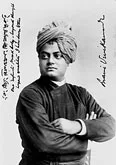  Books Complete books online by the SwamiBy Swami Vivekananda · January 1, 1900 [Place: Calcutta , the house of the late Babu Priyanath Mukhopadhyaya, Baghbazar . Year: 1897 .] It is three or four days since Swamiji has set his foot in Calcutta (On February 20, 1897.) after his first return from the West. The joy of the devotees of Shri Ramakrishna knows no bounds at enjoyin ![1899]() Biographical 1899By Swami Vivekananda · January 1, 1900 Swami Vivekananda went to the Thakur Ghar and sang before the relics and picture of Ramakrishna . The younger members of the Math presented Nivedita with an address. “ ... All others went to Thakur-Ghar [chapel] to hear Swamiji's song, who sang many songs about Siva, Kali, etc. The women relat  |