
The New York Times

S
Swami Vivekananda  ·  January 1, 1900
SharefXin
InstanceBeginEditable name="Body Content"  

Monday, February 28, 1895


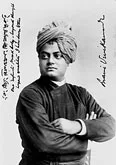
Lecture at Mr. and Mrs. Barber's.—Mr. and Mrs. A. L. Barber will hold the second of their series of "Afternoon and Evening Talks" at their home, 871 Fifth Avenue , this afternoon at 3 o'clock. The Swami Vivekananda of India will talk on “The Vedanta Philosophy: Soul." The remaining lectures will be: "The Conversational Voice and Its Possibilities," by Mrs, Mil-ward Adams of Chicago, on March 4; " The Vedanta Philosophy: God," by the Swami Vivekananda of India , on March 7; " Art as Related to Religion," by Ernest F. Fenollosa of the Art Museum, Boston, on March 9. Tickets for the course may be had of Miss Emma Thursby of 34 Gramercy Park.


InstanceEndEditable


InstanceBeginEditable name="Author Credit Bottom"

- www.vivekananda.net edited by Frank Parlato Jr.

InstanceEndEditable
SharefXin

Comments (0)

Leave a comment

More From Vivekananda

People that Swami Vivekananda knew
Biographical

People that Swami Vivekananda knew

By Swami Vivekananda · January 1, 1900

Friedrich Max Müller (December 6, 1823 – October 28, 1900), more regularly known as Max Müller, was a German philologist and Orientalist, one of the founders of the western academic field of Indian studies and the discipline of comparative religion. Müller wrote both scholarly and popular works on t

Swami Trigunatitananda
Biographical

Swami Trigunatitananda

By Swami Vivekananda · January 1, 1900

Swami Trigunatitananda, a direct disciple of Sri Ramakrishna was the first editor of Udbodhan. In 1902 he went to the USA, at the behest of Swami Vivekananda. He was the head of the Vedanta Society of Northern California, San Francisco, until his death in 1915.

Complete books online by the Swami
Books

Complete books online by the Swami

By Swami Vivekananda · January 1, 1900

How can we love the Vyashti, the particular, without first loving the Samashti, the universal? God is the Samashti, the generalised and the abstract universal whole; and the universe that we see is the Vyashti, the particularised thing. To love the whole universe is possible only by way of lovin