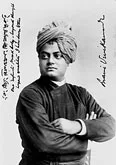
Teachings of Swami Vivekananda by Topic
Aim of Raja Yoga
Yoga has essentially to do with the meditative side of religion, rather than the ethical side, though, of necessity, a little of the latter has to be considered. Men and women are growing to desire more than mere revelation, so called. They want facts in their own consciousness. Only through experience can there be any reality in religion. Spiritual facts are to be gathered mostly from the superconscious state of mind. Let us put ourselves into the same condition as did those who claim to have had special experiences; then if we have similar experiences, they become facts for us. We can see all that another has seen; a thing that happened once can happen again, nay, must, under the same circumstances. Raja-Yoga teaches us how to reach the superconscious state. All the great religions recognise this state in some form; but in India, special attention is paid to this side of religion. In the beginning, some mechanical means may help us to acquire this state; but mechanical means alone can never accomplish much. Certain positions, certain modes of breathing, help to harmonise and concentrate the mind, but with these must go purity and strong desire for God, or realisation. The attempt to sit down and fix the mind on one idea and hold it there will prove to most people that there is some need for help to enable them to do this successfully. The mind has to be gradually and systematically brought under control. The will has to be strengthened by slow, continuous, and persevering drill. This is no child's play, no fad to be tried one day and discarded the next. It is a life's work; and the end to be attained is well worth all that it can cost us to reach it; being nothing less than the realisation of our absolute oneness with the Divine. Surely, with this end in view, and with the knowledge that we can certainly succeed, no price can be too great to pay.
notes from lecture
InstanceEndEditable
InstanceBeginEditable name="Author Credit Bottom"
- www.vivekananda.net edited by Frank Parlato Jr.
InstanceEndEditable