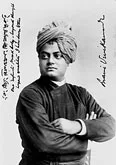
On Art in India
"Arts and Sciences in India" was the topic under which the Swami Vivekananda was introduced to the audience at Wendte Hall, San Francisco. The Swami held the attention of his hearers throughout as was demonstrated by the many questions which were put to him after his address.
The Swami said in part:
In the history of nations, the government at the beginning has always been in the hands of the priests. All the learning also has proceeded from the priests. Then, after the priests, the government changes hands, and the Kshatriya or the kingly power prevails, and the military rule is triumphant. This has always been true. And last comes the grasp of luxury, and the people sink down under it to be dominated by stronger and more barbarous races.
Amongst all races of the world, from the earliest time in history, India has been called the land of wisdom. For ages India itself has never gone out to conquer other nations. Its people have never been fighters. Unlike your Western people, they do not eat meat, for meat makes fighters; the blood of animals makes you restless, and you desire to do something.
Compare India and England in the Elizabethan period. What a dark age it was for your people, and how enlightened we were even then. The Anglo-Saxon people have always been badly fitted for art. They have good poetry — for instance, how wonderful is the blank verse of Shakespeare! Merely the rhyming of words is not good. It is not the most civilised thing in the world.
In India, music was developed to the full seven notes, even to half and quarter notes, ages ago. India led in music, also in drama and sculpture. Whatever is done now is merely an attempt at imitation. Everything now in India hinges on the question of how little a man requires to live upon.
InstanceEndEditable
InstanceBeginEditable name="Author Credit Bottom"
- www.vivekananda.net edited by Frank Parlato Jr.
InstanceEndEditable