Activities of the Order
The Institute of Culture
Calcutta, India
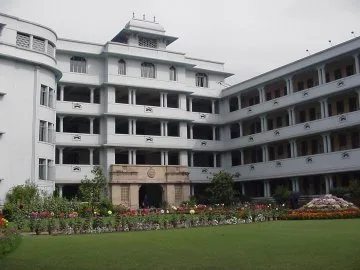
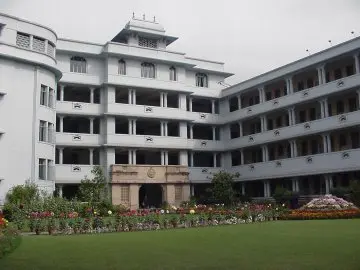
The Ramakrishna Mission Institute of Culture
Among the centres of cultural activities of the Ramakrishna Mission, special mention should be made of its Institute of Culture, Calcutta (India).
The Institute was started in 1938 as an offshoot of Sri Ramakrishna's first birth centenary celebration held in 1936. With humble beginnings in small rented rooms in North Calcutta, the Institute has grown over the years, and the fact that it now occupies its present magnificent building in South Calcutta is a testimony to its popularity.
Briefly, the Institute's activities are:
Cultural Programmes: Include a busy schedule of lectures, debates, elocution competitions, seminars, symposia, study circles, scripture classes, religious congregations, devotional songs, and Indian classical music.Vivekananda Study Circle: Encourages youths to study Ramkrishna-Vivekananda literature and organises youth conventions in the city and rural areas jointly with the local youth bodies. The Study Circle has also a junior wing, for the members of the Children's and Junior Sections of the Institute's Library.
School of Languages: The Institute's School of Languages, with over 8,000 students on the roll, teaches 14 languages: Arabic, Bengali, Chinese, French, German, Hindi, Japanese, Latin, Persian, Russian, Sanskrit, Spanish, Spoken English, and Urdu.
International House: The International House is meant for the Institute's guests, the scholars, and the students. They come from different parts of India as well as from abroad at the invitation of the Institute or of universities and other learned societies to stay here for study and research or simply for exchange of ideas with Indian scholars.
Library: The General Library and the attached reading room assists scholars in their work of study and research The Library specialises in the humanities and social sciences and contains over 1,88,148 books and 424 Indian and foreign journals. The Library's JUNIOR Section contains over 6,182 books for children between 13 and 16, and a CHILDREN'S Section with over about 14,000 books, for children between 6 and 12.
Research: Calcutta, Jadavpur,and Burdwan Universities recognize the Institute as a centre for learning and research. This entitles the Institute to guide scholars in their pre-doctoral and post-doctoral research. The Indian Council of Social Science Research, the Indian National Science Academy, Rashtriya Sanskrit Samsthan, and the Indian Council of Philosophical Research, New Delhi, also recognize the Institute as a centre for research.
Museum and Art Gallery: The Institute has a small Museum and Art Gallery to help people, specially scholars from outside India, have a glimpse of Indian art in its diverse forms. It has four major sections: (i) Paintings, (ii) Sculptures, (iii) FolkArts, and (iv) MSS. Attached to it is the Sarada Devi School of Fine Arts and Crafts for Children between 8 and 12 and a permanent exhibition on the Ramakrishna Movement.
Publications: The Institute's publications, including the monthly Bulletin, represent a further attempt on the part of the Institute to help educate the public about culture in all its aspects. Its major attempt in this direction is The Cultural Heritage of India, an encyclopaedic work in eight volumes (six of which have been published) that project India's accumulated wisdom in a planned manner with contributions from well-known scholars. Among the Institute's other major publications are Religions of the World (2 Vols), Concordance, Upanishads, Vivekananda in Contemporary Indian News, A Portrait of Sri Ramakrishna, and several publications in Bengali.
Prayer Room and Chapel: in keeping with the spirit which animates all its activities, the Institute has a Universal Prayer Room, open to all, where people can pray and meditate in the manner they like best. There is also a Chapel dedicated to Sri Ramakrishna, the symbol of harmony and unity, where regular devotional services are held in the evenings.
For further information please contact:
The Secretary, Ramakrishna Mission Institute of Culture
Gol Park, Calcutta 700 029, India
Phone: 011-91-33 464-1303 and 466-1235
Fax: 011-91-33 464-1307
Email: [email protected] or [email protected]
Web site: http://www.sriramakrishna.org
InstanceEndEditable
InstanceBeginEditable name="Author Credit Bottom"
- www.vivekananda.net edited by Frank Parlato Jr.
InstanceEndEditable