Ramakrishna his life and sayings
Ramakrishna: His life and sayings
The Sayings of
Râmakrishna.
His sayings or Logia were collected and written down by his pupils, in Bengâli; some were translated into Sanskrit
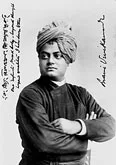
and into English. There are many that remind us of old Sanskrit sayings, of which there are several collections, all, however, in metrical form. The sayings of Râmakrishna are different, because they are in prose, uttered evidently on the spur of the moment, and tinged here and there with European ideas which must have reached Râmakrishna through his intercourse with Anglo-Indians, and not from books, for he was ignorant of English. I received a complete collection of them from Râmakrishna's own pupil, Vivekânanda, well known by his missionary labours in the United States and England. I give them as they were sent to me, with such corrections only as seemed absolutely necessary. I thought at first of arranging them under different heads, but found that this would have destroyed their character and made them rather monotonous reading. I believe as they are, they give a true picture of the man and of his way of teaching, suggested by the impulses of the moment, but by no means systematic, and by no means free from repetitions and contradictions. I should have liked very much to leave out some of his sayings, because, to our mind, they seem insipid, in bad taste, or even blasphemous. But should I not in doing so have offended against historic truth? We want to know the man who has exercised and is exercising so wide an influence, such as he was, not such as we wish him to have been. He himself never wished to appear different from what he was, and he often seems to have made himself out worse than he was. Besides, if I had done so, I know that there are men who would not have been ashamed of suspecting me
of a wish to represent the religions of the East, both modern and ancient, as better than they really are. These are the very men who would find many a lesson to learn from Râmakrishna's sayings. No, I said, let the wheat and the tares remain together. Few thoughtful readers will go through them without finding some thought that makes them ponder, some truth that will startle them as coming from so unexpected a quarter. Nothing, on the other hand, would be easier than to pick out a saying here and there, and thus to show that they are all insipid and foolish. This is a very old trick, described in India as the trick of the rice-merchants who wish to sell or to buy a rice-field, and who offer you a handful of good or bad grains to show that the field is either valuable or worthless. To my mind these sayings, the good, the bad, and the indifferent, are interesting because they represent an important phase of thought, an attempt to give prominence to the devotional and practical side of the Vedânta, and because they show the compatibility of the Vedânta with other religions. They will make it clear that the Vedânta also possesses a morality of its own, which may seem too high and too spiritual for ordinary mortals, but which in India has done good, is doing good, and may continue to do good for centuries to come.
In conclusion, I have to thank my friend Mozoomdar, and several of the disciples of Râmakrishna, more particularly Vivekânanda and the editor of the Brahmavâdin, for the ready help they have rendered me in publishing this collection of the sayings of their departed Master.
InstanceEndEditable
InstanceBeginEditable name="Author Credit Bottom"
- www.vivekananda.net edited by Frank Parlato Jr.
InstanceEndEditable