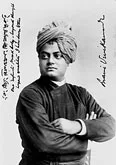
Ramakrishna- his life and sayings
Ramakrishna: His life and sayings
Râmakrishna.
The few cases mentioned here may suffice to show that Râmakrishna was by no means a solitary instance, and that, however much the old social system of the Four Stages as described by Manu may have changed, there are still Samnyâsins in India who live the life of the ancient Samnyâsins, though of course in different surroundings and under different conditions. These cases are as well authenticated as anything that comes to us from India is ever likely to be. If we turned our eyes to the ancient literature of that country, we should see Samnyâsins in large numbers, but their performances would probably be considered as fabulous, nor should I venture to say that they
are what we mean by well authenticated. The fact, how-ever, that some of these Samnyâsins reduced themselves by ascetic exercises to mere skeletons 1 or became raving mad-men can hardly be doubted, if we may judge by the warnings against such excesses which appear at a very early time in the ancient literature of the country. A well-known instance is that of Buddha himself, who, before he founded his own religion, went through all the tortures of Brâhmanic ascesis, but derived so little benefit from them that he denounced the whole system, as then practised, not only as useless but as mischievous, preferring in all things what he called the via media.
If now we turn our attention again to the fourth of the Paramahamsas, recognised by Keshub Chunder Sen as pre-eminent among his contemporaries, we shall feel less surprised by his life and his doctrines, but accept him as one of a class which has always existed in India. We possess indeed full accounts of his life, but they are often so strangely exaggerated, nay so contradictory, that it seemed almost hopeless to form a correct and true idea of his earthly career and his character. I applied therefore to one of his most eminent pupils, Vivekânanda, asking him to write down for me what he could tell of his own knowledge of his venerable teacher, and I received from him a full description of his Master's life. It will be easily seen, however, that even this account is not quite free from traditional elements. If I give it as much as possible unaltered, I have a reason for it.
Footnotes
24:1 See a remarkable instance in Mrs. Flora Annie Steel's 'In the Permanent Way,' 1898.
InstanceEndEditable
InstanceBeginEditable name="Author Credit Bottom"
- www.vivekananda.net edited by Frank Parlato Jr.
InstanceEndEditable