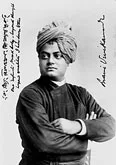
(RECORDED BY MISS S. E. WALDO, A DISCIPLE
Inspired Talks
(RECORDED BY MISS S. E. WALDO, A DISCIPLE
SUNDAY, June 30, 1895.
To try to think without a phantasm is to try to make the impossible possible. We cannot think "mammalia" without a concrete example. So with the idea of God.
The great abstraction of ideas in the world is what we call God.
Each thought has two parts — the thinking and the word; and we must have both. Neither idealists nor materialists are right; we must take both idea and expression.
All knowledge is of the reflected, as we can only see our face in a mirror. No one will ever know his own Self or God; but we are that own Self, we are God.
In Nirvana you are when you are not. Buddha said, "You are best, you are real, when you are not" — when the little self is gone.
The Light Divine within is obscured in most people. It is like a lamp in a cask of iron, no gleam of light can shine through. Gradually, by purity and unselfishness we can make the obscuring medium less and less dense, until at last it becomes as transparent as glass. Shri Ramakrishna was like the iron cask transformed into a glass cask through which can be seen the inner light as it is. We are all on the way to become the cask of glass and even higher and higher reflections. As long as there is a "cask" at all, we must think through material means. No impatient one can ever succeed.
* * *
Great saints are the object-lessons of the Principle. But the disciples make the saint the Principle, and then they forget the Principle in the person.
The result of Buddha's constant inveighing against a personal God was the introduction of idols into India. In the Vedas they knew them not, because they saw God everywhere, but the reaction against the loss of God as Creator and Friend was to make idols, and Buddha became an idol — so too with Jesus. The range of idols is from wood and stone to Jesus and Buddha, but we must have idols.
* * *
Violent attempts at reform always end by retarding reform. Do not say, "You are bad"; say only, "You are good, but be better."
Priests are an evil in every country, because they denounce and criticise, pulling at one string to mend it until two or three others are out of place. Love never denounces, only ambition does that. There is no such thing as "righteous" anger or justifiable killing.
If you do not allow one to become a lion, he will become a fox. Women are a power, only now it is more for evil because man oppresses woman; she is the fox, but when she is not longer oppressed, she will become the lion.
Ordinarily speaking, spiritual aspiration ought to be balanced through the intellect; otherwise it may degenerate into mere sentimentality. . . .
All theists agree that behind the changeable there is an Unchangeable, though they vary in their conception of the Ultimate. Buddha denied this in toto. "There is no Brahman, no Atman, no soul," he said.
As a character Buddha was the greatest the world has ever seen; next to him Christ. But the teachings of Krishna as taught by the Gita are the grandest the world has ever known. He who wrote that wonderful poem was one of those rare souls whose lives sent a wave of regeneration through the world. The human race will never again see such a brain as his who wrote the Gita.
* * *
There is only one Power, whether manifesting as evil or good. God and the devil are the same river with the water flowing in opposite directions.
InstanceEndEditable
InstanceBeginEditable name="Author Credit Bottom"
- www.vivekananda.net edited by Frank Parlato Jr.
InstanceEndEditable