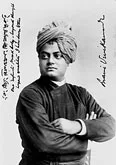
(RECORDED BY MISS S. E. WALDO, A DISCIPLE
Inspired Talks
(RECORDED BY MISS S. E. WALDO, A DISCIPLE
TUESDAY, July 9, 1895.
Man as Atman is really free; as man he is bound, changed by every physical condition. As man, he is a machine with an idea of freedom; but this human body is the best and the human mind the highest mind there is. When a man attains to the Atman state, he can take a body, making it to suit himself; he is above law. This is a statement and must be proved. Each one must prove it for himself; we may satisfy ourselves, but we cannot satisfy another. Râja-Yoga is the only science of religion that can be demonstrated; and only what I myself have proved by experience, do I teach. The full ripeness of reason is intuition, but intuition cannot antagonise reason.
Work purifies the heart and so leads to Vidyâ (wisdom). The Buddhists said, doing good to men and to animals were the only works; the Brahmins said that worship and all ceremonials were equally "work" and purified the mind. Shankara declares that "all works, good and bad, are against knowledge". Actions tending to ignorance are sins, not directly, but as causes, because they tend to increase Tamas and Rajas. With Sattva only, comes wisdom. Virtuous deeds take off the veil from knowledge, and knowledge alone can make us see God.
Knowledge can never be created, it can only be discovered; and every man who makes a great discovery is inspired. Only, when it is a spiritual truth he brings, we call him a prophet; and when it is on the physical plane, we call him a scientific man, and we attribute more importance to the former, although the source of all truth is one.
Shankara says, Brahman is the essence, the reality of all knowledge, and that all manifestations as knower, knowing, and known are mere imaginings in Brahman. Ramanuja attributes consciousness to God; the real monists attribute nothing, not even existence in any meaning that we can attach to it. Ramanuja declares that God is the essence of conscious knowledge. Undifferentiated consciousness, when differentiated, becomes the world. . . .
Buddhism, one of the most philosophical religions in the world, spread all through the populace, the common people of India. What a wonderful culture there must have been among the Aryans twenty-five hundred years ago, to be able to grasp ideas!
Buddha was the only great Indian philosopher who would not recognise caste, and not one of his followers remains in India. All the other philosophers pandered more or less to social prejudices; no matter how high they soared, still a bit of the vulture remained in them. As my Master used to say, "The vulture soars high out of sight in the sky, but his eye is ever on a bit of carrion on the earth."
* * *
The ancient Hindus were wonderful scholars, veritable living encyclopaedias. They said, "Knowledge in books and money in other people's hands is like no knowledge and no money at all."
Shankara was regarded by many as an incarnation of Shiva.
InstanceEndEditable
InstanceBeginEditable name="Author Credit Bottom"
- www.vivekananda.net edited by Frank Parlato Jr.
InstanceEndEditable