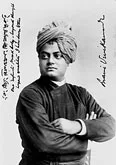
The gospel of Sri Ramakrishna
by Swami Nikhilananda
SRI RAMAKRISHNA, the God-man of modern India, was born at Kamarpukur. This village in the Hooghly District preserved during the last century the idyllic simplicity of the rural areas of Bengal. Situated far from the railway, it was untouched by the glamour of the city. It contained rice-fields, tall palms, royal banyans, a few lakes, and two cremation grounds. South of the village a stream took its leisurely course. A mango orchard dedicated by a neighbouring zemindar to the public use was frequented by the boys for their noonday sports. A highway passed through the village to the great temple of Jagannath at Puri, and the villagers, most of whom were farmers and craftsmen, entertained many passing holy men and pilgrims. The dull round of the rural life was broken by lively festivals, the observance of sacred days, religious singing, and other innocent pleasures.
About his parents Sri Ramakrishna once said: "My mother was the personification of rectitude and gentleness. She did not know much about the ways of the world; innocent of the art of concealment, she would say what was in her mind. People loved her for her open-heartedness. My father, an orthodox brahmin, never accepted gifts from the sudras. He spent much of his time in worship and meditation, and in repeating God's name and chanting His glories. Whenever in his daily prayers he invoked the Goddess Gayatri, his chest flushed and tears rolled down his cheeks. He spent his leisure hours making garlands for the Family Deity, Raghuvir."
Khudiram Chattopadhyaya and Chandra Devi, the parents of Sri Ramakrishna, were married in 1799. At that time Khudiram was living in his ancestral village of Dereypore, not far from Kamarpukur. Their first son, Ramkumar, was born in 1805, and their first daughter, Katyayani, in 1810. In 1814 Khudiram was ordered by his landlord to bear false witness in court against a neighbour. When he refused to do so, the landlord brought a false case against him and deprived him of his ancestral property. Thus dispossessed, he arrived, at the invitation of another landlord, in the quiet village of Kamarpukur, where he was given a dwelling and about an acre of fertile land. The crops from this little property were enough to meet his family's simple needs. Here he lived in simplicity, dignity, and contentment.
Ten years after his coming to Kamarpukur, Khudiram made a pilgrimage on foot to Rameswar, at the southern extremity of India. Two years later was born his second son, whom he named Rameswar. Again in 1835, at the age of sixty, he made a pilgrimage, this time to Gaya. Here, from ancient times, Hindus have come from the four corners of India to discharge their duties to their departed ancestors by offering them food and drink at the sacred footprint of the Lord Vishnu. At this holy place Khudiram had a dream in which the Lord Vishnu promised to he born as his son. And Chandra Devi, too, in front of the Siva temple at Kamarpukur, had a vision indicating the birth of a divine child. Upon his return the husband found that she had conceived.
It was on February 18, 1836, that the child, to be known afterwards as Ramakrishna, was born. In memory ot the dream at Gaya he was given the name of Gadadhar, the "Bearer of the Mace", an epithet of Vishnu. Three years later a little sister was born.
- Boyhood
- Coming to Calcutta
- Bread Winning Education
- Kali Temple at Dakshineswar
- Siva
- Radhakanta
- Kali
- Sri Ramakrishna as a Priest
- The First Vision of Kali
- God Intoxicated State
- Haladhari
- Marriage and After
- The Brahmani
- Tantra
- Vaishnava Disciples
- Ramlala
- In Communion with the Divine Beloved
- Vedanta
- Totapuri
- Kali and Maya
- Totapuri's Lesson
- Company of Holy Men and Devotees
- Islam
- Christiniaty
- Attitude towards DIfferent Religions
- Pilgrimage
- Relation with His Wife
- The "Ego" of The Master
- Summary of the Master's Spiritual Experiences
- Brahmo Samaj
- Arya Samaj
- Keshab Chandra Sen
- Other Brahmo Leaders
- The Master's Yearning for His Own Devotees
- The Master's Method of Teaching
- Householder Devotees
- Future Monks
- Ram and Manomohan
- Surendra
- Kedar
- Harish
- Bhavanath
- Balaram Bose
- Mahendra or M.
- Nag Mahashay
- Girish Ghosh
- Purna
- Mahimacharan and Pratap Hazra
- Some Noted Men
- Kristodas Pal
- Monastic Disciples
- Latu
- Rakhal
- The Elder Gopal
- Narendra
- Tarak
- Baburam
- Niranjan
- Jogindra
- Sashi and Sharat
- Harinath
- Gangadhar
- Hariprasanna
- Kali
- Subodh
- Sarada and Tulasi
- Women Devotees
- Gopal Ma
- The March of Events
- Injury to the Master's Arm
- Beginning of His Illness
- Syampukur
- Last Days at Cossipore
- Mahasamadhi
InstanceBeginEditable name="Author Credit Bottom"
- www.vivekananda.net edited by Frank Parlato Jr.
InstanceEndEditable