The Gospel of Sri Ramakrishna
Syampukur
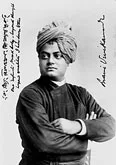
In the beginning of September 1885 Sri Ramakrishna was moved to Syampukur. Here Narendra organized the young disciples to attend the Master day and night. At first they concealed the Master's illness from their guardians; but when it became more serious they remained with him almost constantly, sweeping aside the objections of their relatives and devoting themselves whole-heartedly to the nursing of their beloved guru. These young men, under the watchful eyes of the Master and the leadership of Narendra, became the antaranga bhaktas, the devotees of Sri Ramakrishna's inner circle. They were privileged to witness many manifestations of the Master's divine powers. Narendra received instructions regarding the propagation of his message after his death.
The Holv Mother — so Sarada Devi had come to be affectionately known by Sri Ramakrishna's devotees — was brought from Dakshineswar to look after the general cooking and to prepare the special diet of the patient. The dwelling space being extremely limited, she had to adapt herself to cramped conditions. At three o'clock in the morning she would finish her bath in the Ganges and then enter a small covered place on the roof, where she spent the whole day cooking and praying. After eleven at night, when the visitors went away, she would come down to her small bedroom on the first floor to enjoy a few hours' sleep. Thus she spent three months, working hard, sleeping little, and praying constantly for the Master's recovery.
At Syampukur the devotees led an intense life. Their attendance on the Master was in itself a form of spiritual discipline, His mind was constantly waring to an exalted plane of consciousness. Now and then they would catch the contagion of his spiritual fervour. They sought to divine the meaning of this illness of the Master, whom most of them had accepted as an Incarnation of God. One group, headed by Girish with his robust optimism and great power of imagination, believed that the illness was a mere pretext to serve a deeper purpose. The Master had willed his illness in order to bring the devotees together and promote solidarity among them. As soon as this purpose was served, he would himself get rid of the disease. A second group thought that the Divine Mother, in whose hand the Master was an instrument, had brought about this illness to serve Her own mysterious ends. But the young rationalists, led by Narendra, refused to ascribe a supernatural cause to a natural phenomenon. They believed that the Master's body, a material thing, was subject, like all other material things, to physical laws. Growth, development, decay, and death were laws of nature to which the Master's body could not but respond. But though holding differing views, they all believed that it was to him alone that they must look for the attainment of their spiritual goal.
In spite of the physician's efforts and the prayers and nursing of the devotees, the illness rapidly progressed. The pain sometimes appeared to be unbearable. The Master lived only on liquid food, and his frail body was becoming a mere skeleton. Yet his face always radiated joy, and he continued to welcome the visitors pouring in to receive his blessing. When certain zealous devotees tried to keep the visitors away, they were told by Girish, "You cannot succeed in it; he has been born for this very purpose — to sacrifice himself for the redemption of others."
The more the body was devastated by illness, the more it became the habitation of the Divine Spirit. Through its transparency the gods and goddesses began to shine with ever increasing luminosity. On the day of the Kali Puja the devotees clearly saw in him the manifestation of the Divine Mother.
It was noticed at this time that some of the devotees were making an unbridled display of their emotions. A number of them, particularly among the householders, began to cultivate, though at first unconsciously, the art of shedding tears, shaking the body, contorting the face, and going into trances, attempting thereby to imitate the Master. They began openly to declare Sri Ramakrishna a Divine Incarnation and to regard themselves as his chosen people, who could neglect religious disciplines with impunity. Narendra's penetrating eye soon sized up the situation. He found out that some of these external manifestations were being carefully practised at home, while some were the outcome of malnutrition, mental weakness, or nervous debility. He mercilessly exposed the devotees who were pretending to have visions, and asked all to develop a healthy religious spirit. Narendra sang inspiring songs for the younger devotees, read with them the Imitation of Christ and the Gita, and held before them the positive ideals of spirituality.
- www.vivekananda.net edited by Frank Parlato Jr.