
Swami Vivekananda

How to be a Yogi
THE Science of Yoga with its various branches justly claims, as we have already seen, to unravel the mysteries of life and death. Some of the advanced thinkers in Western countries are beginning to understand the importance of this noble science and to explain the problems of existence by it; bu
How to be a Yogi
THE last is Jnâna Yoga, the path of wisdom. The word "Jnâna," being derived from the Sanskrit root Jnâ," to know, means knowledge; and the ideal which it holds up before its followers is the realization of that Absolute Truth, which is the one common source of all subjective and objective phenom
How to be a Yogi
BHAKTI YOGA teaches that the final end of all religions can be reached through love and worship of the personal God, who is the Creator and Governor of the phenomenal universe. It leads to the same destination as all the other branches of Yoga, but is especially suited for such as are emotional
How to be a Yogi
ONE of the significations of the word "Yoga" is "Dexterity in work." To render this meaning still more specific, the Sanskrit term "Karma," derived from the root verb "Kri," to act, is added. Taken in its literal sense, therefore, Karma signifies action, and refers to all actions whether of mind
How to be a Yogi
HATHA YOGA, as we have already seen, is wholly devoted to the control of the functions of the body and to the mastery of the physical forces, its ideal being a sound constitution, well-fitted to overcome those physical and environmental conditions which stand as obstacles in the path of spiritua
How to be a Yogi
HATHA YOGA is that branch of the Science of Yoga which teaches how to conquer hunger, thirst, and sleep; how to overcome the effects of heat and cold; how to gain perfect health and cure disease without using drugs; how to arrest the untimely decay of the body resulting from the waste of vital e
How to be a Yogi
IN all the Sacred Writings of the world as well as in the lives of the inspired teachers, prophets, saints, and Seers of Truth, we find frequent descriptions of miraculous events and powers, which, admitting a certain measure of exaggeration, must still have had some foundation in fact. We, inde
How to be a Yogi
TRUE religion is extremely practical; it is, indeed, based entirely upon practice, and not upon theory or speculation of any kind, for religion begins only where theory ends. Its object is to mould the character, unfold the divine nature of the soul, and make it possible to live on the spiritual
How to be a Yogi
THE Vedânta Philosophy includes the different branches of the Science of Yoga. Four of these have already been treated at length by the Swâmi Vivekananda in his works on "Râja Yoga," "Karma Yoga," "Bhakti Yoga," and "Jnâna Yoga"; but there existed no short and consecutive survey of the science a
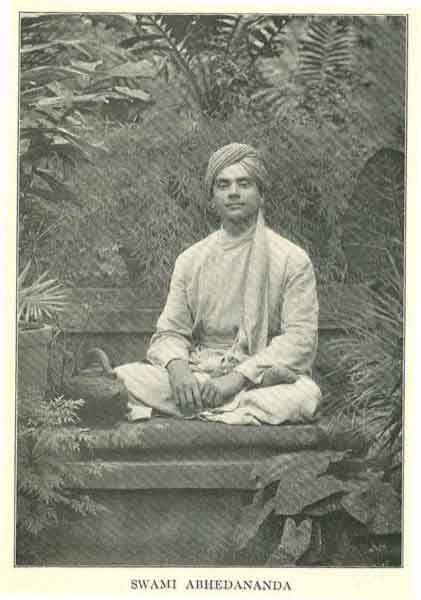
How to be a Yogi
Swami Abhedananda was a disciple of Ramakrishna and a dedicated friend and follower of Vivekananda. He came to England and America at the request of Vivekananda and headed the New York Vedanata Society after Vivekananda returned to India.
CONVERSATIONS WITH SWAMI TURIYANANDA,
Recorded by Swami Raghavananda From the May – June, 1958 Vedanta and the West Magazine Swami Turiyananda has been called an embodiment of the teachings of Vedanta. His faith in God and self-surrender to him were an inspiration to all who came within the orbit of his influence. Swami Pavitrananda,
CONVERSATIONS WITH SWAMI TURIYANANDA
CONVERSATIONS WITH SWAMI TURIYANANDA Witnessed and recorded by Swami Raghavananda. Swami Raghavananda, a disciple of Swami Brahmananda, first came in contact with many of the direct disciples of Sri Ramakrishna as a college student. After passing his M.A. and law examinations, he joined the Ramak