
Swami Vivekananda
Mundaka Upanishad
[A Jnâna-Yoga class delivered in New York, January 29, 1896, and recorded by Mr. Josiah J. Goodwin]
One existence appearing as many
Vairâgya or renunciation is the turning point in all the various Yogas. The Karmi (worker) renounces the fruits of his work. The Bhakta (devotee) renounces all little loves for the almighty and omnipresent love. The Yogi renounces his experiences, because his philosophy is that the whole Nature,
Complete books online by the Swami
We see love everywhere in nature. Whatever in society is good and great and sublime is the working out of that love; whatever in society is very bad, nay diabolical, is also the ill-directed working out of the same emotion of love. It is this same emotion that gives us the pure and holy conjugal
Complete books online by the Swami
We have now finished the consideration of what may be called the preparatory Bhakti, and are entering on the study of the Parâ-Bhakti or supreme devotion. We have to speak of a preparation to the practice of this Para-Bhakti. All such preparations are intended only for the purification of the so
Dhyana and Samadhi
We have taken a cursory view of the different steps in Raja-Yoga, except the finer ones, the training in concentration, which is the goal, to which Raja-Yoga will lead us. We see, as human beings, that all our knowledge which is called rational is referred to consciousness. My cons

Appendix
6. Where the fire is rubbed, where the air is controlled, where the Soma flows over, there a (perfect) mind is created. 8. Placing the body in a straight posture, with the chest, the throat and the head held erect, making the organs enter the mind, the sage crosses all the fearful currents by mea
Complete books online by the Swami
I shall tell you a story from the Vedas tonight. The Vedas are the sacred scriptures of the Hindus and are a vast collection of literature, of which the last part is called the Vedanta, meaning the end of the Vedas. It deals with the theories contained in them, and more especially the philosophy
The Free Soul
The analysis of the Sânkhyas stops with the duality of existence — Nature and souls. There are an infinite number of souls, which, being simple, cannot die, and must therefore be separate from Nature. Nature in itself changes and manifests all these phenomena; and the soul, according to the Sank
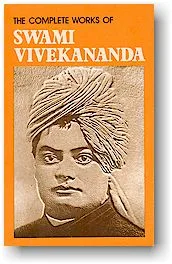
Jnana Yoga by Swami Vivekananda
The flowers that we see all around us are beautiful, beautiful is the rising of the morning sun, beautiful are the variegated hues of nature. The whole universe is beautiful, and man has been enjoying it since his appearance on earth. Sublime and awe-inspiring are the mountains; th
Pratyahara and Dharana
The next step is called Pratyahara. What is this? You know how perceptions come. First of all there are the external instruments, then the internal organs acting in the body through the brain centres, and there is the mind. When these come together and attach themselves to some ext

Independence
1. The Siddhis (powers) are attained by birth, chemical means, power of words, mortification, or concentration. Sometimes a man is born with the Siddhis, powers, of course, those he had earned in his previous incarnation. This time he is born, as it were, to enjoy the fruits of them. It is said o
Jnana Yoga by Swami Vivekananda
What question has been asked a greater number of times, what idea has led men more to search the universe for an answer, what question is nearer and dearer to the human heart, what question is more inseparably connected with our existence, than this one, the immortality of the huma