
Swami Vivekananda
Reply to the address of welcome at Madras
When the Swami Vivekananda arrived at Madras an address of welcome was presented to him by the Madras Reception Committee. It read as follows:
Reply to the address of welcome at Madura
The Swami was presented with an address of welcome by the Hindus of Madura, which read as follows:
Reply to the address of welcome at Shivaganga and Manamadura
At Manamadura, the following address of welcome from the Zemindars and citizens of Shivaganga and Manamadura was presented to the Swami:
Reply to the address of welcome at Paramakudi
Paramakudi was the first stopping-place after leaving Ramnad, and there was a demonstration on a large scale, including the presentation of the following address:
Reply to the address of welcome at Ramnad
At Ramnad the following address was presented to Swami Vivekananda by the Raja:
Address at the Rameswaram temple on real worship
A visit was subsequently paid to the Rameswaram Temple, where the Swami was asked to address a few words to the people who had assembled there. This he did in the following terms:
Reply to the address of welcome at Pamban
On the arrival of Swami Vivekananda at Pamban, he was met by His Highness the Raja of Ramnad, who accorded him a hearty welcome. Preparations had been made at the landing wharf for a formal reception; and here, under a pandal which had been decorated with great taste, the following address on be

First public lecture in the
After his memorable work in the West, Swami Vivekananda landed at Colombo on the afternoon of January 15, 1897, and was given a right royal reception by the Hindu community there. The following address of welcome was then presented to him:
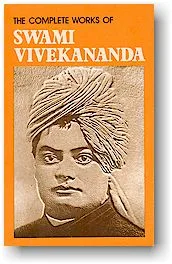
Jnana Yoga by Swami Vivekananda
Great is the tenacity with which man clings to the senses. Yet, however substantial he may think the external world in which he lives and moves, there comes a time in the lives of individuals and of races when, involuntarily, they ask, "Is this real?" To the person who never finds
My Master
(Two lectures delivered in New York and England in 1896 were combined subsequently under the present heading.)
Jnana Yoga by Swami Vivekananda
The Katha Upanishad, which we have been studying, was written much later than that to which we now turn--the Chhandogya. The language is more modern, and the thought more organised. In the older Upanishads the language is very archaic, like that of the hymn portion of the Vedas, an
Jnana Yoga by Swami Vivekananda
"The Self-existent One projected the senses outwards and, therefore, a man looks outward, not within himself. A certain wise one, desiring immortality, with inverted senses, perceived the Self within." As I have already said, the first inquiry that we find in the Vedas was concerni