
Swami Vivekananda
Prose: Lecture Notes
Probably at the turn of the century, Miss Ellen Waldo gave these undated notes in Swami Vivekananda’s handwriting to her friend Sister Devamata, a member of the Boston Vedanta Centre, where they were later made available for publication.
Prose: Notes
[An undated and untitled, one-page manuscript in Swami Vivekananda’s own handwriting]

Prose: A Preface to the Imitation of Christ
(Translated from an original Bengali writing of the Swami in 1889. The passage is the preface to his Bengali translation of The Imitation of Christ which he contributed to a Bengali monthly. He translated only six chapters with quotations of parallel passages from the Hindu scriptures.)
Prose: Cyclic Rest and Change
(Written by the Swami during his first visit to America in answer to questions put by a Western disciple.)
Prose: Four Paths of Yoga
(Written by the Swami during his first visit to America in answer to questions put by a Western disciple.)
Prose : The Birth of Religion
(Written by the Swami during his first visit to America in answer to questions put by a Western disciple.)
Prose: Struggle for Expansion
(Written by the Swami during his first visit to America in answer to questions put by a Western disciple.)
Prose: Shiva's Demon
(This incomplete story was found among Swamiji's papers after he had passed away. It is printed as the last article in the Bengali book Bhâbbâr Kathâ.)
Prose: Matter for Serious Thought
A man presented himself to be blessed by a sight of the Deity. He had an access of joy and devotion at the sight; and perhaps to pay back the good he received, he burst out into a song. In one corner of the hall, reclining against a pillar, was Chobeji dozing. He was the priest in the temple,
Prose: Hinduism and Shri Ramakrishna
By the word "Shastras" the Vedas without beginning or end are meant. In matters of religious duty the Vedas are the only capable authority.
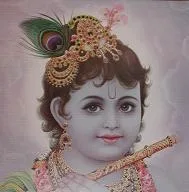
Prose: The Story of the Boy Gopala
"O mother! I am so afraid to go to school through the woods alone; other boys have servants or somebody to bring them to school or take them home — why cannot I have someone to bring me home?" — thus said Gopâla, a little Brahmin boy, to his mother one winter afternoon when he was getting read

OM TAT SAT
Non-existence can never be the cause of what exists. Something cannot come out of nothing. That the law of causation is omnipotent and knows no time or place when it did not exist is a doctrine as old as the Aryan race, sung by its ancient poet-seers, formulated by its philosophers, and made t