
Biographical
Books of biographical nature
The original manuscript of Nivedita's diary , since 1972, has been deposited in the Bangiya Sahitya Parisad Library, 243/1, A.P.C. Road , Calcutta : 700 006. Phone : 2350-3743.
Hinduism . Madras : Sri Ramakrishna Math, 1943. iv, 109 p. ; 17 cm. English.
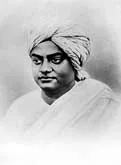
"That wonderful Gita, Margot! Not one note of weakness or discouragement in it!”
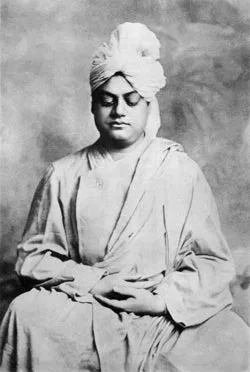
Was it a coincedence that Vivekananda's Mahasamadhi occurred on this date? As far as we know this fact has not been discussed in the biographies of Vivekananda: But Swami Vivekananda's death occurred a few hours after the aphelion in 1902 (an aphelion is the point on the orbit of the earth, or any o
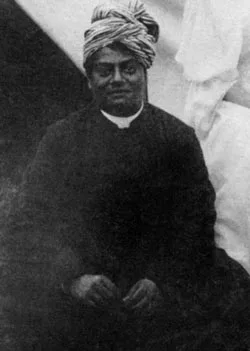
Vivekananda's blessings - as recorded in various letters, lectures and elsewhere....
Makara Sankranti is still celebrated on the last day of the ninth month of Poush and is a harvest festival. It is a celebration of spring on the occasion of the 'ascent' of the sun to the north (Uttarayana). In Maharashtra , Karnataka as well as parts of Andhra, Makara Sankranti is a day of
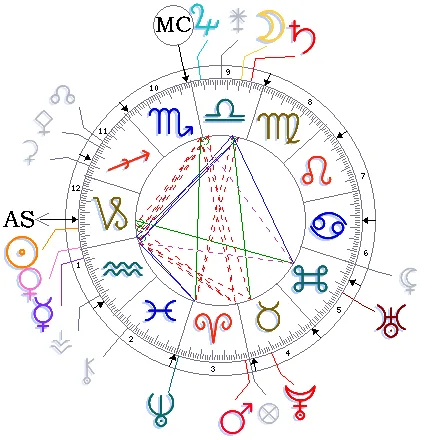
Map of the Heavens, Planets, Astrological Chart, Horoscope Swami VIVEKANANDA , born January 12, 1863 at 6:33 AM in Calcutta (Inde)
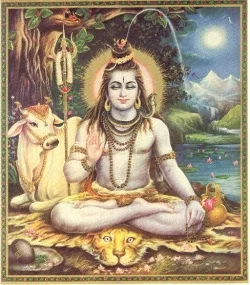
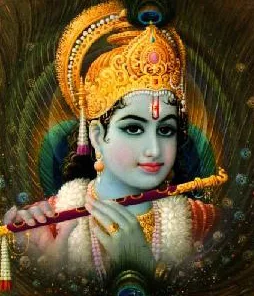
Sister Nivedita wrote "The existence of Krishna , then, like that of Christ, he often told us in the general way he doubted. Buddha and Mohammed alone, amongst religious teachers, had been fortunate enough to have 'enemies as well as friends,’ so that their historical careers were beyo
DEAR READER, if you wish to enjoy reading a few pages of my reminiscences of Swami Vivekananda, you must bear with me for a while till I have given you some idea about the sort of man I was before I met the Swami, the conceptions I had of religion, my education, and my nature in general. Unless

In the course of his wanderings, Vivekananda had got accustomed to eat chillies, which were often the only condiment he had with his food. I have seen him eating a handful of pungent, green chillies with evident relish.
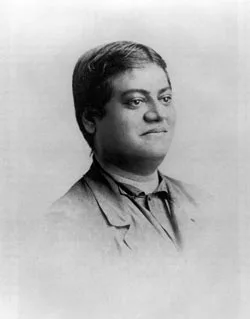
Swami Ramakrishnananda arranged an introduction to the Swami of a young man who apparently asked the Swami for money... The Swami wrote back to Ramakrishnananda (Sashi) Feb 25, 1898. I received your letter of recommendation for the young man with the old story of "having nothing to eat, Your Honour"
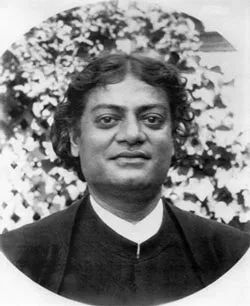
He loved to tell the story of a Christian missionary who was sent to preach to the
Like Vivekananda's letters, many of his poems were edited. Let us compare the version of REQUISCAT IN PACE! as published in the first edition of Notes of Some Wanderings with the Swami Vivekananda (published under the watchful eye of Swami Saradanananda) and the version published in the Comple
“Found poetry” are poems which are “extracted” from or found in prose or utterances, not written by the author as poetry, which can nevertheless be read as poetry. My selections here, of course, are purely subjective and perhaps a little presumptuous. Yet Vi
' The Necessity of Religion' was a lecture delivered by Swami Vivekananda in England in June 1896. While we have no intention of making any judgement on the editing of Swami Vivekananda's works, we feel it is important to point out that his lectures were edited. Much was done with his permission - i

Laura Glenn (Sister Devamata) wrote: "The design which has become the symbol of the Ramakrishna Mission everywhere came into being in the same casual way as did the 'Song of the Sannyasin.' It took shape in 1900 during Swami Vivekananda's later visit to America . At that time the Vedanta
The following is a partial list of books mentioned in various sources as those that Vivekananda read.
The following anecdote about Swami Vivekananda is as narrated by K. Sundarama Iyer in his reminiscences.
Perchance a prophet thou- Who knows? Who dares touch The depths where Mother hides Her silent failless bolts!
REGARDING THE SWAMI'S DEATH, JULY 4, 1902, AND HIS 1898 POEM "TO THE FOURTH OF JULY."
Note regarding the Swami's death, July 4, 1902 and his 1898 poem 'To the Fourth of July'
The Swami in Srinagar planned to write an introductory letter for the forthcoming first number, under the new editorship of Swami Swarupananda, of the Prabuddha Bharata. One afternoon he brought to Sister Nivedita, Josephine MacLoed and Mrs Ole Bull as they sat together, a paper on whic
Hold yet a while, Strong Heart, Not part a lifelong yoke Though blighted looks the present, future gloom.
What though thy bed be frozen earth, Thy cloak the chilling blast; What though no mate to clear thy path, Thy sky with gloom o'ercast --
Where darkness is interpreted as light, Where misery passes for happiness, Where disease is pretended to be health, Where the new-born's cry but shows 'tis alive; Dost thou, O wise, expect happiness here?
If things go ill or well — If joy rebounding spreads the face, Or sea of sorrow swells — A play — we each have part, Each one to weep or laugh as may; Each one his dress to don — Its scenes, alternative shine and rain.
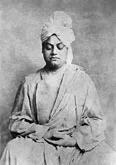
The wounded snake its hood unfurls, The flame stirred up doth blaze, The desert air resounds the calls Of heart-struck lion's rage.
And evermore protect us—Oh Thou Terrible!— From ignorance, by Thy sweet compassionate Face.
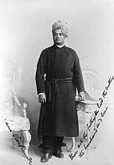
He who is in you and outside you, Who works through all hands, Who walks on all feet, Whose body are all ye, Him worship, and break all other idols!